If you read nothing else
- The Nærøyfjord forms part of the West Norwegian Fjords UNESCO World Heritage Site, first recognised in 2005.[1]
- The fjord is 20 km long and only 250 meters across at its narrowest point.[2]
- Kjelfossen runs down at the head of the fjord, with a free fall of 150 metres and a total drop of 840 metres.[3]
- The RIB-boat experience starts from US$146 per person and runs for 2 hours.[4]
- Reserve now and pay later, and cancel up to 24 hours in advance for a full refund.[4]
| RIB boat | Fjord cruise | Kayak trip | |
|---|---|---|---|
| From | from US$146[4] | from US$70[5] | from US$179[6] |
| Duration | 2 hours[4] | 2 hours[5] | 6 hours[6] |
| Rating | 4.91 from 129 reviews[4] | 4.52 from 36 reviews[5] | 4.85 from 12 reviews[6] |
| Notes | Live tour guide in English[4] | Wheelchair accessible[5] | Limited to 8 participants[6] |
The Nærøyfjord is unique with steep mountain inclines, ascending 1800 metres high, wild waterfalls, and a living cultural landscape.
Is the RIB boat worth it for a UNESCO fjord day?
Things to check
The Nærøyfjord UNESCO Listing, Explained
The Nærøyfjord does not stand on its own. It forms part of the West Norwegian Fjords UNESCO World Heritage Site, which includes Nærøyfjord and was first recognised in 2005, and the same listing takes in Geirangerfjord.[1] For anyone planning a day out from Flåm, that is the reason the fjord is treated as a destination in its own right rather than a pretty detour on the way somewhere else.
World heritage status here is a geology story as much as a scenery one. A fjord is formed when a glacier retreats after carving its typical U-shaped valley, and the sea fills the resulting valley floor.[9] The water you travel over is that flooded floor, and the walls on either side are the valley sides the ice left behind. Once you know that, the shape of the channel makes more sense: deep in the middle, steep at the sides, and narrowest where the ice had least room to move.
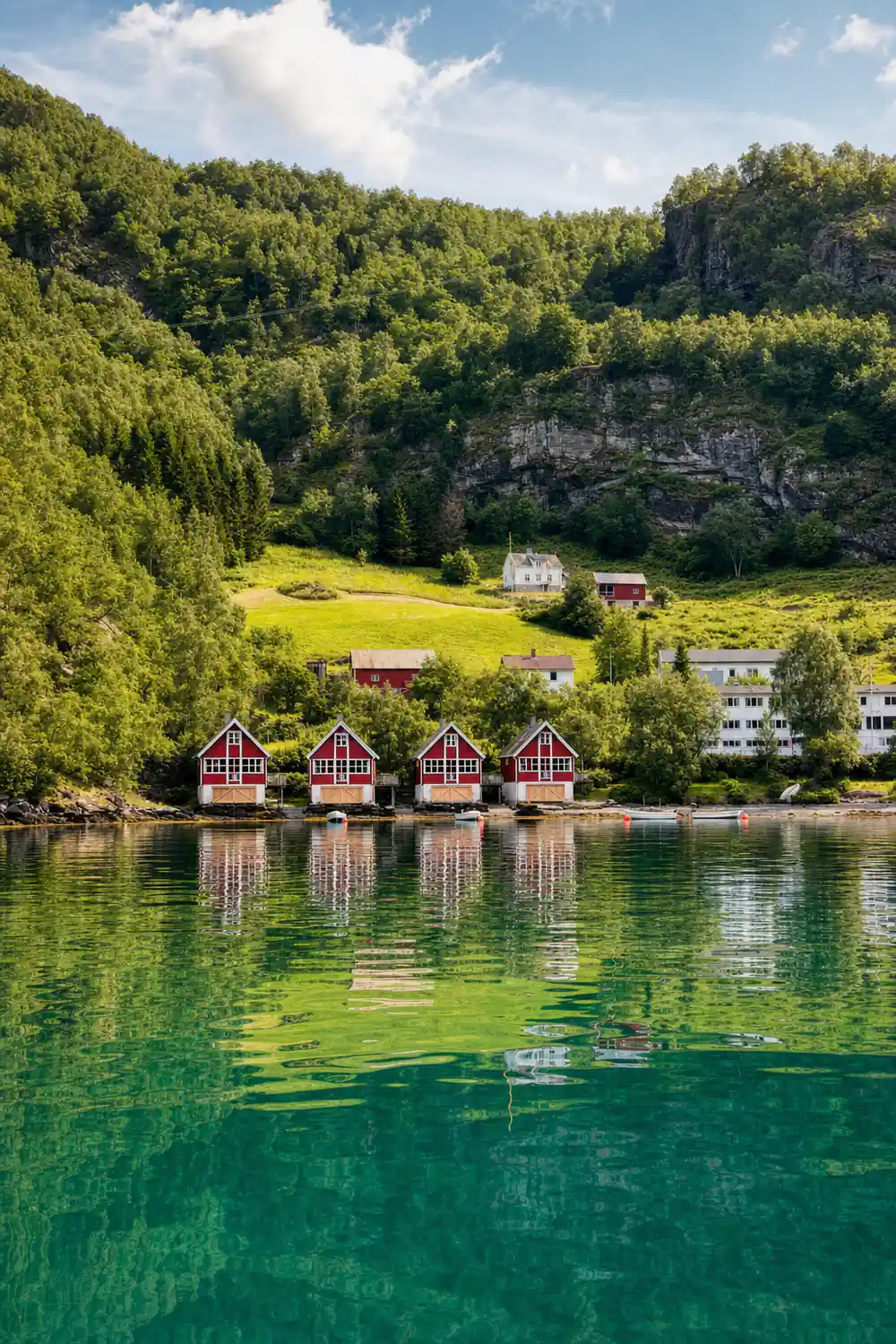
In practice the fjord is a working landscape rather than a museum piece. Cruise boats, ferries, kayaks and small open boats share the same water, farms and small villages sit on the flatter ground, and the shoreline looks different in every kind of weather. Boat trips here are built around looking, listening and taking photographs, so most of the day is spent on the water with the cliffs sliding past.
How Narrow Does the Nærøyfjord Get?
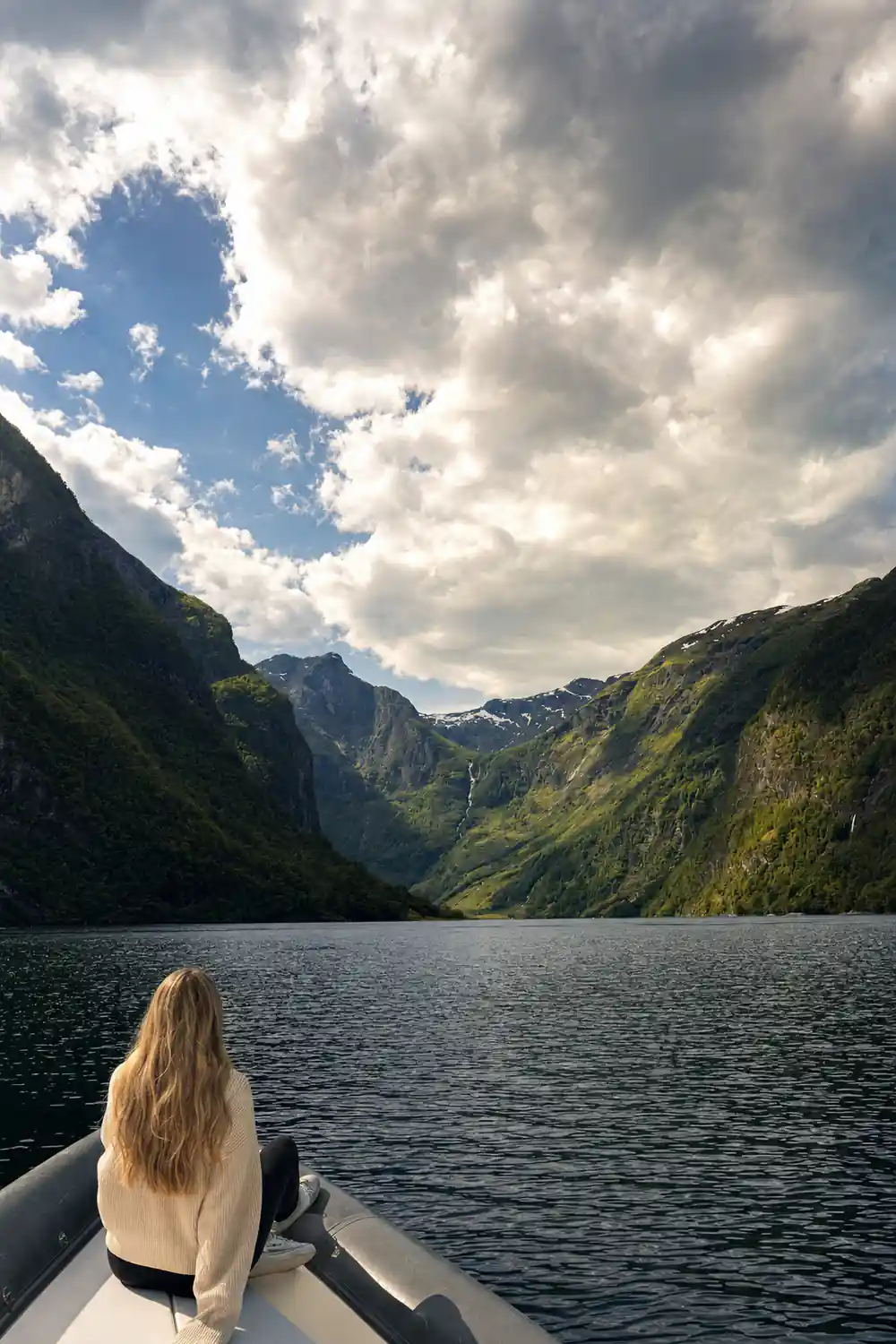
The first thing most people notice from a boat is the width, or the lack of it. The Nærøyfjord is 20 km long and only 250 meters across at its narrowest point.[2] The narrowest section is short, but it is the stretch that stays with you, because the two shores come close and the channel bends away in front of you. The light shifts constantly as the boat turns, and a stretch that looked hazy a minute earlier can open up into clear water.
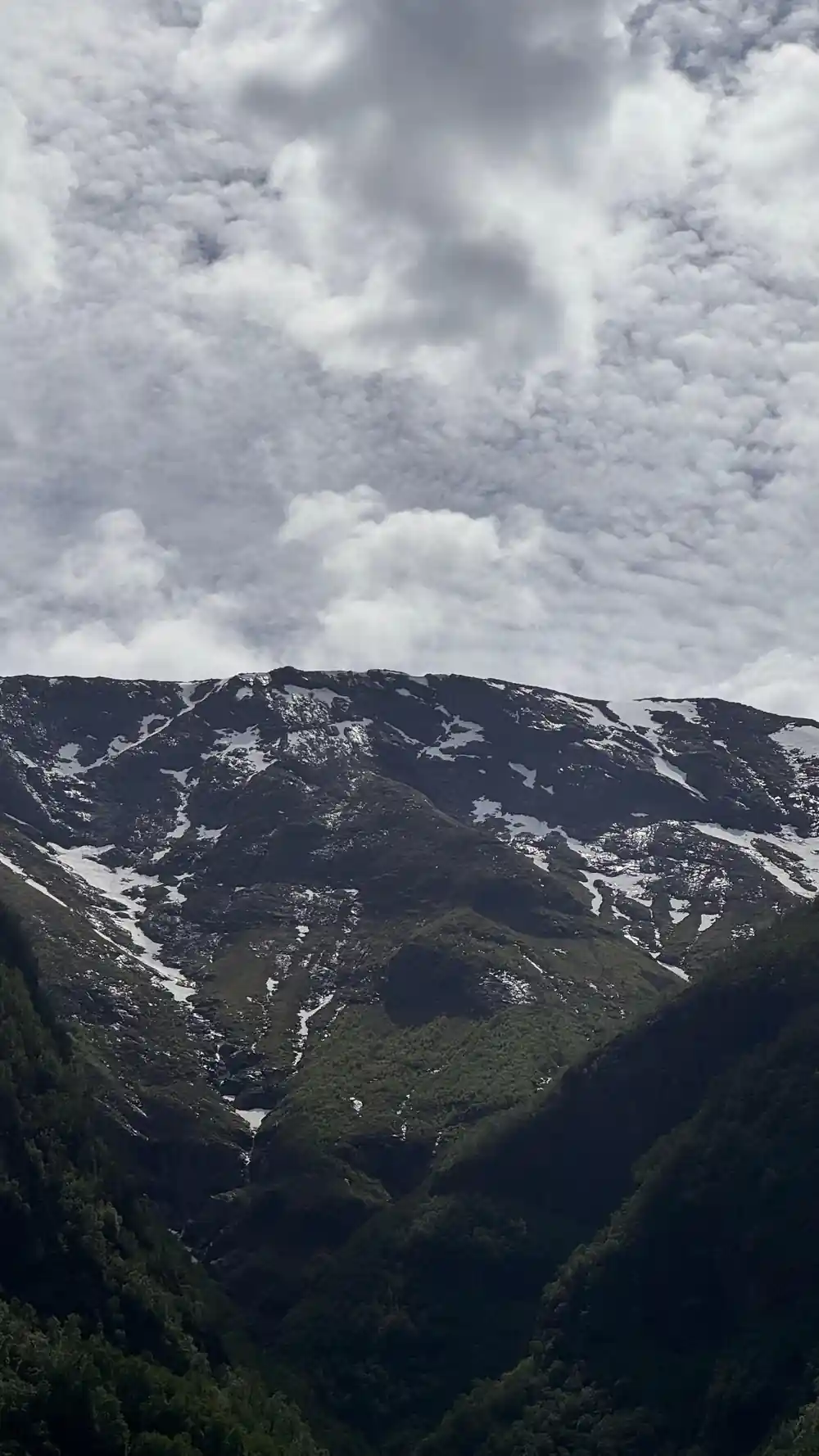
Above the waterline the scale changes again. The steep mountain inclines above the Nærøyfjord ascend to 1800 metres high.[10] That is a long way up when you are sitting in a small boat. Snow can sit on those slopes well into spring, and meltwater from them feeds the waterfalls that drop towards the fjord through the summer months. Looking straight up from the water is worth doing, especially in the narrow section where the sky turns into a strip.
For the wider picture, the Nærøyfjord branches off the Sognefjord, and the deepest part of the Sognefjord is 1300 meters.[11] The contrast between the wide main fjord and the tight arm is part of what makes a day here interesting: broad water with room for ferries, then a channel where the boat has to slow down and pick its line.
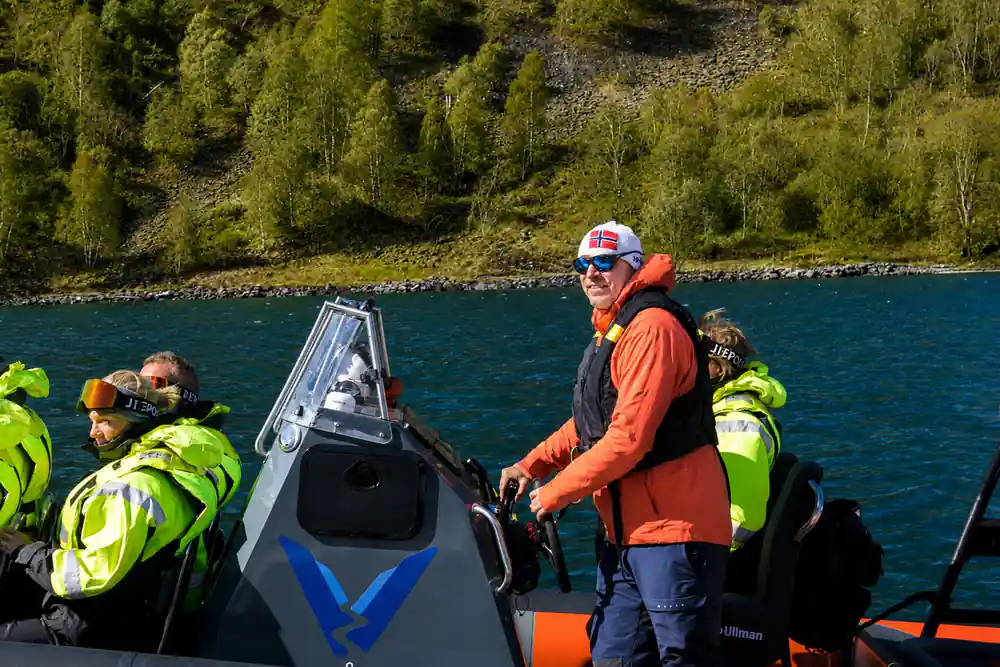
Steep walls, narrow water and a boat small enough to feel the fjord close up.
Waterfalls, Seals and Villages Along the Route
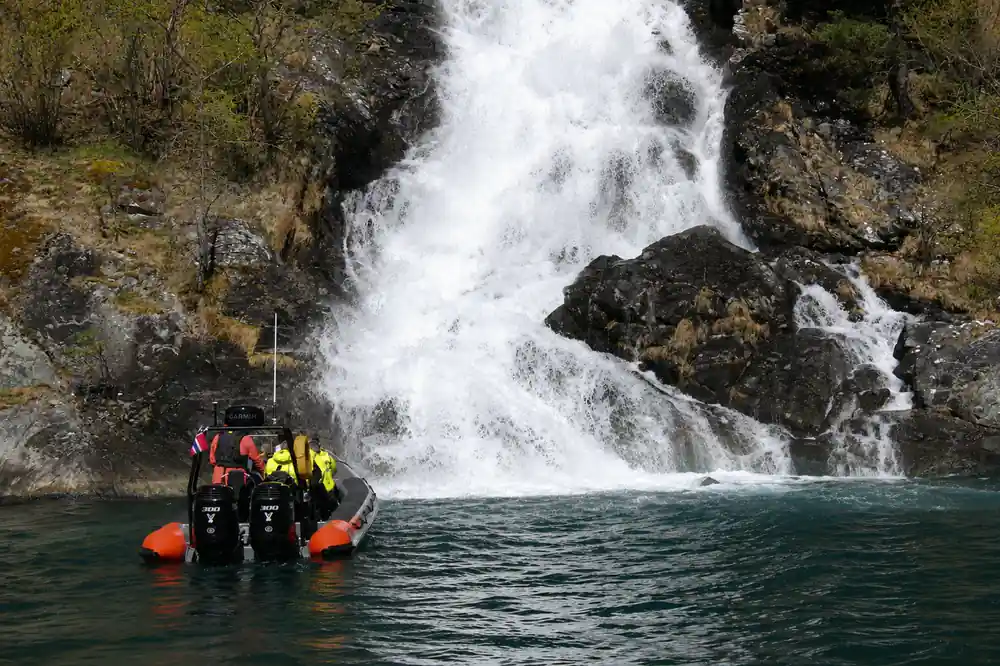
Waterfalls are the loudest part of the trip. Kjelfossen runs down at the head of the Nærøyfjord, with a free fall of 150 metres and a total drop of 840 metres.[3] In a small open boat you can often get close enough for the spray to reach the passengers, which is where waterproof clothing earns its place. The falls change character through the year, from a heavy curtain in early summer to a thinner ribbon later in the season.
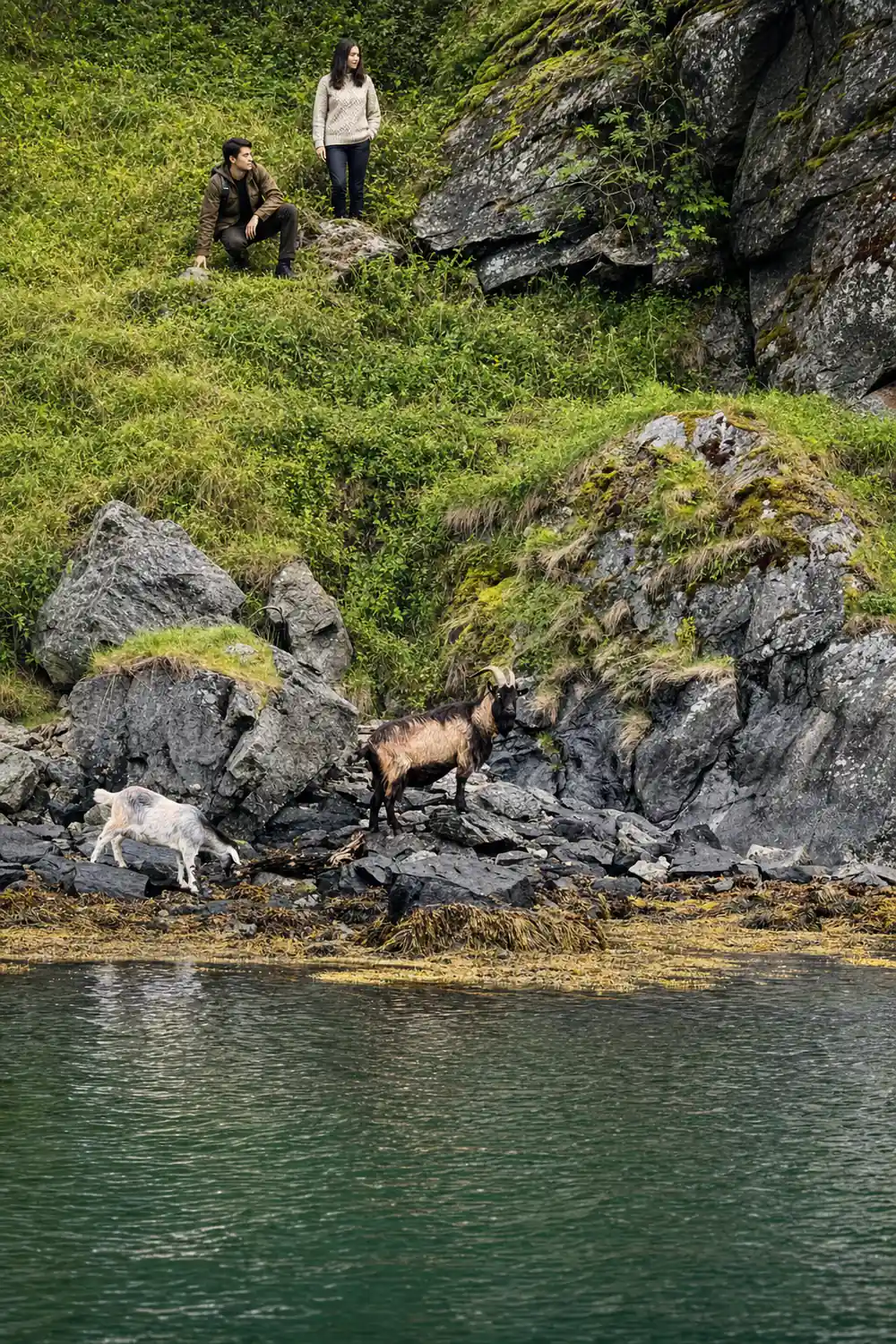
Wildlife is a bonus rather than a promise, but it is a real one. Both Aurlandsfjorden and Nærøyfjorden are important habitats for harbor seals, which are often seen basking on rocks or popping their heads out of the water.[8] Watch the low rocks near the shore as well as the open water, and keep voices down when the boat drifts close. Seals are curious, and a slow approach usually gives better views than a fast one.
At the far end of the narrow section sits Gudvangen, a small village with about 90 inhabitants.[12] Ferries, buses and coaches meet here, and it is the usual turnaround point for trips that run the fjord in one direction and return by road. Flåm, at the other end of the water, has the railway station and the harbour where boats tie up.
Nærøyfjord UNESCO Narrow Fjord Cruise Options from Flåm
A classic fjord cruise between Flåm and Gudvangen takes approximately two hours.[13] That timing is useful when you are assembling a day, because it leaves room for a railway trip, a viewpoint stop or a slow lunch without turning the whole day into one activity. It also means the trip is short enough for children, for anyone who feels the cold, and for travellers with a bus or a train to catch afterwards.
Much of the fleet on this stretch is quiet. The all-electric vessel Future of The Fjords operates on the itinerary between Flåm and Gudvangen.[14] Gliding through the narrow water with almost no engine noise is part of the appeal, especially in the tightest section where the cliffs throw sound back at you. If you are choosing between a cruise and a faster boat, the quiet is a genuine difference in how the fjord feels.
There are also shorter and cheaper ways onto the water. A Flåm afternoon cruise through Aurlandsfjord and Nærøyfjord starts from US$70 and takes 2 hours.[5] A full-day guided kayaking trip from Vossevangen starts from US$179 and takes 6 hours, for travellers who would rather paddle at water level than sit above it.[6] Each option shows you the same fjord from a different height and at a different speed.
from US$146
The Flåm RIB-boat experience runs for 2 hours with a live English-speaking guide, and is rated 4.91 from 129 reviews.[4]
The RIB Boat: Two Hours on the Water
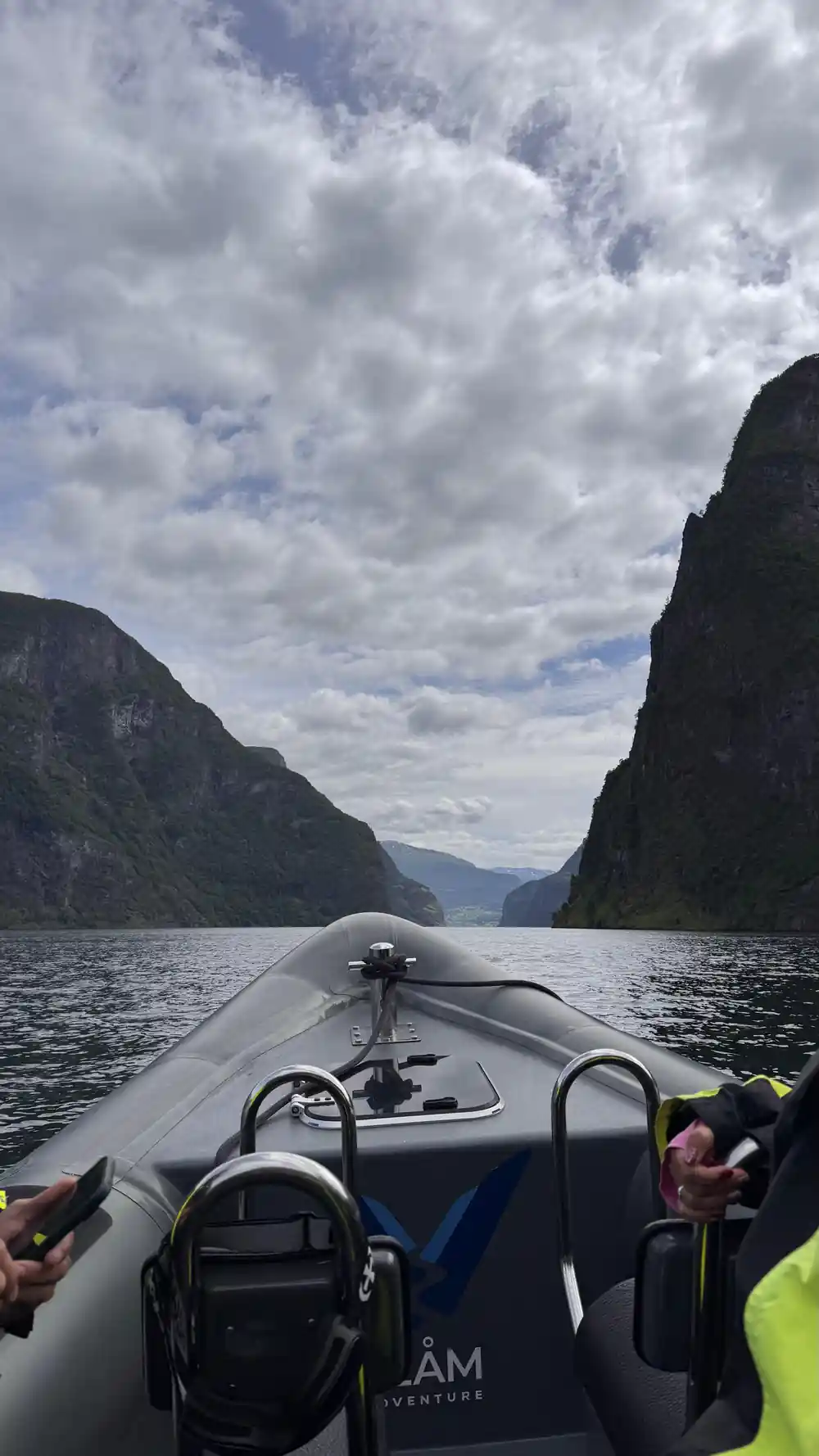
For speed, the Flåm: Nærøyfjord RIB-boat Experience and Waterfalls starts from US$146 per person and runs for 2 hours.[4] A RIB is a rigid inflatable boat, open, low and fast, and it covers the same water as the cruise boats in a much shorter time. That makes it a good fit for a packed itinerary: you get the narrow section, the waterfalls and the mountain walls without giving up the rest of your day.
It is well reviewed. The tour is rated 4.91 from 129 reviews, with a rating breakdown of Guide 5, Transportation 5 and Value for money 4.9.[4] Those are strong scores for any boat trip, and they come from travellers who have already done the ride in real conditions, from flat calm mornings to grey, drizzly afternoons. A live tour guide in English fills the quiet stretches between the fast ones.[4]
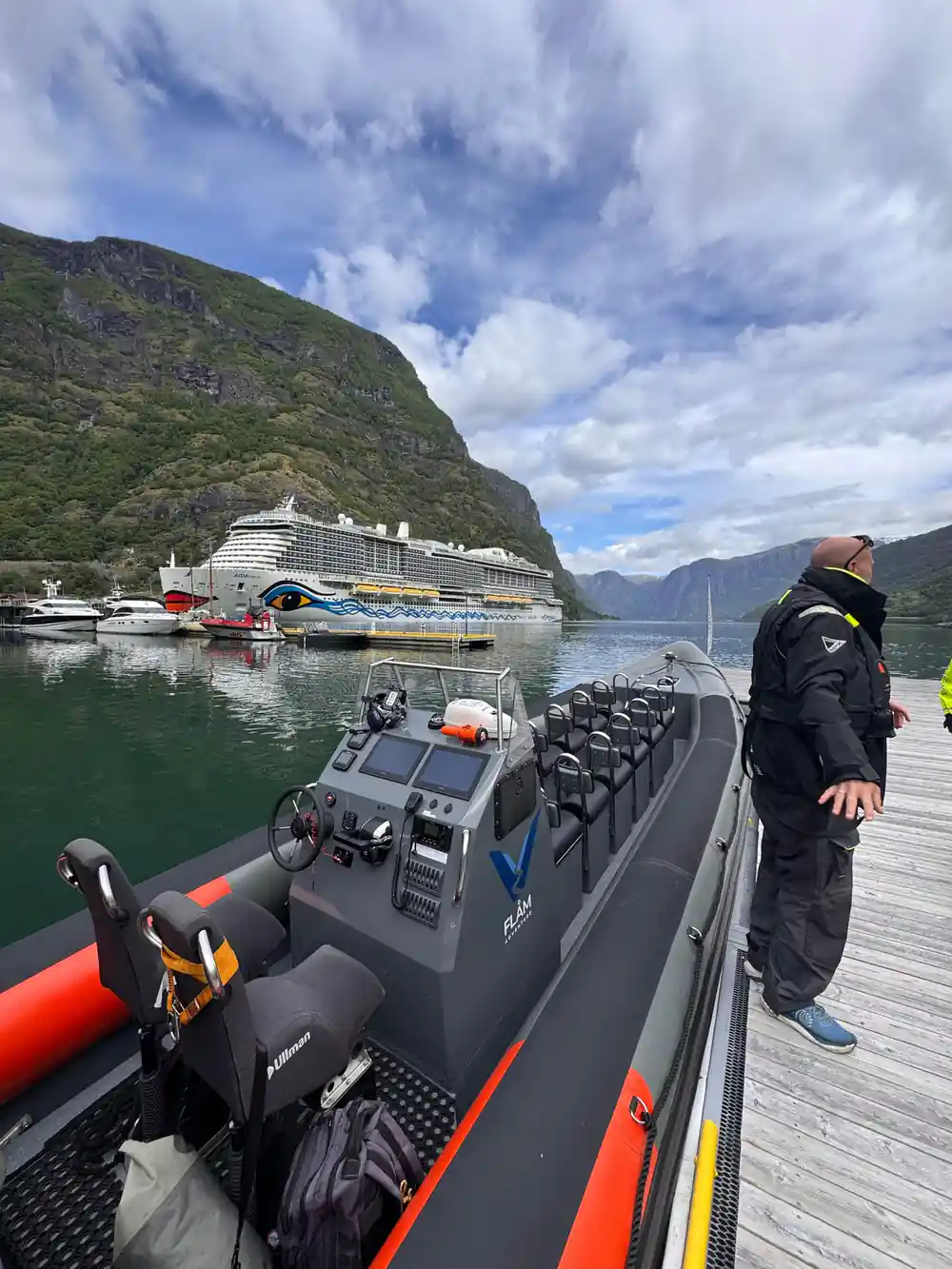
Expect a safety briefing, a survival suit and goggles before you leave the pontoon, then a skipper who knows the water and a guide who points out what you are passing as the boat moves. Sit towards the middle if you would rather stay dry, and hold on when the throttle opens. Photographs are easiest when the boat slows near a waterfall or a seal rock, so keep the camera to hand and out of the spray.
When to Go and What to Wear
Flåm's climate table gives a rough idea of what the seasons feel like here. Monthly average maximum temperatures run from 14°C to 30°C, with monthly minimums between 6°C and 22°C, and monthly rainfall from 22 mm to 84 mm.[7] Those are long-term averages rather than a forecast, so treat them as a packing guide and check a short-range forecast before you travel.
For an open boat, dress in layers and assume you will get damp from spray at some point in the trip. A thin base layer, a fleece, a windproof outer layer, sunglasses and a hat or buff for the fast sections will make the ride far more comfortable. Wear trainers or boots rather than sandals, and use a dry bag or a zipped pocket for a phone, since loose items slide on a wet deck.
Days are long in midsummer and short in midwinter, which changes how much of the fjord you see on an evening departure. Waterfall volume follows the melt, so early summer tends to be the noisiest time on the cliffs, while late summer and autumn usually bring calmer water and softer light. Both have their own appeal, and the water is worth seeing in any of them.
Getting to Flåm and Booking Your Slot
Flåm is the usual starting point, sitting at the inner end of Aurlandsfjord and connected by road, boat and rail. The Flåm Railway is one of the steepest railroads in the world, climbing from 2 meters to 867 meters above sea level at a 5% gradient, so arriving by train turns the journey into part of the day out.[15] If you come by car or coach, the drive down towards Gudvangen is a slow, switchbacked descent with viewpoints along the way.
Booking is flexible on the RIB boat trip. You can reserve now and pay later, and cancel up to 24 hours in advance for a full refund.[4] Check availability to see starting times before you fix a date, then build the rest of your day around the slot you choose.[4] With a duration of 2 hours, the boat still leaves plenty of the day free.[4]
If you are coming from Bergen or Oslo, the fjord is usually one leg of a longer loop, and it works well to pair a boat trip with the railway or a viewpoint stop on the same day. Booking the boat first, then filling in the rest, keeps the tightest part of the schedule fixed. A live guide in English runs the trip, so you can ask about the villages, the geology and the waterfalls as you go.[4]
Flåm average monthly maximum temperature
Monthly average maximum temperatures for Flåm, taken from Weathermondo's climate table.[7]
Nærøyfjord tours: from-prices in US dollars
US dollar from-prices per person: US$146[4], US$70[5], US$179[6], US$100[16]. Each listing gives one from-price per person, so the same figure is entered for both fields.
Booking and cancellation at a glance
How to plan your fjord day
Choose your boat
RIB, electric cruise or kayak: each gives you the same fjord at a different speed and height.
Book the slot
Reserve now and pay later, and you can cancel up to 24 hours in advance for a full refund.[4]
Plan your arrival
The Flåm Railway climbs from 2 meters to 867 meters above sea level at a 5% gradient.[15]
Dress for spray
Layers, a windproof shell, sunglasses and shoes that can get wet will keep an open boat comfortable.
Watch the cliffs
Kjelfossen drops at the head of the fjord with a free fall of 150 metres and a total drop of 840 metres.[3]
See the Nærøyfjord up close on a RIB boat from Flåm
from US$146Reserve now & pay later