If you read nothing else
- Everything you wear ends up under a bulky outer suit, so thin wool or fleece beats a puffy jacket. Think about what you would wear for a cold, windy walk.
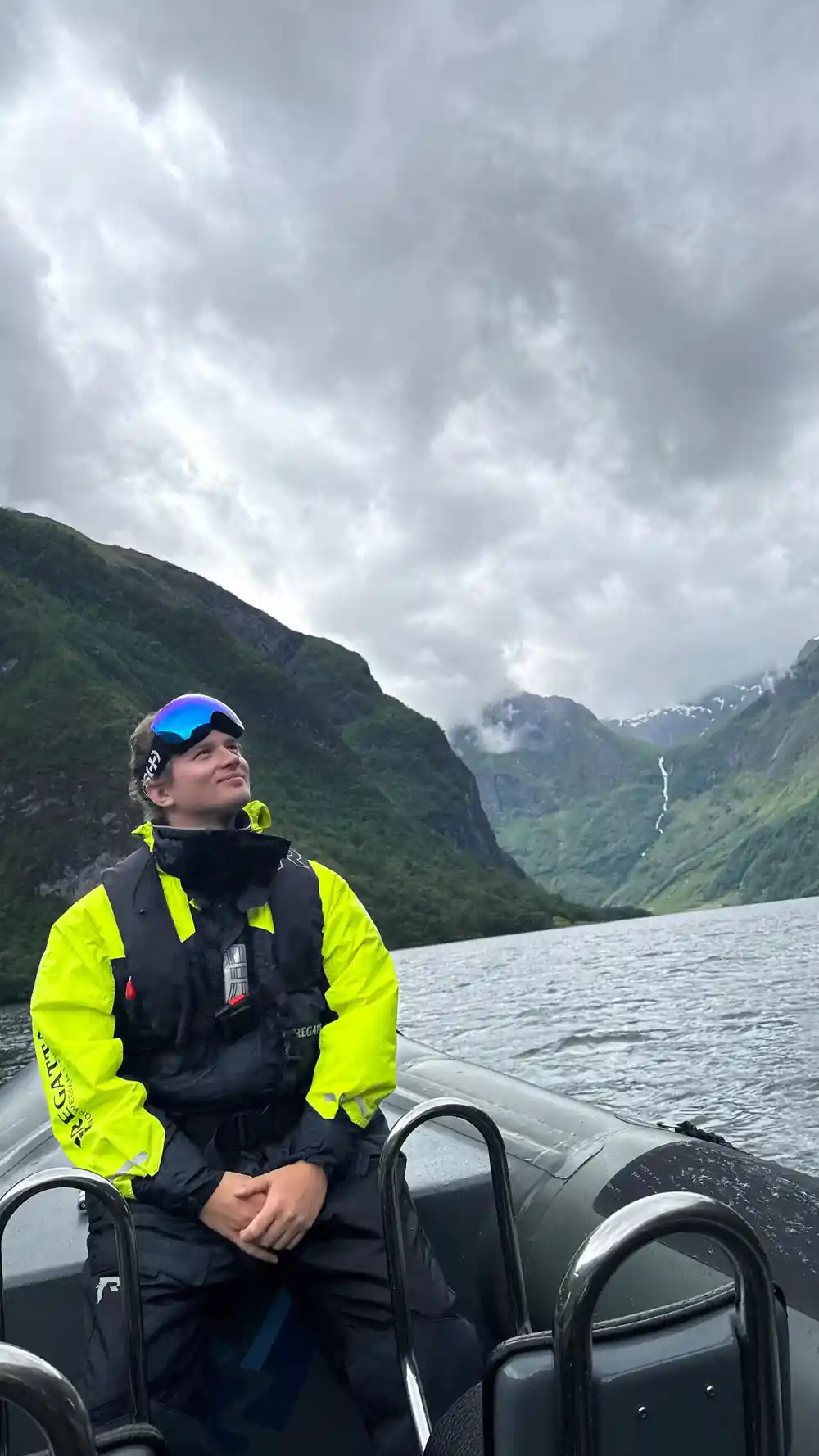
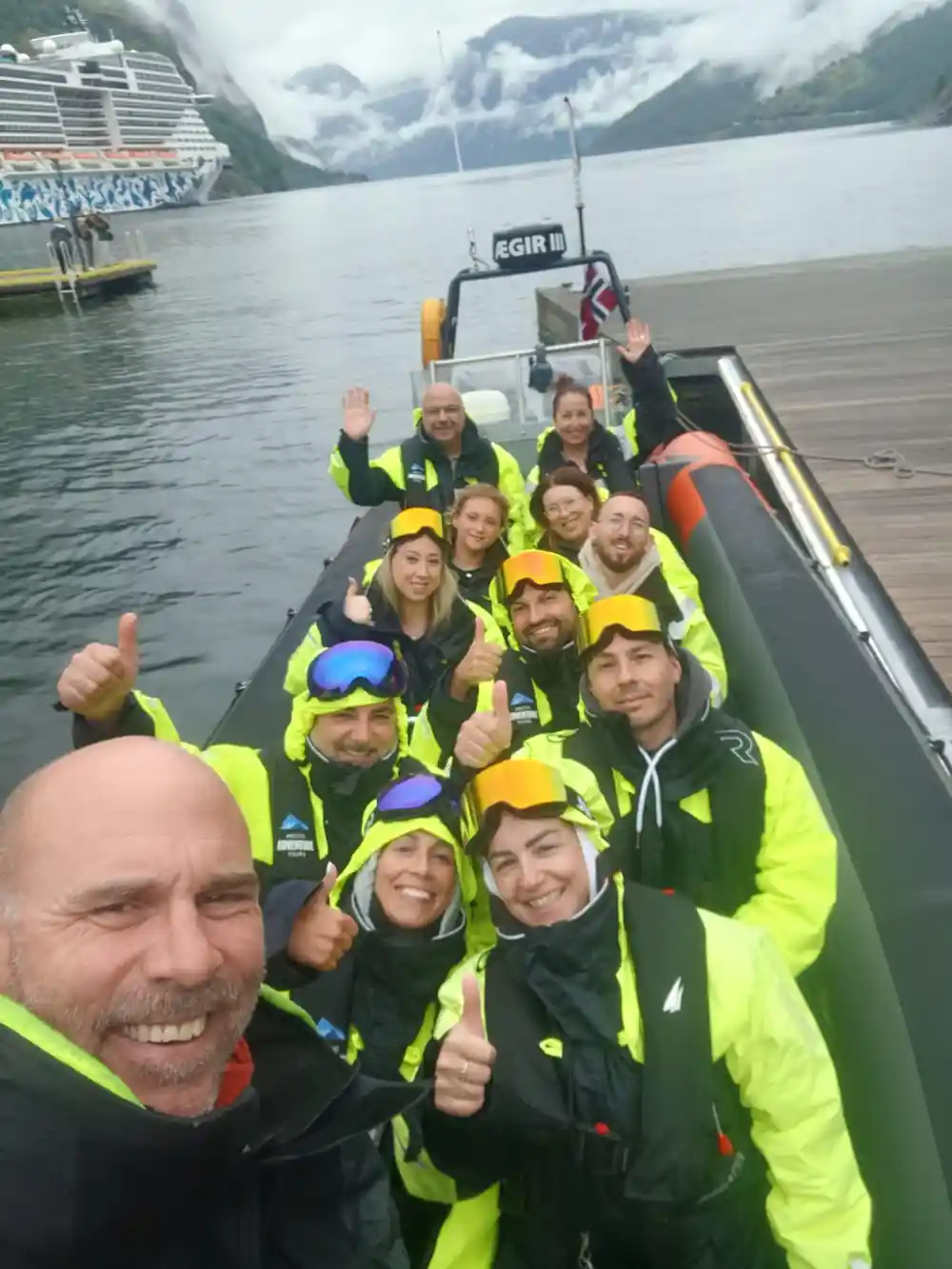
- The trip photos show passengers zipped into flotation suits with goggles, so plan your own clothes as the layer underneath rather than as your outer protection.
- Arrive early enough to find the meeting point at Flåm harbour, use a toilet, stow bags and get suited up without rushing. Your booking confirms the time and place.
- You need to sit astride a saddle seat, hold on and lean into the turns. If anyone in your group has a back or neck problem, ask the operator before booking.
- Salt spray and speed are unkind to loose kit. A zipped pocket inside the suit or a waterproof pouch on a neck strap keeps a phone usable and safe.
| Warm summer day | Cool, wet day | Winter and shoulder season | |
|---|---|---|---|
| Base layer | Thin wool or synthetic tee | Long-sleeve wool or fleece | Wool base layer top and leggings |
| Mid layer | Light fleece or thin jumper | Fleece plus a thin down vest | Two fleeces, one as a spare |
| Legs | Trousers, but not jeans | Trousers with thin leggings under | Wool leggings under trousers |
| Head and hands | Cap and thin gloves | Beanie and lined gloves | Balaclava and thick mittens |
| Flåm average high (Jul / Sep / Jan) | High 30°C, low 22°C[1] | High 27°C, low 19°C[1] | High 14°C, low 6°C[1] |
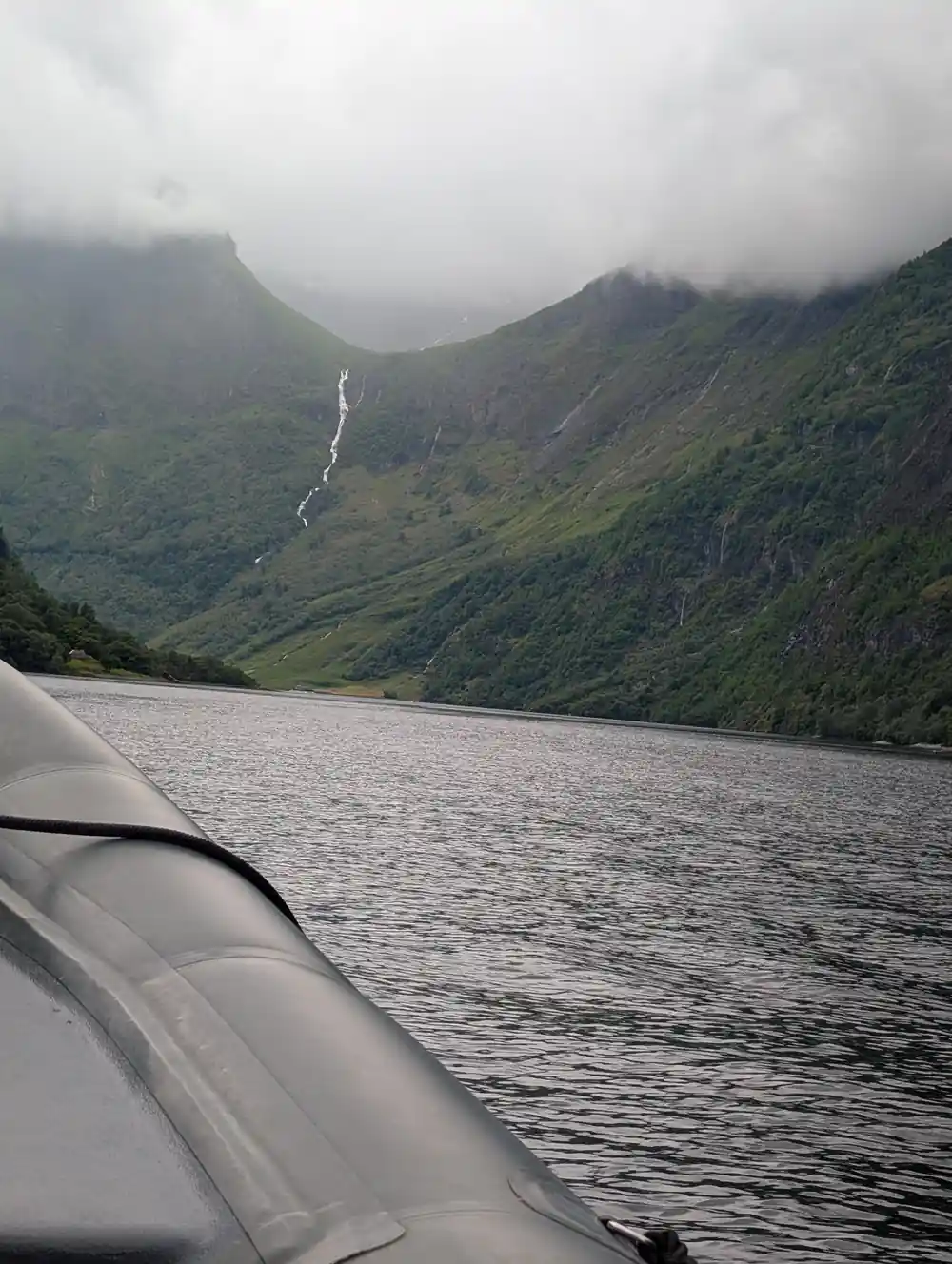
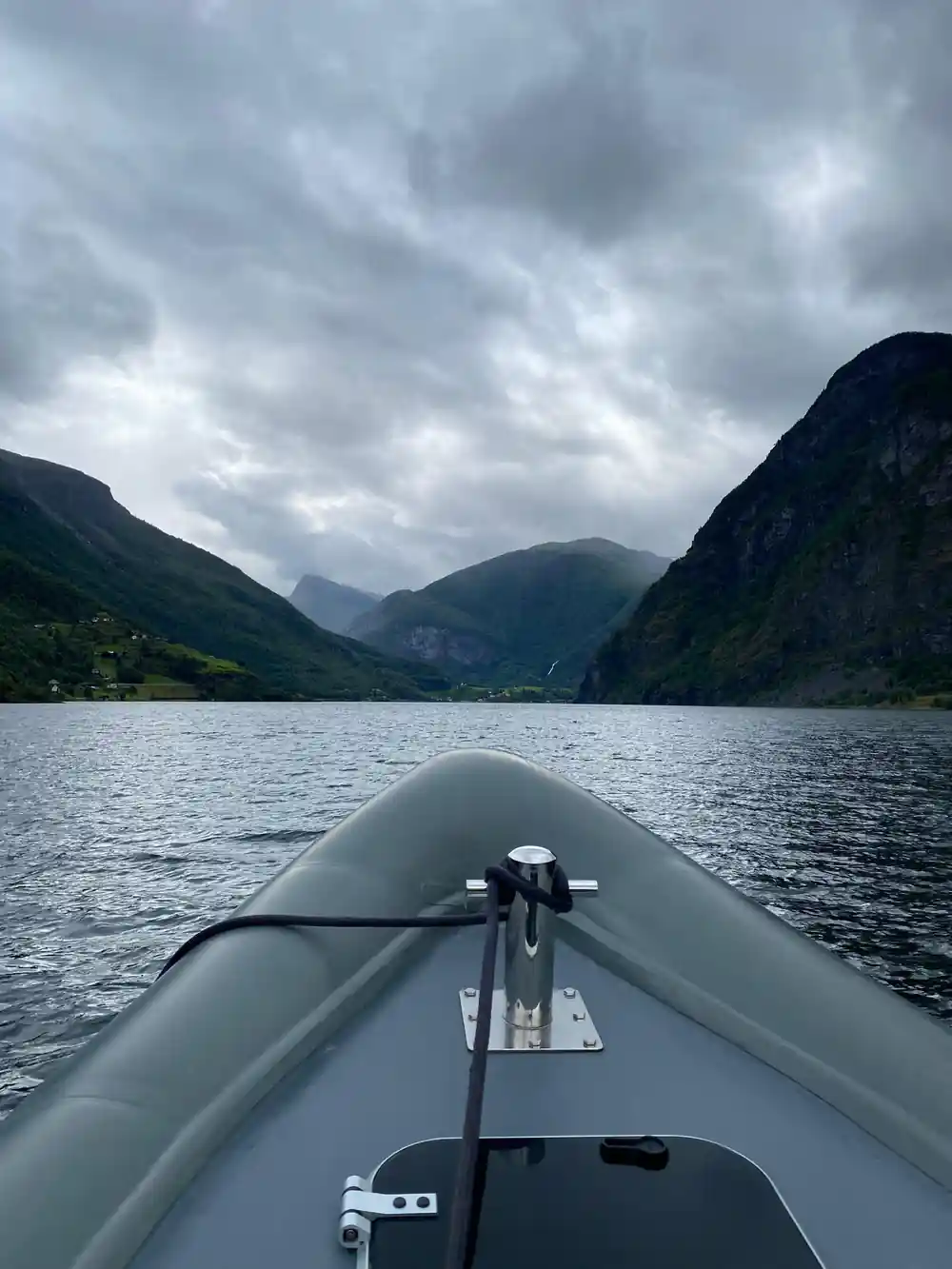
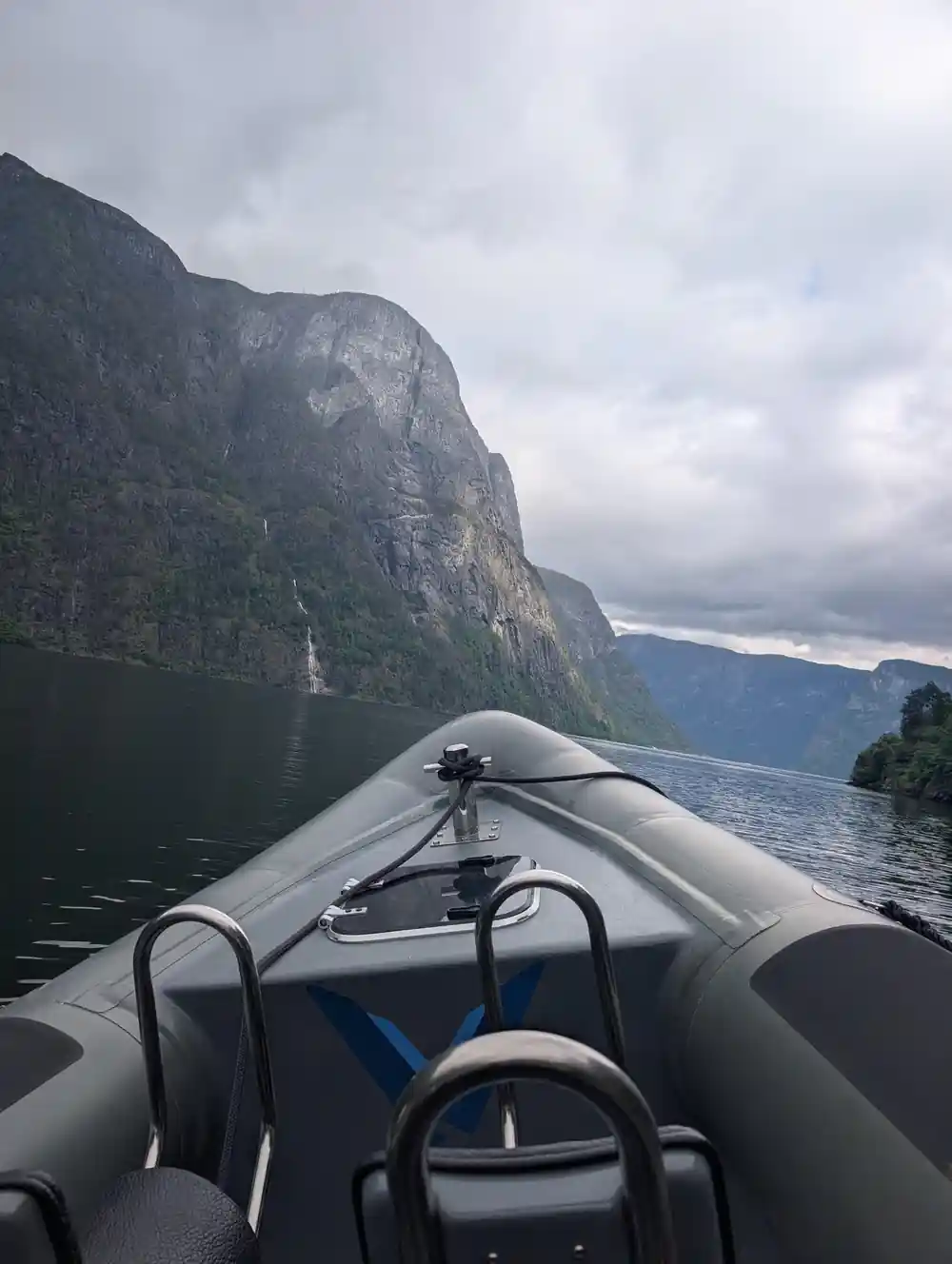
The Nærøyfjord is unique with steep mountain inclines, ascending 1800 metres high, wild waterfalls, and a living cultural landscape.
Our verdict on the Nærøyfjord RIB boat
What to wear on the water
- Thin wool or fleece base layer instead of a bulky jacket
- Sunglasses or goggles for the glare coming off the fjord
- Gloves and a hat that stays put, even on a mild summer day
- Trainers or sturdy shoes with grip, not sandals
Before you board
- Arrive with time to find the harbour and use a toilet
- Have your booking confirmation ready on your phone
- Check the forecast and your onward train or ferry time
- Tell the operator about back, neck or mobility issues when you book
What the operator hands you on the day
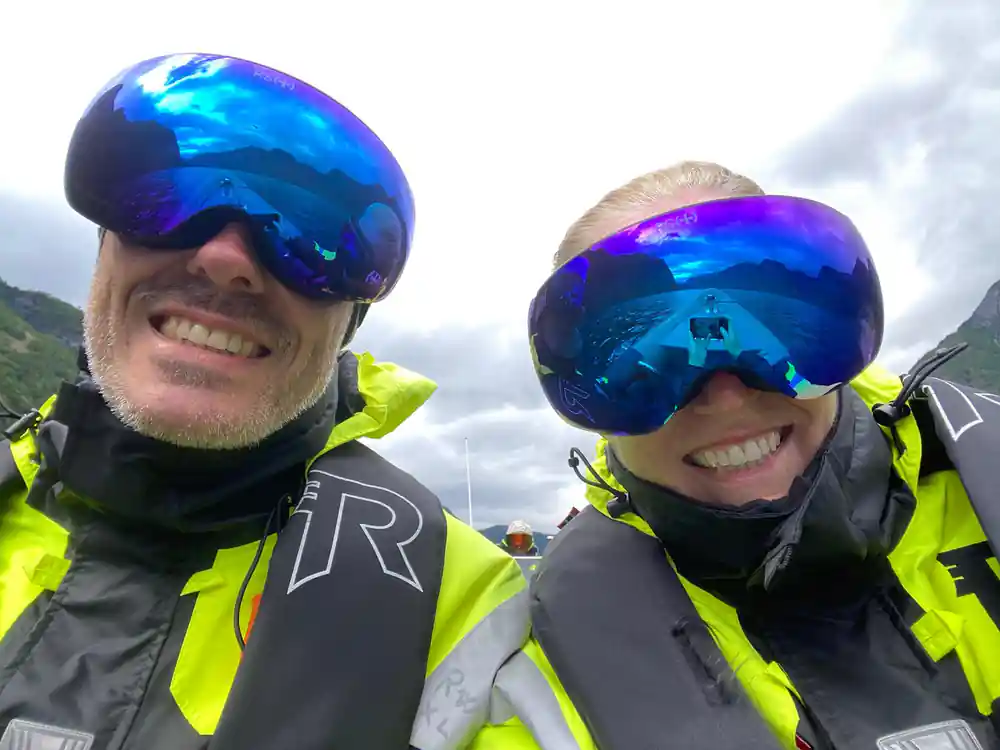
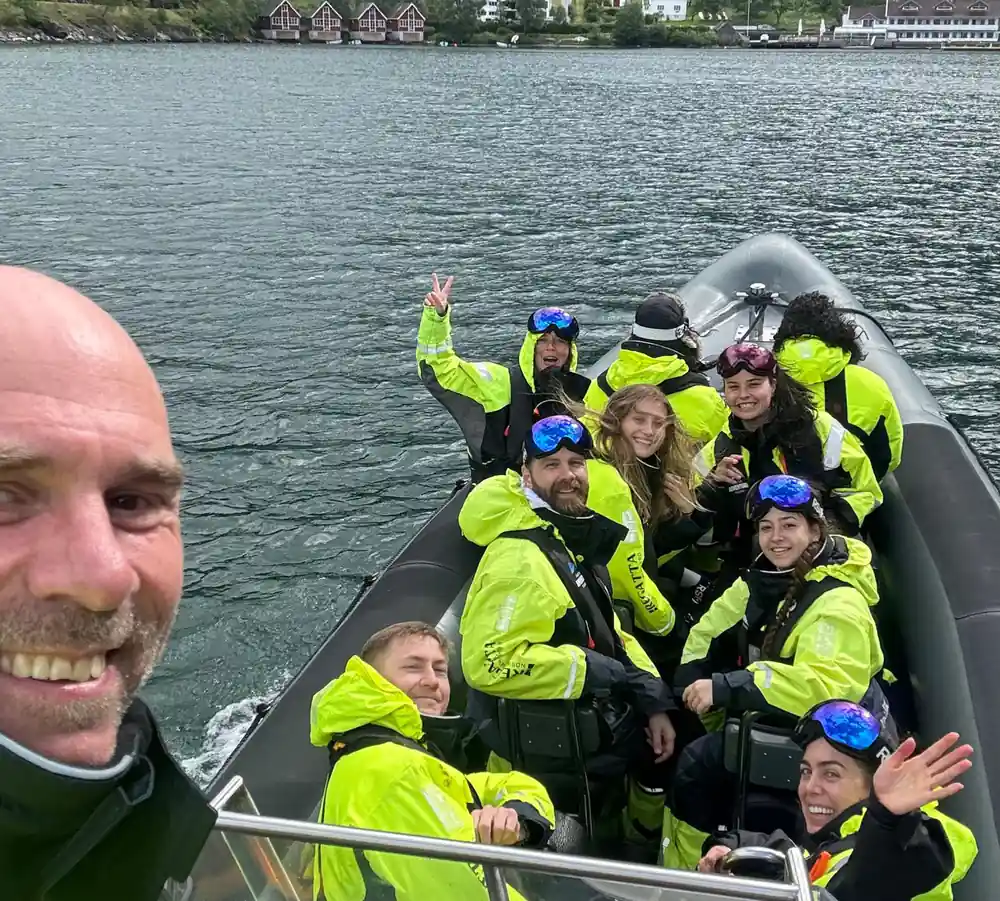
Look at the photographs from this trip and the shape of the day is obvious. Passengers sit zipped into thick one-piece flotation suits with goggles pushed up on their faces, the skipper stands at the wheel, and the fjord walls slide past close enough to touch. A RIB sits low in the water and travels fast, so your outer layer is not really your own decision, and that is a good thing: the suit takes the spray so your clothes do not have to.
What you control is everything underneath. A flotation suit blocks wind and spray, but it does not make heat of its own, so a thin warm layer against your skin does more good than a heavy coat. Wool or a synthetic thermal top works well. A padded jacket worn under a suit only makes you bulky and awkward when you climb aboard and settle onto a saddle seat.
One more thing worth knowing before you plan your outfit: you will be standing, sitting and turning on a moving boat, so nothing should be so tight that you cannot move your arms, and nothing should be so loose that the wind can catch it. Comfort beats style on the water every time.
What to wear underneath, layer by layer
Think in thin layers rather than one thick one: a base layer that wicks, a light fleece or thin jumper, and trousers that are not jeans. Denim soaks up water and stays cold against your legs for the rest of the day. Leggings or walking trousers worn under the outer suit are far more comfortable and let you swing a leg over the seat without a fight.
Flåm's climate table lists average maximum temperatures of 14, 16, 17, 19, 23, 27, 30, 30, 27, 23, 18 and 16°C from January to December, and average minimum temperatures of 6, 7, 9, 11, 15, 19, 22, 22, 19, 15, 10 and 7°C.[1] Check those numbers against your own travel month when you pack; the layer that feels right in one season can be wrong in another.
Rainfall is worth a glance as well: the same table lists 46, 34, 46, 64, 43, 23, 22, 75, 77, 84, 61 and 25 mm across the months.[1] You will get wet from spray on a RIB whatever the forecast says, and you may well get wet on the walk to the boat, so a spare dry top in your bag for afterwards is never wasted.
In winter and the shoulder months, add a second fleece and a spare pair of gloves. In high summer, many people are comfortable in a long-sleeve top and light trousers with a thin fleece packed as backup. It is the layers you can add or remove that make the difference, not one heroic jacket.
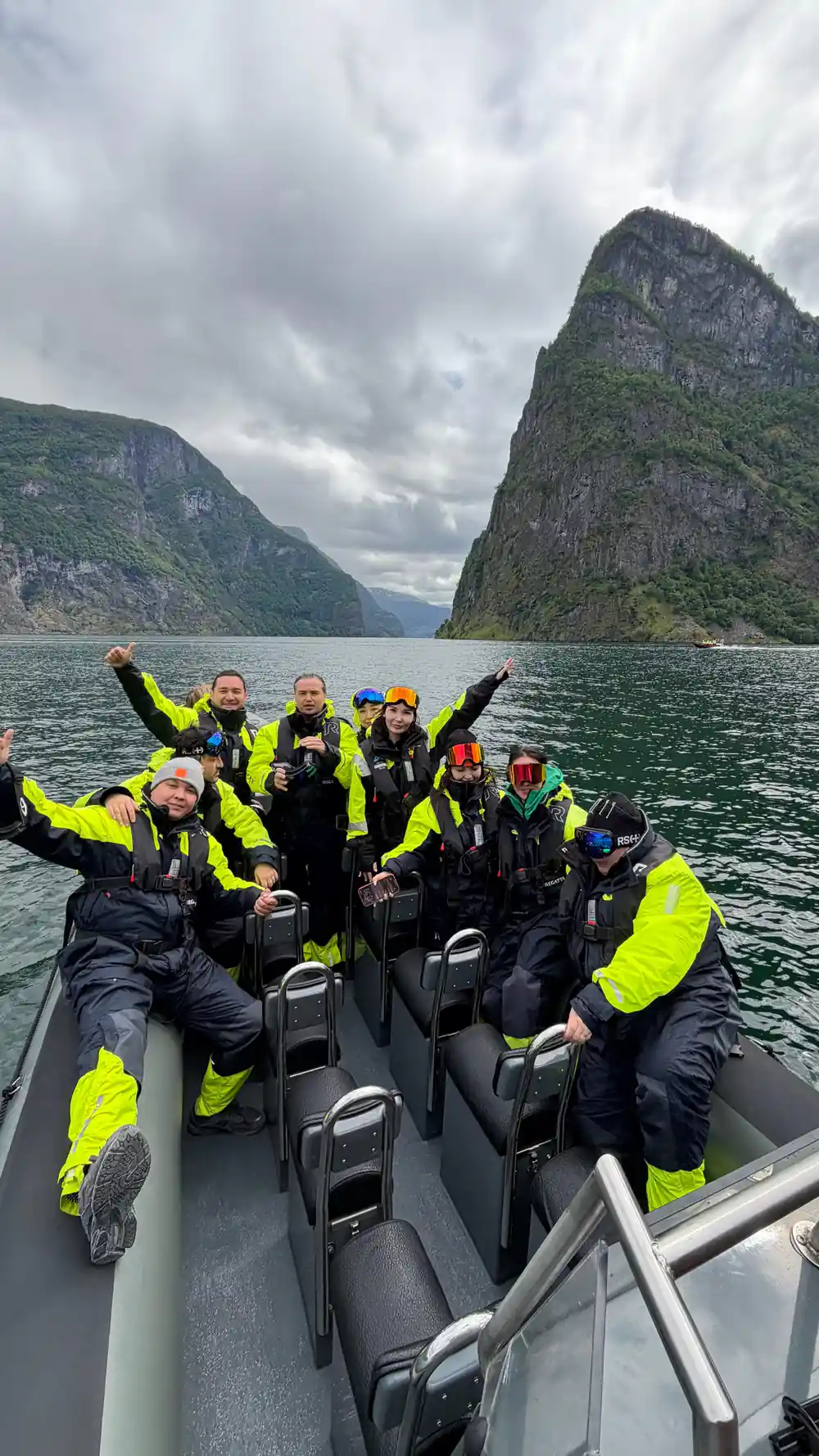
Passengers in flotation suits and goggles wave from a RIB on the Nærøyfjord
Hands, head, feet and eyes
Your hands take the worst of it. You will be gripping a rail or a handle for much of the ride, so thin gloves beat bare hands and windproof or waterproof gloves beat thin ones. A hat that stays put under a hood, or a buff around the neck, makes a surprising difference once the boat is moving.
Footwear should be flat, closed and grippy. Sandals and loose slip-on shoes are a poor match for a wet pontoon and a low boat with a step down into it. Sunglasses or goggles cut the glare coming off the water and keep spray out of your eyes, and a strap means they stay with you when the boat turns.
If you wear contact lenses, consider glasses for the trip instead, or bring a spare pair, because a face full of salt water is not the moment to be searching for a lens. Sunscreen on exposed skin is worth packing too, since the light bouncing off the water is strong even when the air is cool.
The thirty minutes before departure
The time around the ride matters more than people expect. Find out where the boat leaves from before the day starts, use a toilet on shore, and eat something small if you are prone to feeling motion. Flåm can be busy when ferries, cruise tenders and the railway all empty at once, so being early beats being rushed.
Once you are suited up, think about pockets. Anything you carry on board should be zipped away or strapped to your body. Bags you do not need can often be left behind, so ask the crew where to put them before you climb down to the boat rather than juggling a rucksack on the pontoon.
Check the forecast on the morning of your trip and dress for the sea rather than for the village. Then check your onward train or ferry time. Arriving back damp and windblown is far more enjoyable when you are not also about to miss a connection.
from US$146
is the from-price of the Flåm: Nærøyfjord RIB-boat Experience & Waterfalls, rated 4.91 from 129 reviews.[2]
Who this ride suits, and who should ask first
You do not need any experience for a RIB trip. You do need to be able to step down into a boat, sit astride a saddle seat, hold on with both hands and lean with the turns. If you can manage a bumpy bus ride and a few steps, you will probably be fine, and the guide is there to help anyone who is unsure.
Anyone with a back or neck problem, a recent injury, a heart condition or a pregnancy should ask the operator before booking rather than after. That is a question for the people who run the boat, who know the sea state on the day and can tell you honestly whether the trip suits you. Asking in advance costs nothing and saves awkwardness at the harbour.
The tour listing shows a live guide who speaks English and a duration of 2 hours, with free cancellation up to 24 hours in advance.[2] Families travelling with children should ask about ages and about life jackets in children's sizes when they book, and anyone worried about moving around a small boat should raise that at the same time.
Cameras, phones and everything else you carry
Spray and speed are unkind to loose gear. A phone in a waterproof pouch on a neck strap is easy to use and hard to drop. A camera with a strap around your neck, tucked inside the suit between shots, will survive the trip, while one held out over the water at arm's length may not.
Think about what you actually need on board: a phone, perhaps a small camera, a tissue, a lip balm. Everything else can stay in the car, at your accommodation or in a bag on shore. Gloves with touchscreen fingertips save you from peeling them off every time you want a photograph.
A small dry bag is a good home for a spare layer and a snack for afterwards, and it keeps a passport or a train ticket out of the wet. Salt water gets into everything, so rinse what you can at the end of the day.
After the ride: drying out and carrying on
You come off the water windblown, possibly damp and very likely grinning. Flåm is small, with a harbour, a railway station and a few places to eat, so a hot drink and a change of socks is a sensible next move before you board anything else. Keep an eye on the water as well: both Aurlandsfjorden and Nærøyfjorden are important habitats for harbour seals, which are often seen basking on rocks or popping their heads out of the water.[3]
If the day is still young, the Flåm Railway climbs from 2 meters to 867 meters above sea level at a 5% gradient, a fine contrast with a fast boat on flat water.[4] Gudvangen, at the head of the fjord, has about 90 inhabitants.[5] A one-way cruise between Flåm and Gudvangen takes approximately two hours, so a slow boat in one direction and a RIB in the other is easy to arrange.[6]
The Nærøyfjord is 20 km long and only 250 meters across at its narrowest point, and from a low boat those walls feel very close indeed.[7] The steep mountain inclines above the water rise to 1800 metres.[8] The West Norwegian Fjords, which include the Nærøyfjord, were first recognised as a UNESCO World Heritage Site in 2005.[9]
Average monthly maximum temperature in Flåm
Average maximum temperatures for Flåm from Weathermondo's climate table, which lists values for each month from January to December.[1]
From-prices for fjord trips around Flåm
US dollar from-prices for these GetYourGuide listings; child rates are not listed.[2][10][11][12]
When to book the RIB ride
Getting ready for the ride
Book with the weather in mind
Pick a departure that leaves slack in your day. Free cancellation up to 24 hours in advance gives you room to change plans.[2]
Dress in thin layers
Base layer, light fleece, trousers that are not jeans. Everything sits under the outer suit, so bulk only makes moving around harder.
Sort hands, head and eyes
Gloves, a hat that stays put, and sunglasses or goggles. These three do more for your comfort than any extra jumper.
Pack light for the boat
Phone in a waterproof pouch, camera on a strap, nothing loose in open pockets. Leave the rest of your bag on shore.
Turn up early
Find the meeting point, use a toilet, eat something small and be suited up before the group is called down to the pontoon.
Ready to see the Nærøyfjord from water level?
from US$422Reserve now & pay later