If you read nothing else
- Snowmelt keeps the waterfalls loud and the fjord cold and green. Flåm's climate table lists average maxima of 19°C in Apr and 23°C in May.[1]
- The reliable stretch, with every transport link running. Rainfall on the table drops to 23 mm in Jun and 22 mm in Jul.[1]
- Colour and lower light. The table lists 27°C average maximum in Sep and 23°C in Oct, with 77 mm and 84 mm of rain.[1]
- Wind, not rain, is what stops boats on the fjord. The RIB tour allows free cancellation up to 24 hours in advance for a full refund.[2]
- The RIB trip takes 2 hours, and the one-way Flåm to Gudvangen cruise takes approximately two hours.[2][3]
| Late spring | High summer | Autumn | |
|---|---|---|---|
| Average high | 19°C Apr, 23°C May[1] | 30°C Jul, 30°C Aug[1] | 27°C Sep, 23°C Oct[1] |
| Rainfall | 64 mm Apr, 43 mm May[1] | 23 mm Jun, 22 mm Jul[1] | 77 mm Sep, 84 mm Oct[1] |
| Waterfalls | Meltwater at full volume | Steady, thinning flow | Refilling after summer |
| Daylight | Evenings opening up | Long, bright midsummer nights | Sunset earlier each week |
| Pack this | Warm layer, waterproof shell | Sunglasses, thin layers, rain jacket | Fleece and gloves for the boat |
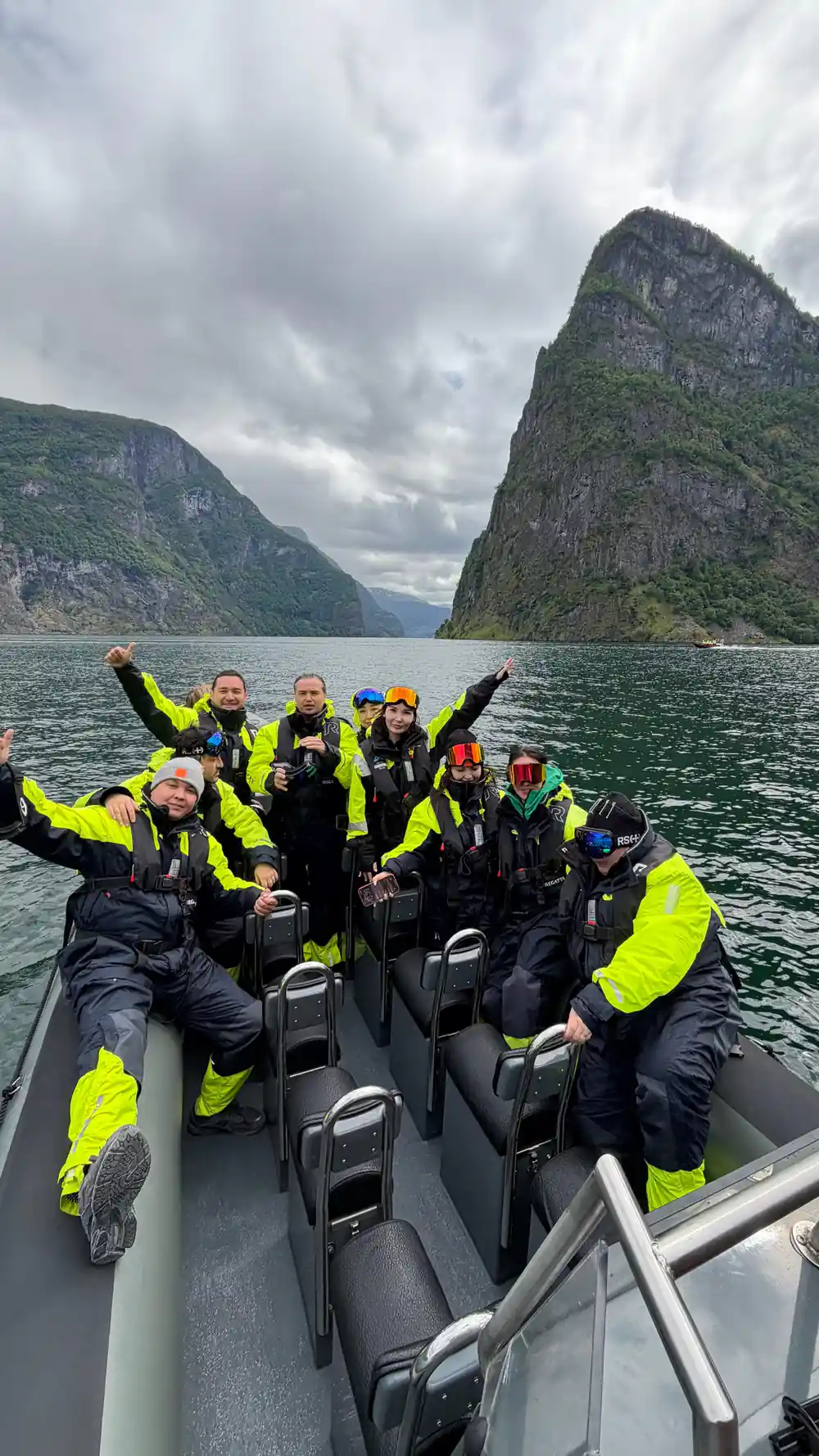
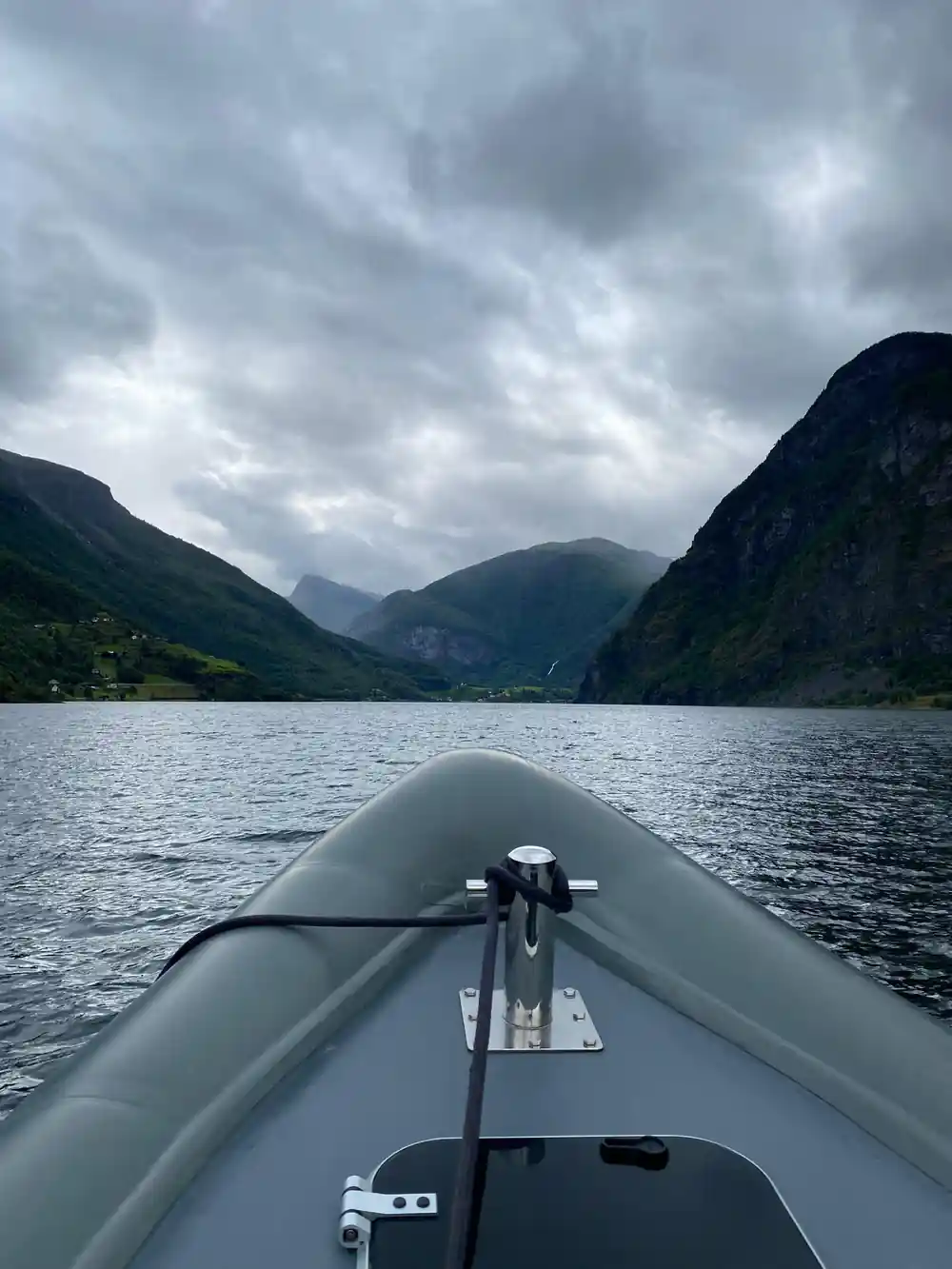
The Nærøyfjord is unique with steep mountain inclines, ascending 1800 metres high, wild waterfalls, and a living cultural landscape.
Our verdict: late spring or early autumn
Things to check
What Actually Changes Across the Year
The Nærøyfjord is 20 km long and only 250 meters across at its narrowest point, and the steep mountain inclines above it ascend to 1800 metres high.[7][8] It is a narrow, walled channel, and small changes in season read loudly on it. The fjord sits inside the West Norwegian Fjords UNESCO World Heritage Site, first recognised in 2005.[9] Its shape is glacial in origin: a fjord is formed when a glacier retreats after carving its typical U-shaped valley and the sea fills the resulting valley floor.[10]
Three things move together through the year. Meltwater changes how much water pours off the slopes. Daylight changes how long you can be out on it. And the traffic on the water changes with the season. Flåm's climate table lists monthly average maximum temperatures of 14, 16, 17, 19, 23, 27, 30, 30, 27, 23, 18 and 16°C from Jan to Dec, minimum temperatures of 6, 7, 9, 11, 15, 19, 22, 22, 19, 15, 10 and 7°C, and rainfall of 46, 34, 46, 64, 43, 23, 22, 75, 77, 84, 61 and 25 mm.[1] The rainfall column deserves as much attention as the temperature, because wet weeks change a fjord day more than a few degrees do.
The Nærøyfjord opens off the Aurlandsfjord, which is an arm of the Sognefjord, where the deepest part reaches 1300 meters.[11] Scale is hard to judge from the water until something gives you a measure. Gudvangen, at the inner end, has about 90 inhabitants.[12] A village that size is a useful yardstick against walls that climb far above it.
Late Spring: The Powerful Version
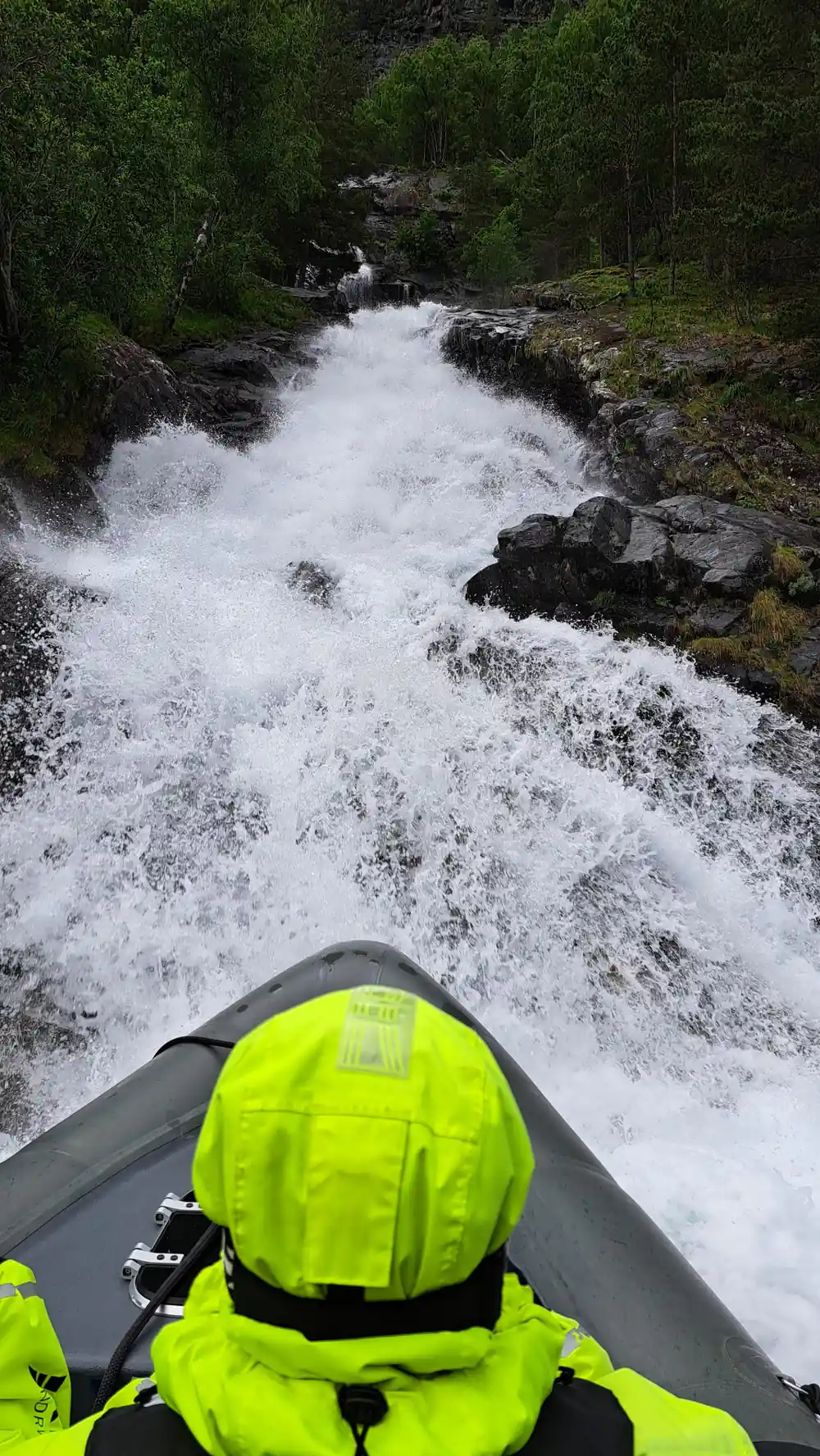
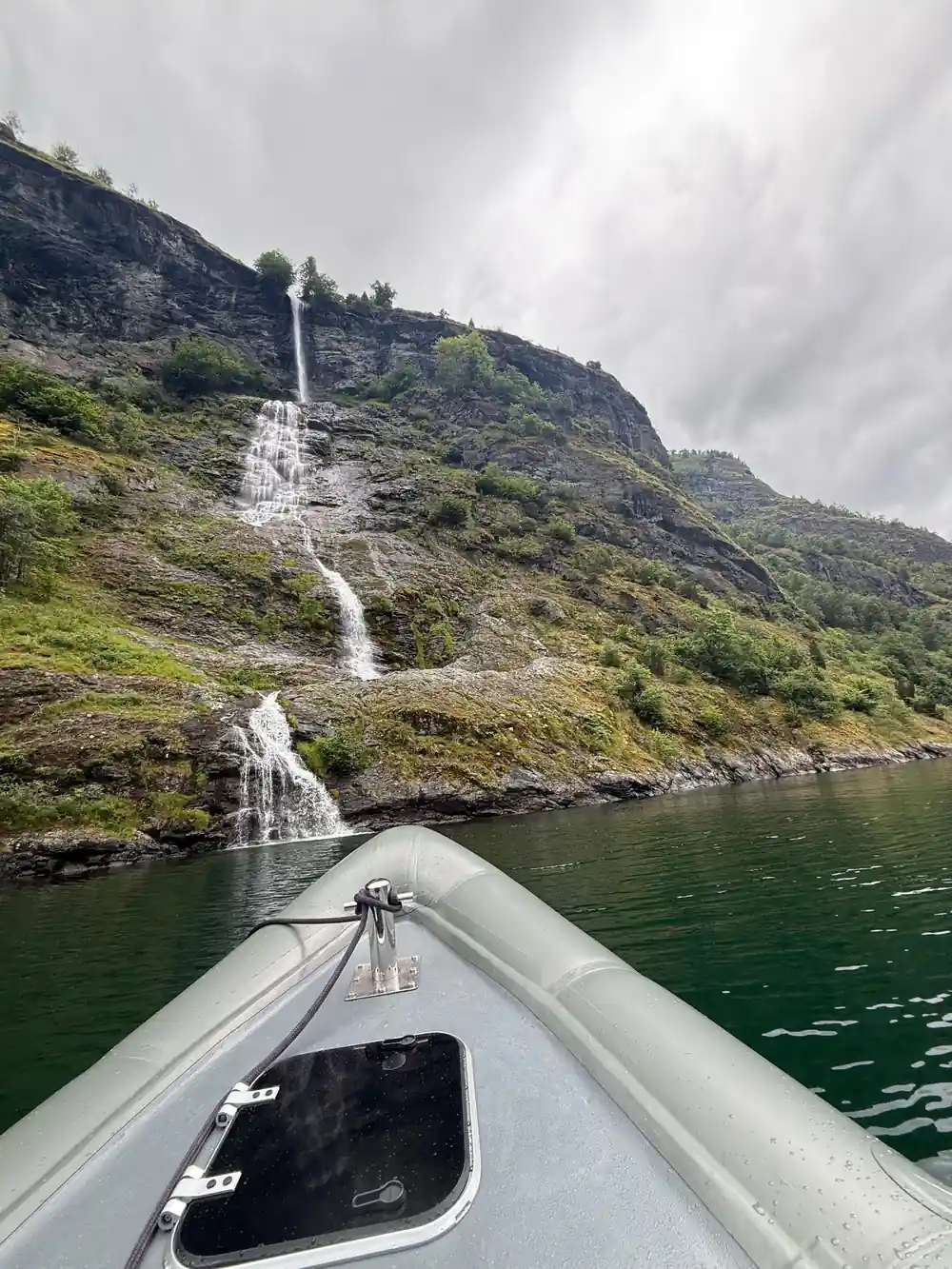
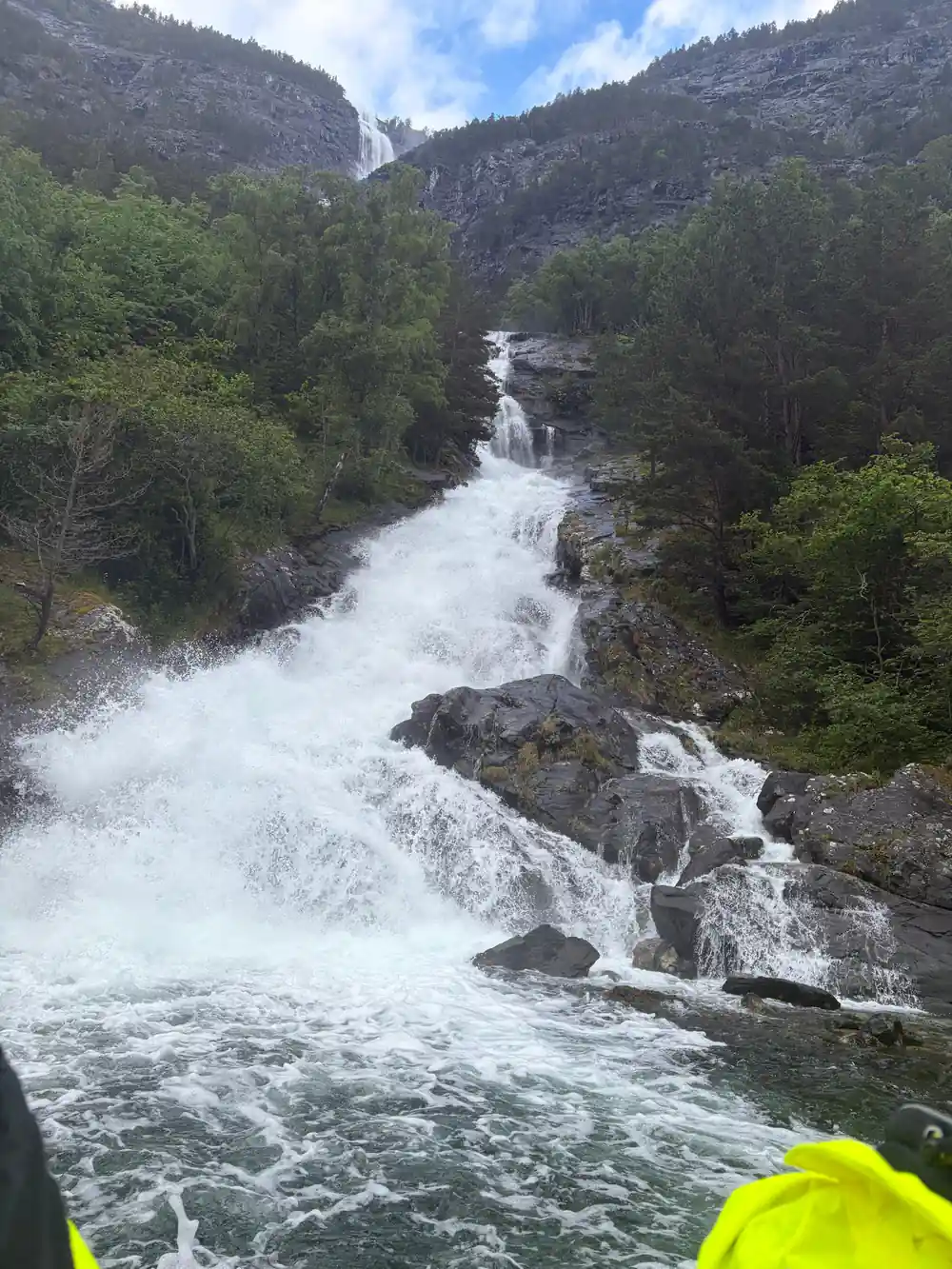
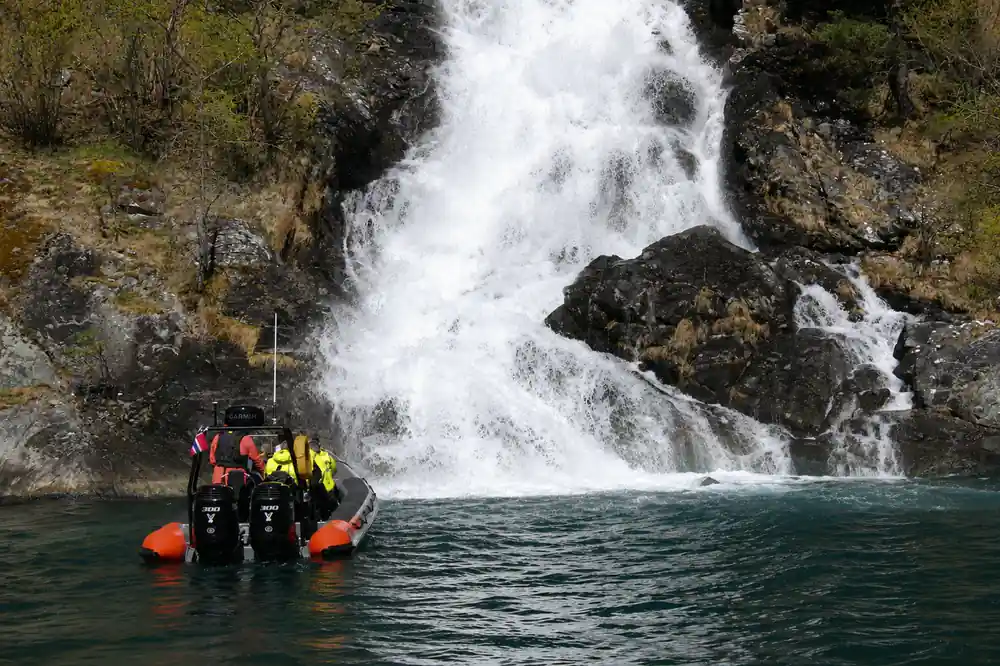
Late spring is when the fjord sounds loudest. Snow above the walls is going, and every gully carries water down to the fjord. Kjelfossen runs down at the head of the Nærøyfjord and has a free fall of 150 metres and a total drop of 840 metres.[13] On a RIB you get close enough to feel the spray and hear the water hit, rather than watching it from a deck a long way off.
The trade is cold air and unsettled weather. Flåm's climate table lists an average maximum of 19°C in Apr and 23°C in May, with rainfall of 64 mm and 43 mm in those two months, and average minima of 11°C and 15°C.[1] A warm mid layer under the flotation suit makes the difference between watching the fjord and hiding from it. Mornings are the coldest part of the day on the water, and they are also the calmest.
Book the boat before you fix anything else. The RIB experience runs for 2 hours from Flåm, and starting times appear when you check availability.[2] Around it you can fit the railway, a walk through the village or a slow lunch, and late spring often leaves you a spare morning if one turns grey.
A RIB running fast past a village at the edge of the fjord
High Summer: The Reliable Version
Midsummer is the easiest version of the fjord. The light lasts late into the evening, the water is often glassy early in the morning, and the links between Flåm, Gudvangen and the railway all run. Villages, piers and viewpoints work at full stretch, and a day spent moving between them feels straightforward rather than improvised. The Flåm Railway climbs from 2 meters to 867 meters above sea level at a 5% gradient.[14]
The climate table supports the reputation for settled weather. It lists 23 mm of rain in Jun and 22 mm in Jul, with average maxima of 27, 30 and 30°C for Jun, Jul and Aug, and average minima of 19, 22 and 22°C.[1] A climate table of averages is not a forecast, and a wet afternoon is possible in any week of high summer. Pack sun cream and a rain shell, and keep the plan loose.
For a slower look at the same water, the all-electric Future of The Fjords operates on the itinerary between Flåm and Gudvangen.[15] That sailing takes approximately two hours.[3] A RIB covers the same stretch at speed, so the two make very different days out, and you can build a trip around one with the other as a fallback.
The Shoulders: Underrated Months
Sep and Oct do much of what summer does, in a different key. The table lists 27°C as the average maximum in Sep and 23°C in Oct, with rainfall of 77 mm and 84 mm.[1] Rain is the catch, and it arrives in spells rather than as a solid grey week. Daylight falls away quickly once the clocks change, and the light stays low for most of the afternoon.
The light drops lower and warmer, the slopes turn, and the fjord feels like a working place again. Both Aurlandsfjorden and Nærøyfjorden are important habitats for harbor seals, often seen in small groups basking on rocks or popping their round heads out of the water.[6] A RIB is a quick way to cover ground if the seals are on the far side of the fjord.
Options multiply too. A full-day guided kayak trip from Vossevangen runs 6 hours, from US$179.[16] A guided half-day excursion from Flåm takes 5 hours, from US$137.[17] The classic cruise on the Nærøyfjord takes 2 hours, from US$62.[4] Shoulder months are the time to try more than one of them.
from US$146
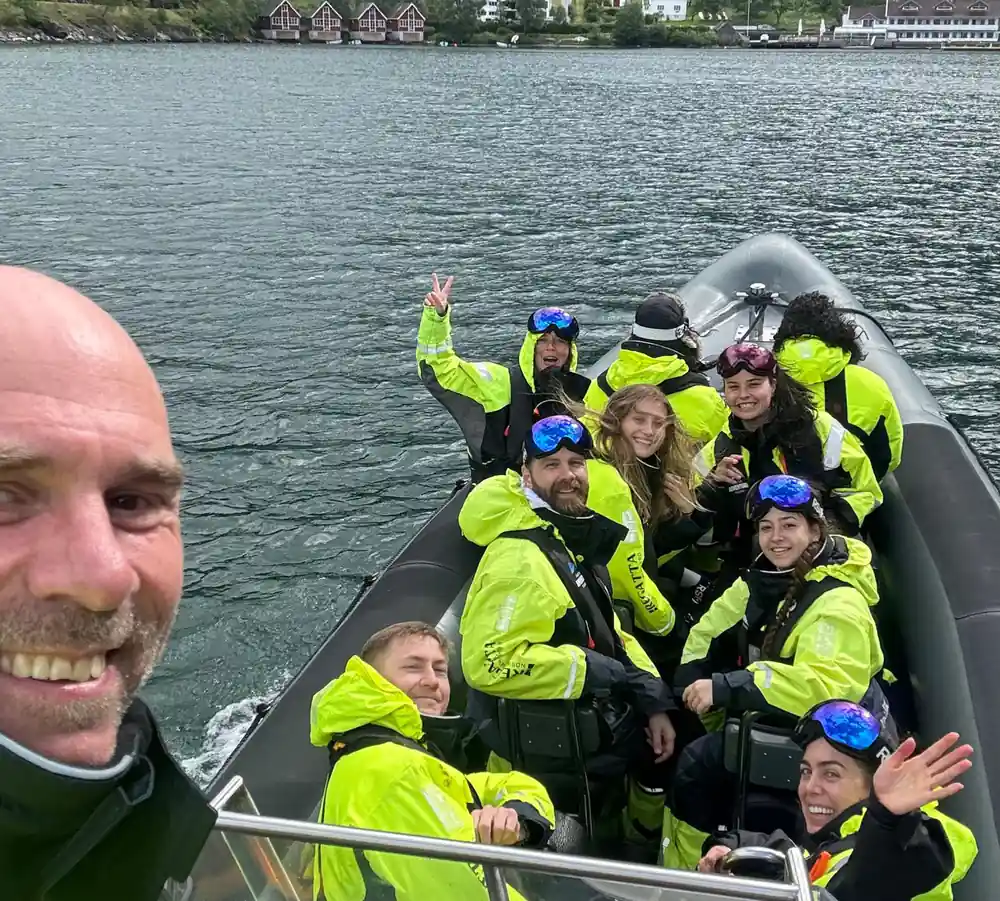
The RIB trip runs 2 hours from Flåm and puts you on the narrow water at eye level, close enough to feel the spray off the falls.[2]
Winter on the Fjord
Winter strips the scene back. Snow sits high on the walls, the water goes dark and still, and the villages empty out. Flåm's climate table lists average maxima of 16°C in Dec, 14°C in Jan and 16°C in Feb, with average minima of 7, 6 and 7°C.[1] On the water it feels colder than that, so full winter clothing matters more than it does in summer.
Guided trips still run. A winter day tour from Bergen covering the Nærøyfjord cruise, Flåm and Stegastein takes 11 hours and starts from US$309.[18] A winter Viking Village, Nærøyfjord cruise and Flåm Railway tour takes 10.5 hours from US$440.[19] Both are long days, so start rested and eat properly beforehand.
Winter also changes what you do with the dark hours. Indoor stops, a slow lunch and the railway take up the middle of the day, and anything on the water fits into the brightest window. Check what is running before you build an itinerary around a single departure, and keep a spare day if you have one.
What Cancels a Trip
Wind is the thing that stops boats. A narrow fjord funnels air down from the valleys, and small open craft feel it first. The decision is made on the morning, and it is made by the skipper rather than by the forecast on your phone. Treat the RIB as the flexible part of your trip and put fixed bookings on either side of it.
That flexibility is built into the booking. The RIB tour offers free cancellation up to 24 hours in advance for a full refund.[2] The same 24 hour arrangement covers the classic cruise and the half-day excursion.[4][17] One Oslo day trip works to a different clock and needs 3 days for a full refund.[20]
Weather at Flåm level and weather out on the water are two different things. A calm morning in the village can still mean a stiff breeze at the narrows, and a grey day can be flat and fast. Check before you set out, and carry a layer you can shed once the boat is moving.
Which Month for Which Visitor
For the biggest waterfalls and the emptiest water, late spring. For the easiest logistics and the settled weeks, Jun and Jul, when rainfall on the table drops to 23 mm and 22 mm.[1] For colour, space and still comfortable temperatures, Sep, at an average maximum of 27°C.[1] For a cheaper, moodier fjord, Oct, at 23°C and 84 mm of rain.[1]
Families tend to do best in high summer, when days are long and everything runs to a full timetable. Photographers get better light at the edges of the season. Walkers and kayakers want the drier weeks of early summer. Anyone who dislikes queuing should look at late spring or early autumn. Wherever you land, the RIB trip takes 2 hours, which leaves most of the day free.[2]
One last thing about timing: the difference between a good day and a great one here is often the hour rather than the month. Early departures get flatter water and softer light, and the afternoon brings the breeze that builds over the day. Book the earliest slot you can face, then use the rest of the day for the railway, the village or a walk along the water.
Flåm average monthly maximum temperature
Average monthly maximum temperatures for Flåm as listed in a Weathermondo climate table.[1]
Compare from-prices in US dollars
All amounts are US dollar from-prices for adult places on GetYourGuide listings.[2][4][17][21]
Booking windows through the year
How to pick your month
Start with water, not weather
The falls and the mood of the fjord follow the melt, so spring and early summer look and sound different from high summer.
Then read the rain column
Flåm's table lists 23 mm in Jun and 22 mm in Jul, against 84 mm in Oct.[1]
Fix the boat before the rest
The RIB takes 2 hours and shows starting times when you check availability, so it slots around a train or a cruise.[2]
Keep one flexible day
Wind can stop any small boat, and free cancellation up to 24 hours in advance means you can move the trip.[2]
Match the month to the group
Families do best in high summer, photographers in the shoulder months, and anyone wanting quiet water in late spring.
Pick your month, then book the Nærøyfjord RIB from Flåm
from US$422Reserve now & pay later