If you read nothing else
- The Nærøyfjord is 20 km long and only 250 meters across at its narrowest point, with mountain inclines rising to 1800 metres.[1][2]
- Kjelfossen, at the head of the fjord, has a free fall of 150 metres and a total drop of 840 metres.[3]
- The Flåm Nærøyfjord RIB-boat Experience & Waterfalls runs for 2 hours with a live English guide, from US$146.[4]
- Rated 4.91 from 129 travellers, with top scores for guide and transportation.[4]
- Free cancellation up to 24 hours in advance for a full refund; reserve now and pay later.[4]
| Duration | From price | Review score | |
|---|---|---|---|
| RIB boat tour | 2 hours[4] | from US$146[4] | 4.91[4] |
| Classic cruise | 2 hours[5] | from US$62[5] | 4.49[5] |
| Full-day kayak | 6 hours[6] | from US$179[6] | 4.85[6] |
| Bergen UNESCO tour | 12 hours[7] | from US$309[7] | 4.74[7] |
The waterfall runs down south of the farm of Ramsøy, to the east of Gudvangen at the head of the Nærøyfjord. Kjelfossen has a free fall of 150 metres and a total drop of 840 metres.
Make the waterfalls the main event
Plan your trip
What to carry
- Sunglasses, because the water reflects light.
- Warm layers; the wind off the water is cold.
- A waterproof camera bag or cover for phones.
- Waterproof clothing is usually provided, but ask when booking.
Why the Nærøyfjord is stacked with waterfalls
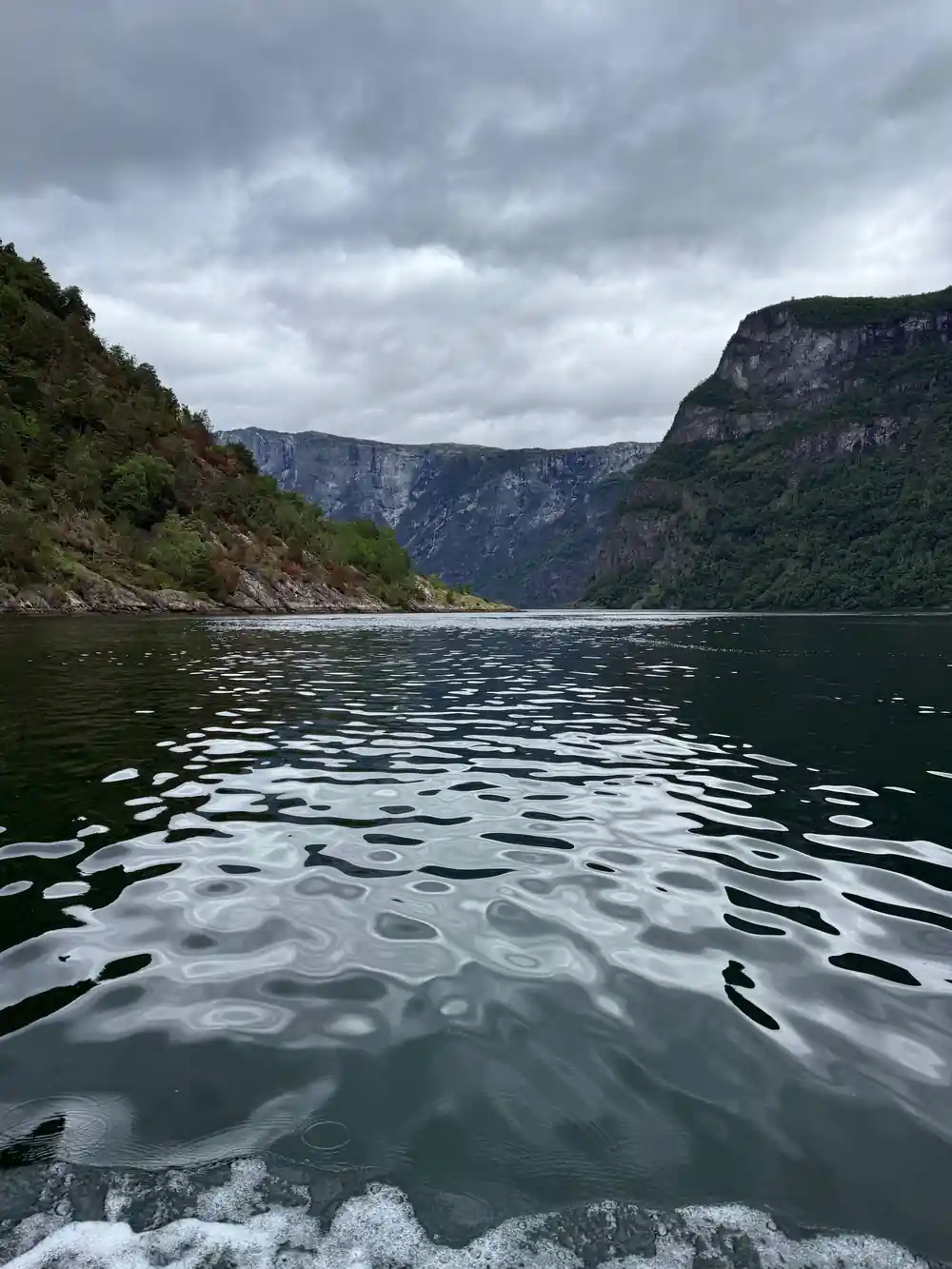
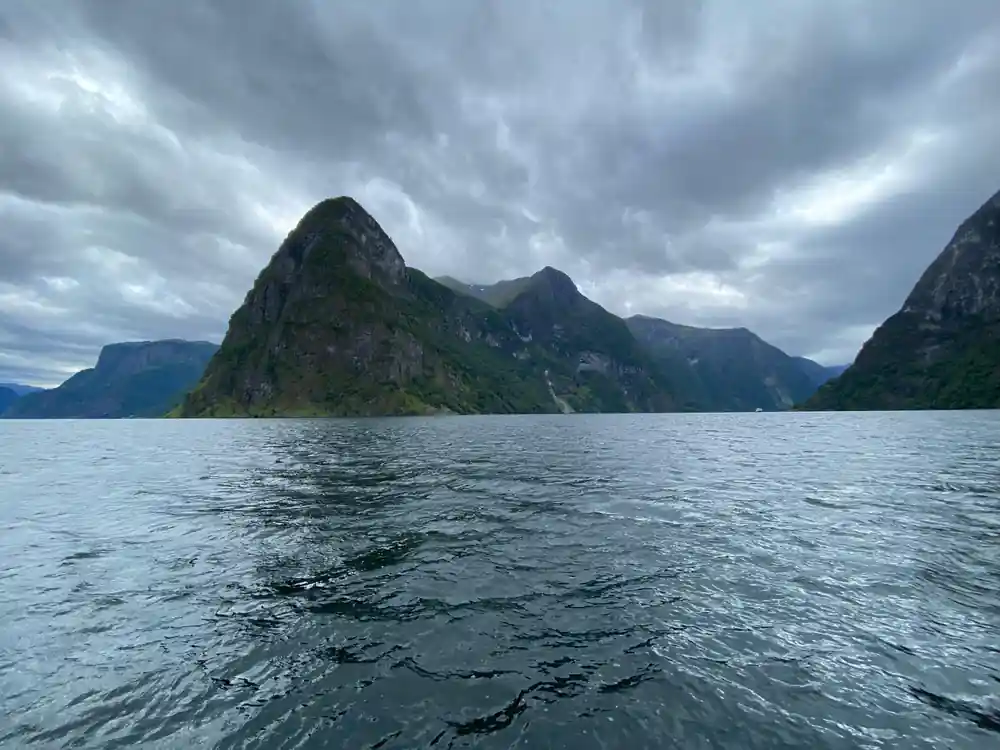
A fjord is formed when a glacier retreats after carving its typical U-shaped valley, and the sea fills the resulting valley floor.[8] That plain sentence hides a long history of ice, rock and meltwater. The Nærøyfjord is a narrow arm of the Sognefjord, and its walls were ground out by ice that has long since gone. What is left is a channel so tight that the mountains seem to lean over the water, and every gully on those walls carries a stream down towards the sea. On a still morning the surface reflects the cliffs so completely that it is hard to tell where the rock ends and the water begins.
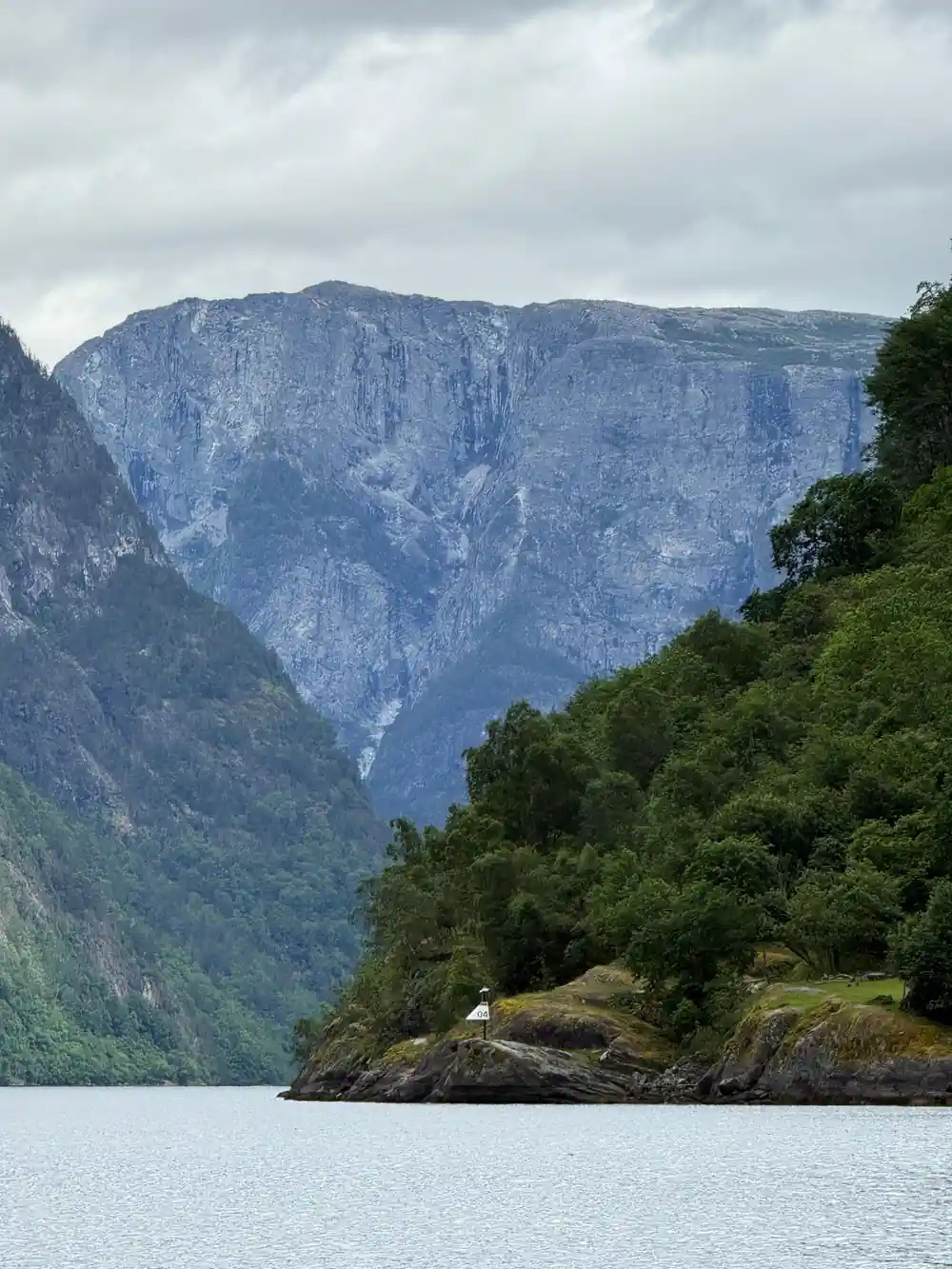
The Nærøyfjord is 20 km long and only 250 meters across at its narrowest point.[1] Above the water, the mountain inclines ascend to 1800 metres high.[2] Put those two figures together and you have a landscape of rare verticality: a thin ribbon of water with rock climbing away on both sides, sometimes at angles that look impossible for anything to hold on to. Water that falls here does not have far to travel sideways. It comes down the wall, hits the fjord and disappears into water that is far deeper than it looks.
A fjord that drops this steeply also carries a lot of water. The West Norwegian Fjords UNESCO World Heritage Site, which includes the Nærøyfjord, was first recognised in 2005.[9] The deep water, the sheer rock and the streams in every gully are the things that make the place what it is. Standing on the deck of a small boat, with cliffs rising on both sides and spray cooling your face, the scale of it is what stays with you long after the trip.
Kjelfossen and the named falls
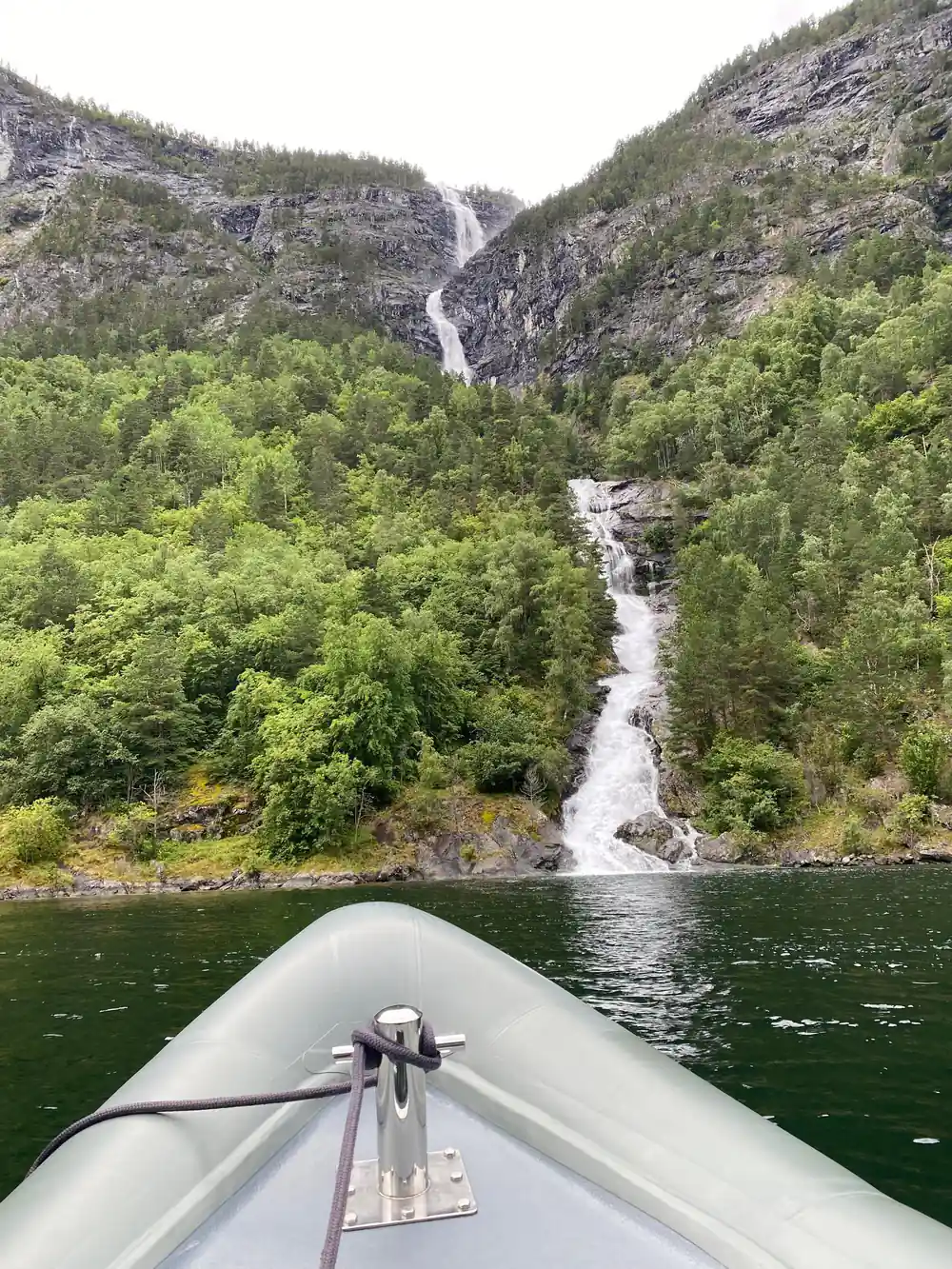
One waterfall worth knowing by name is Kjelfossen. It runs down south of the farm of Ramsøy, to the east of Gudvangen at the head of the fjord.[3] In spring, when the high ground is still holding snow, you hear it before you see it: a low, steady roar that carries across the water. Then a white shape appears against the grey rock, and the boat slows.
Kjelfossen has a free fall of 150 metres and a total drop of 840 metres.[3] The free fall is the unbroken plunge. The total drop counts the whole descent of the stream, cascades and all. From the water you take in the lower section at close range, with mist drifting over the boat when the wind is right and a rainbow sometimes forming in it. Keep one hand on the rail and one on the camera.
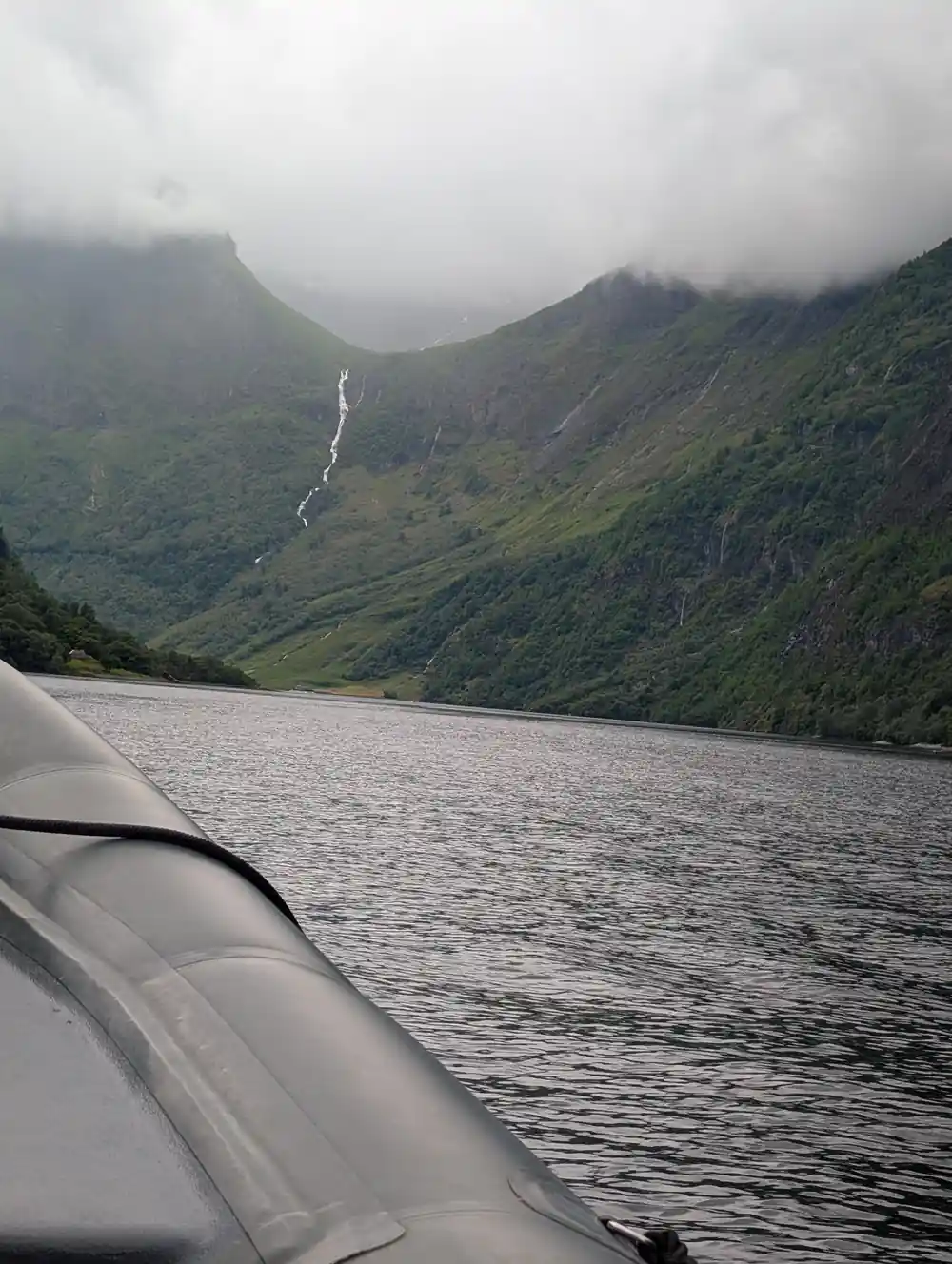
Beyond Kjelfossen, the fjord is dotted with smaller falls, many without names. Some are thin threads that vanish in dry spells and return after the first heavy rain. Others run all year, fed by high lakes and snowfields you cannot see from the boat. A guide who knows the fjord can point them out, and from the water they appear one by one as the boat turns a corner and a new wall of rock opens up ahead.
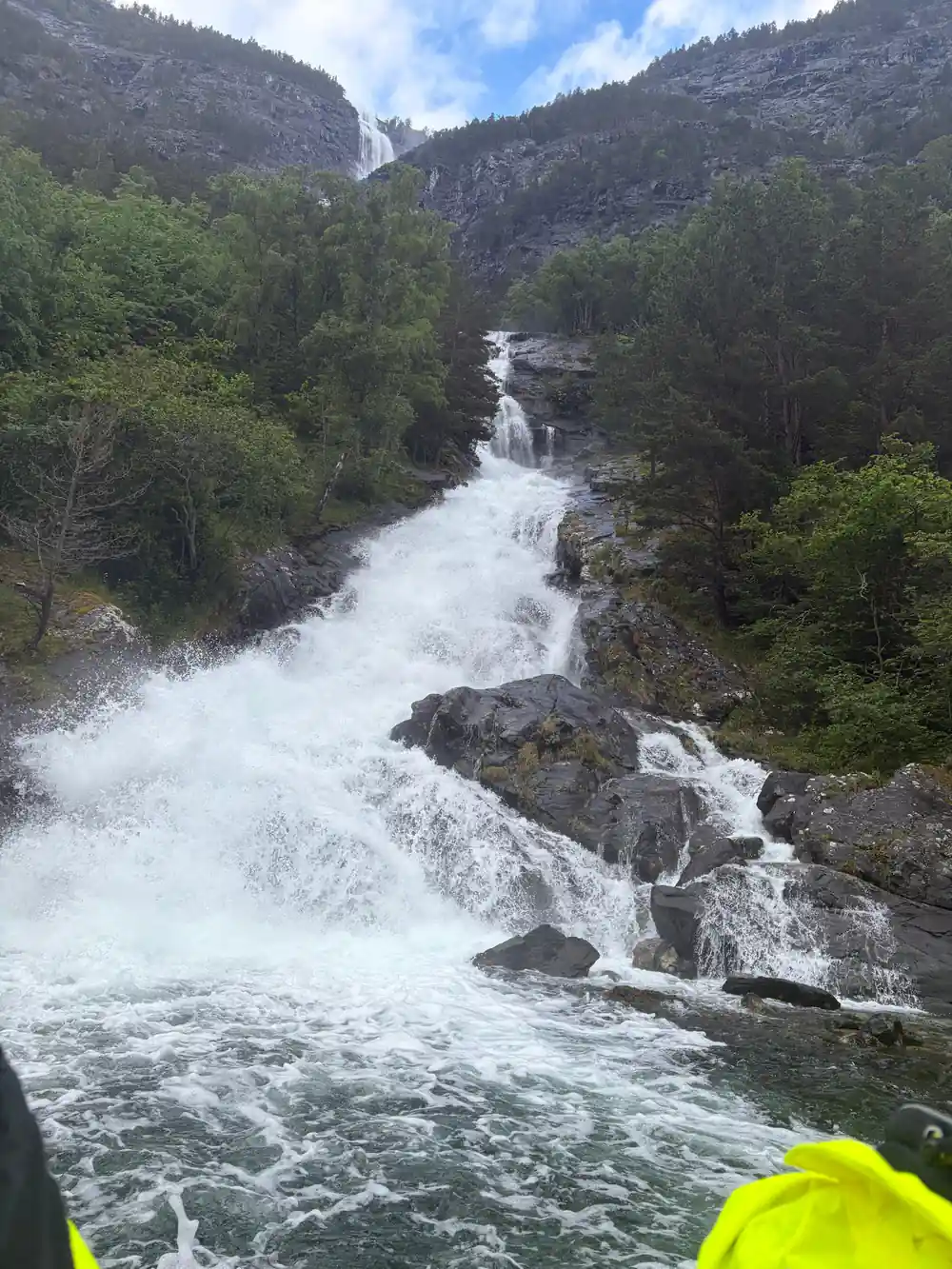
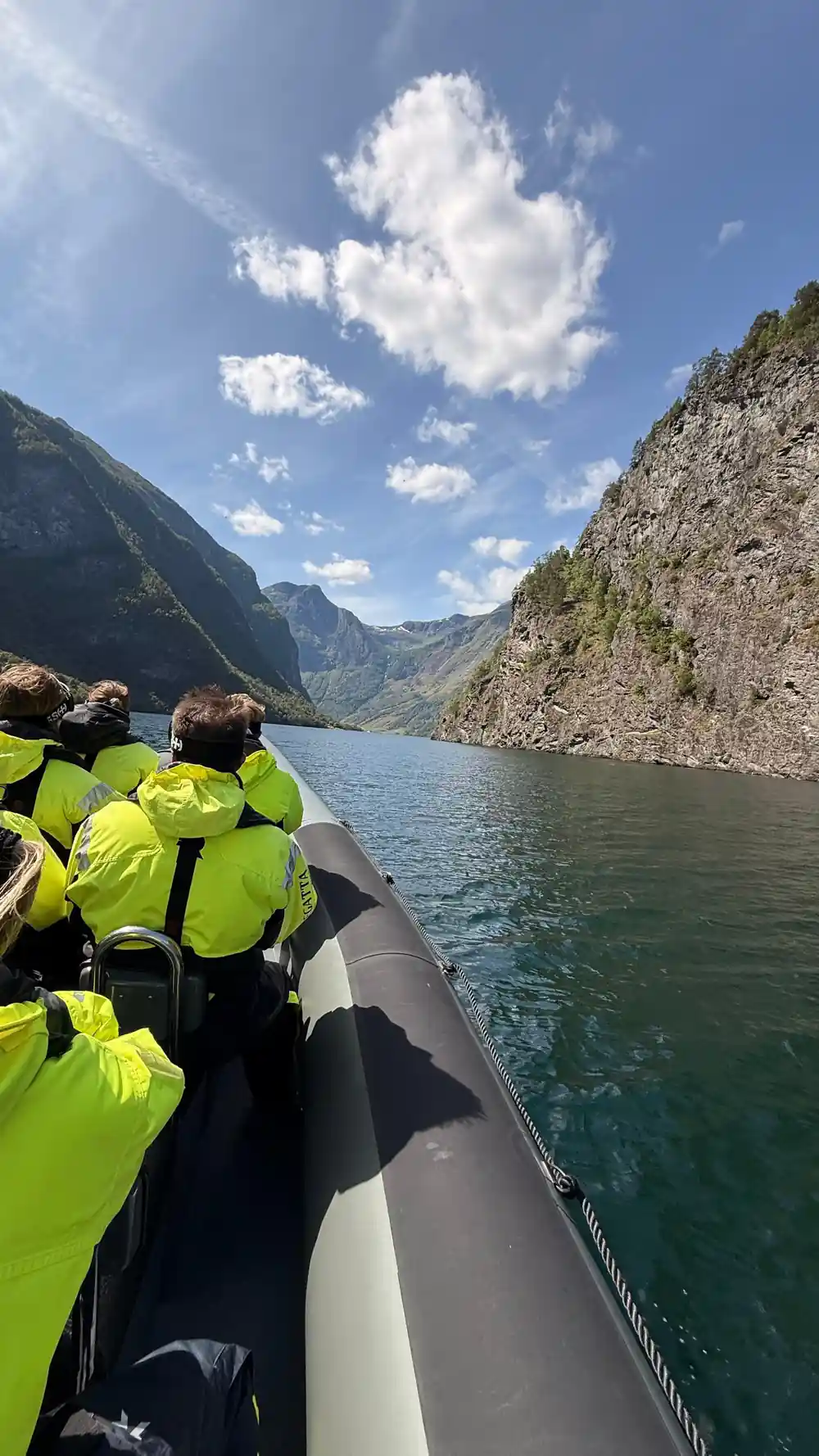
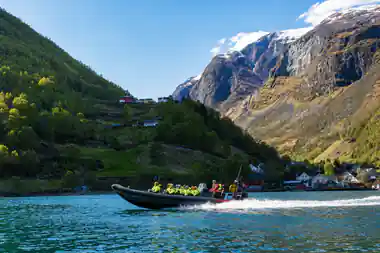
A RIB boat cuts across the narrow Nærøyfjord beneath waterfalls that pour down sheer cliffs.
When the waterfalls run hardest
Rainfall in Flåm is uneven through the year. The monthly averages in the climate table range from 22 mm to 84 mm.[10] There is no single wet season here, and a dry week can follow a soaking one. What matters more than the month on the calendar is what the weather has done in the days before you arrive, which is worth checking the night before you travel.
Spring and early summer bring snowmelt from the high ground, and that is when the falls tend to run at their fullest. Rain later in the season tops the streams up again, and autumn on a wet day can be just as dramatic as high summer. A day or two after heavy rain, every gully on the fjord walls carries water, including the ones that were dry and grey when you looked at them last.
Wind matters as much as rain. A strong breeze blowing up the fjord lifts spray off the falls and pushes it back against the cliffs, which looks spectacular from a small boat, though it makes the ride bumpier and the camera work harder. On calm days the water goes glassy, the reflections double the height of the walls, and the falls seem to hang in mid air between rock and reflection.
The RIB boat: getting underneath one
The Flåm: Nærøyfjord RIB-boat Experience & Waterfalls lasts 2 hours and runs with a live English guide.[4] It leaves from Flåm, a village at the head of the Aurlandsfjord that is easy to reach by train, bus or car, and a natural base if you are combining the fjord with the railway.
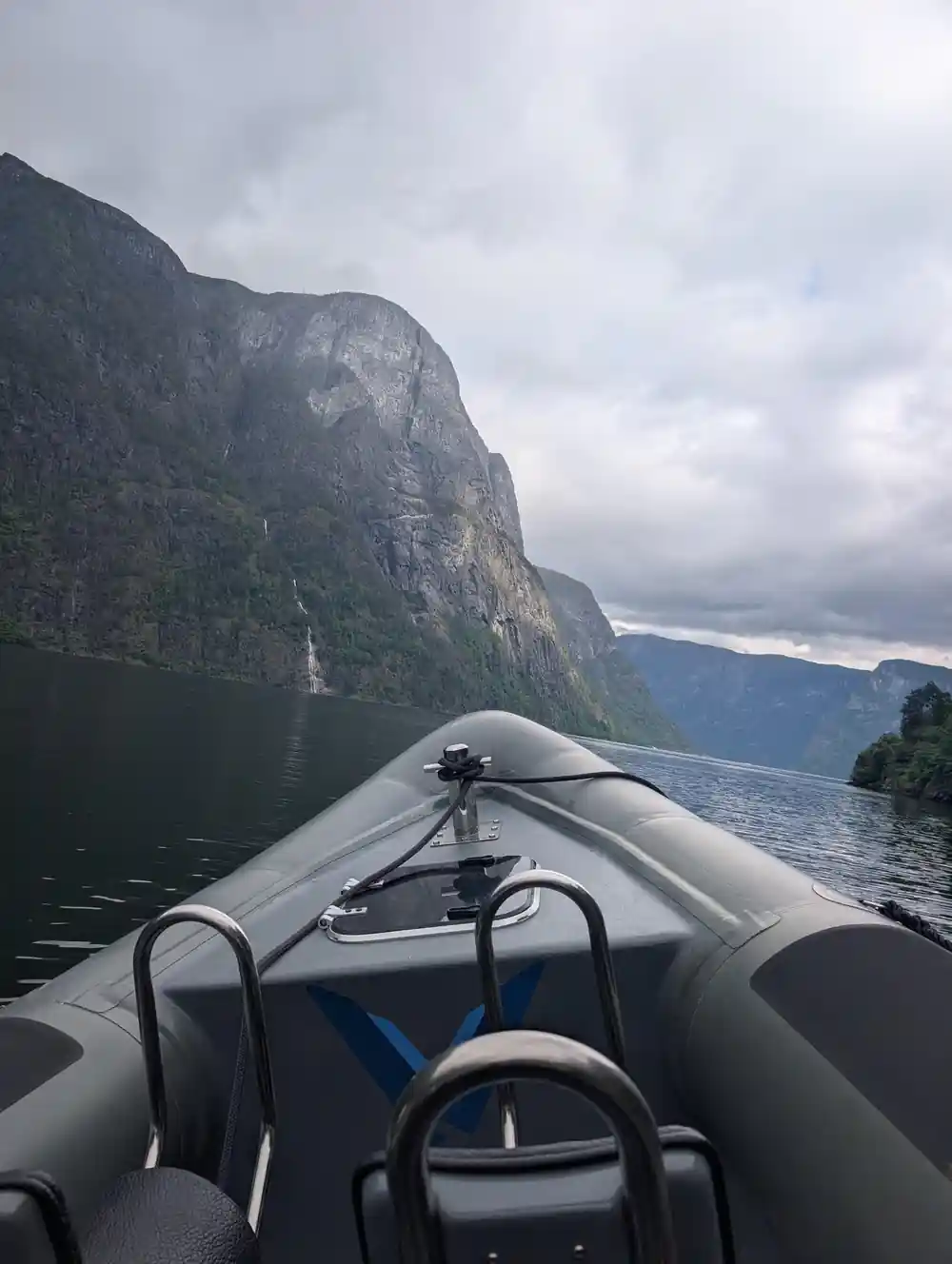
You sit low in an inflatable hull, which puts the cliffs and the falling water directly above you. A RIB can move in close to the spray in a way that a larger vessel cannot, and when the boat stops under a fall the noise, the cold mist and the movement of the water all arrive at once. It is a wet, loud, immediate way to meet the fjord, and it suits anyone who would rather be in the landscape than looking at it through a window.
The trip is rated 4.91 from 129 traveller reviews, with guide and transportation both scored 5 out of 5.[4] That is a strong record for a short outing. Book a time that leaves you room on either side. Conditions on the day decide how much of the fjord you actually see, and a flexible schedule takes the pressure off.
from US$146
Flåm: Nærøyfjord RIB-boat Experience & Waterfalls, 2 hours, live English guide.[4]
Other ways to see the waterfalls
If you prefer a slower pace, the Flåm: Classic Fjord Cruise on the Nærøyfjord runs for 2 hours from US$62.[5] It is a comfortable option for anyone who would rather stay dry, and the fjord reads differently from a larger deck: the walls recede a little, the scale becomes clearer, and you have time to watch one waterfall for a while instead of passing it in a moment.
For something more active, a full-day kayaking trip from Vossevangen is limited to 8 participants, lasts 6 hours and costs from US$179.[6] Paddling puts you at water level with nothing between you and the cliffs, and the pace is your own. It is a workout as much as a sightseeing trip, and the quiet in the middle of the fjord is the part people remember.
For a longer day from Bergen, the UNESCO fjord cruise with lunch lasts 12 hours and costs from US$309, covering Nærøyfjord and Stalheim.[7] Bergen is a common starting point for travellers arriving by air, and the drive inland through the valleys is a scenic part of the day in its own right, with waterfalls beside the road as well as on the fjord.
Planning your visit
The RIB tour leaves from Flåm, which is also the terminus of the Flåm Railway. The Flåm Railway is one of the steepest railroads in the world, climbing from 2 meters to 867 meters above sea level at a 5% gradient.[11] The two sit well together: a fast, wet morning on the fjord and a slow, high climb in the afternoon, with the valley opening below you as the train gains height.
The booking terms are straightforward. Free cancellation is available up to 24 hours in advance for a full refund, and you can reserve now and pay later.[4] That flexibility is worth having in a place where the forecast can change quickly. Hold a place on the departure you want, then watch the weather and decide.
If you are travelling independently, note that the cruise between Flåm and Gudvangen takes approximately two hours, and that the all-electric vessel Future of The Fjords operates on that itinerary.[12][13] Gudvangen has about 90 inhabitants.[14] Check onward bus and boat connection times in advance rather than on arrival, and give yourself a margin if you are catching a train later the same day.
Photographing waterfalls from the water
The best photographs from a RIB are rarely the ones you plan. Everything is moving: the boat, the water, the spray in the air, the people around you. Use a fast shutter speed to freeze the falling water, and brace the camera against the hull or your own knee. A burst of frames as the boat turns often gives you the one keeper of the day.
Protect your gear. Spray reaches the middle of the boat when the wind is up, and salt water is unkind to electronics. A dry bag, a waterproof pouch or a simple housing for your phone is worth more than any accessory. Keep a microfibre cloth in a zipped pocket so you can clear the lens without hunting for it.
Light is the other tool. Overcast days suit waterfalls, because soft light holds detail in white water instead of blowing it out, and the colours of the rock stay rich. A polarising filter deepens the blue of the fjord and cuts glare off wet stone. When the sun does come out, turn towards the shaded wall, where falling water stands out against dark rock, and watch for rainbows in the spray on bright afternoons.
Monthly rainfall in Flåm
Rainfall averages for Flåm from Weathermondo's climate table[10].
How much to see the Nærøyfjord
From-prices for Nærøyfjord tours:[4],[5],[6].
Seasonal notes
Book your RIB trip
Check availability
Choose a time that works for you. The tour runs for 2 hours with a live English guide.[4]
Reserve now, pay later
You can reserve and pay later, and cancel up to 24 hours in advance for a full refund.[4]
Pack a layer
Bring a warm midlayer, sunglasses and a way to protect your phone. The boat provides the gear you need for the spray.
Meet your guide
Look for the GetYourGuide sign near the Flåm harbour. Your guide will fit your flotation suit and give a safety briefing.
Ride and point
After the tour, check your photos and give the guide a wave. You will already be planning the next fjord trip.
Ready to feel the spray of the Nærøyfjord waterfalls?
from US$422Reserve now & pay later