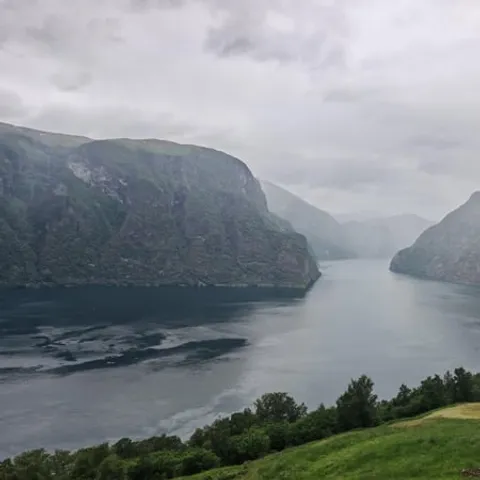
Nærøyfjord RIB-boat Experience & Waterfalls

Flam

Fjord Cruise Naeroyfjord: Two Hours at Water Level

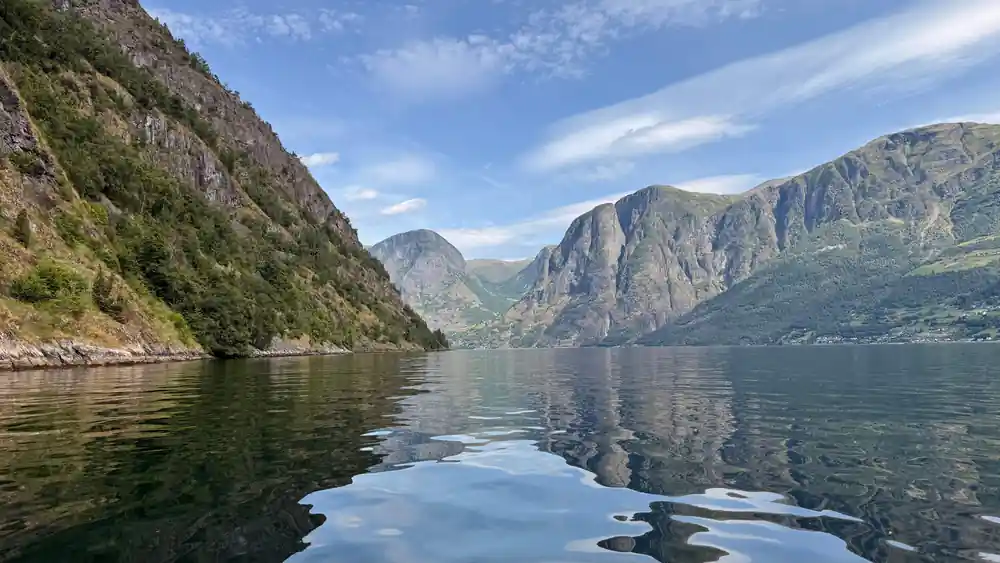
The narrowest arm of Norway's longest fjord, under walls that go up more than a kilometre, in a small fast boat that can get right in against the rock.

100% secure

2 hoursOn the water
UNESCOListed since 2005
SuitsThermal kit provided
Age 14+And 140 cm minimum

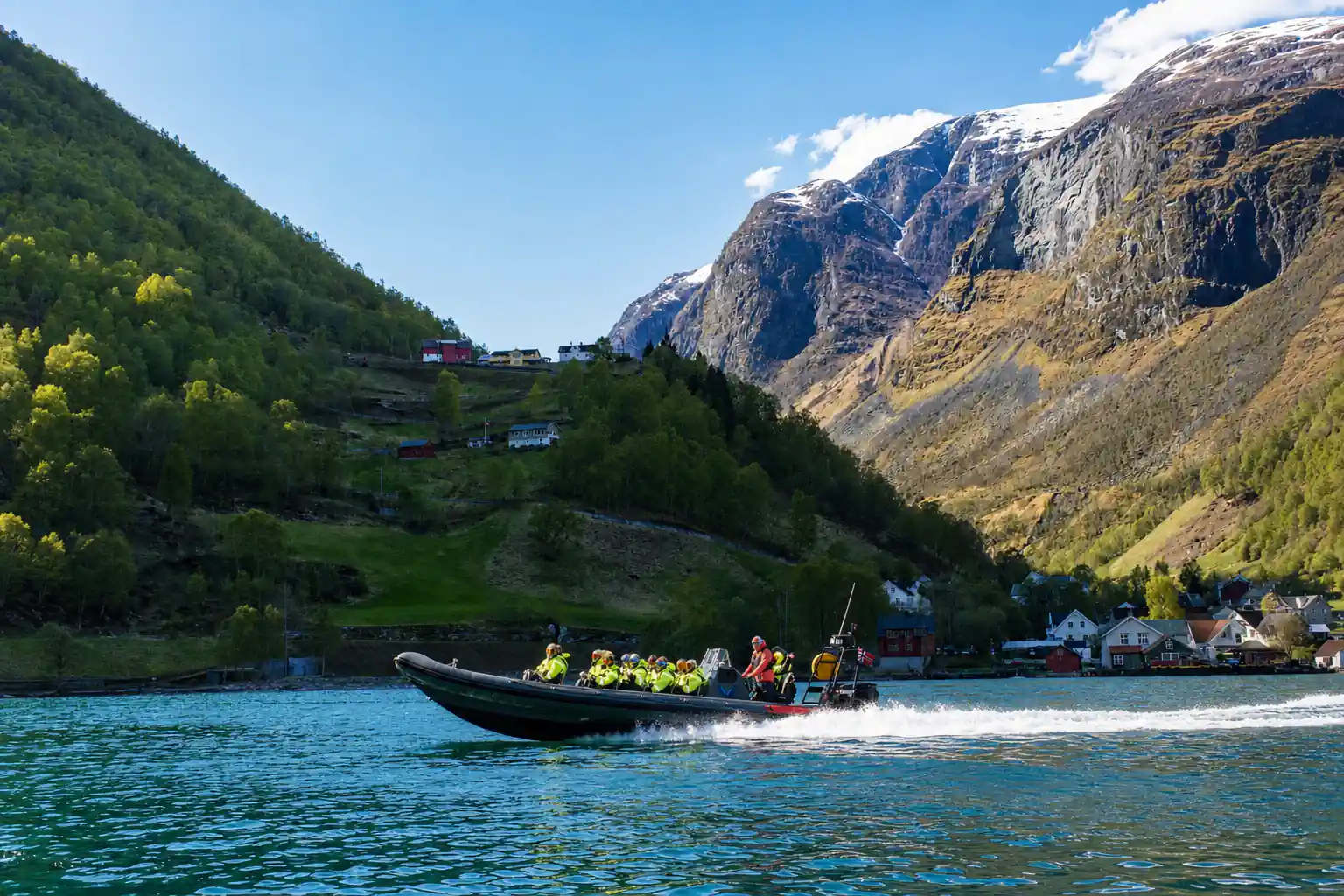
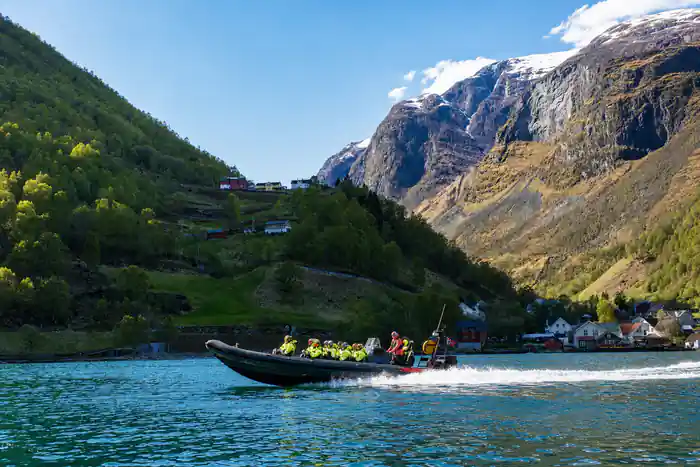
There are two ways onto this fjord. One is a large scheduled vessel that carries hundreds and holds its line down the middle. The other is a rigid inflatable that seats a dozen, turns inside its own length and can put its bow under a waterfall. This is the second one, and the difference is not a detail.

Reviews

What people say

Gallery

What it looks like

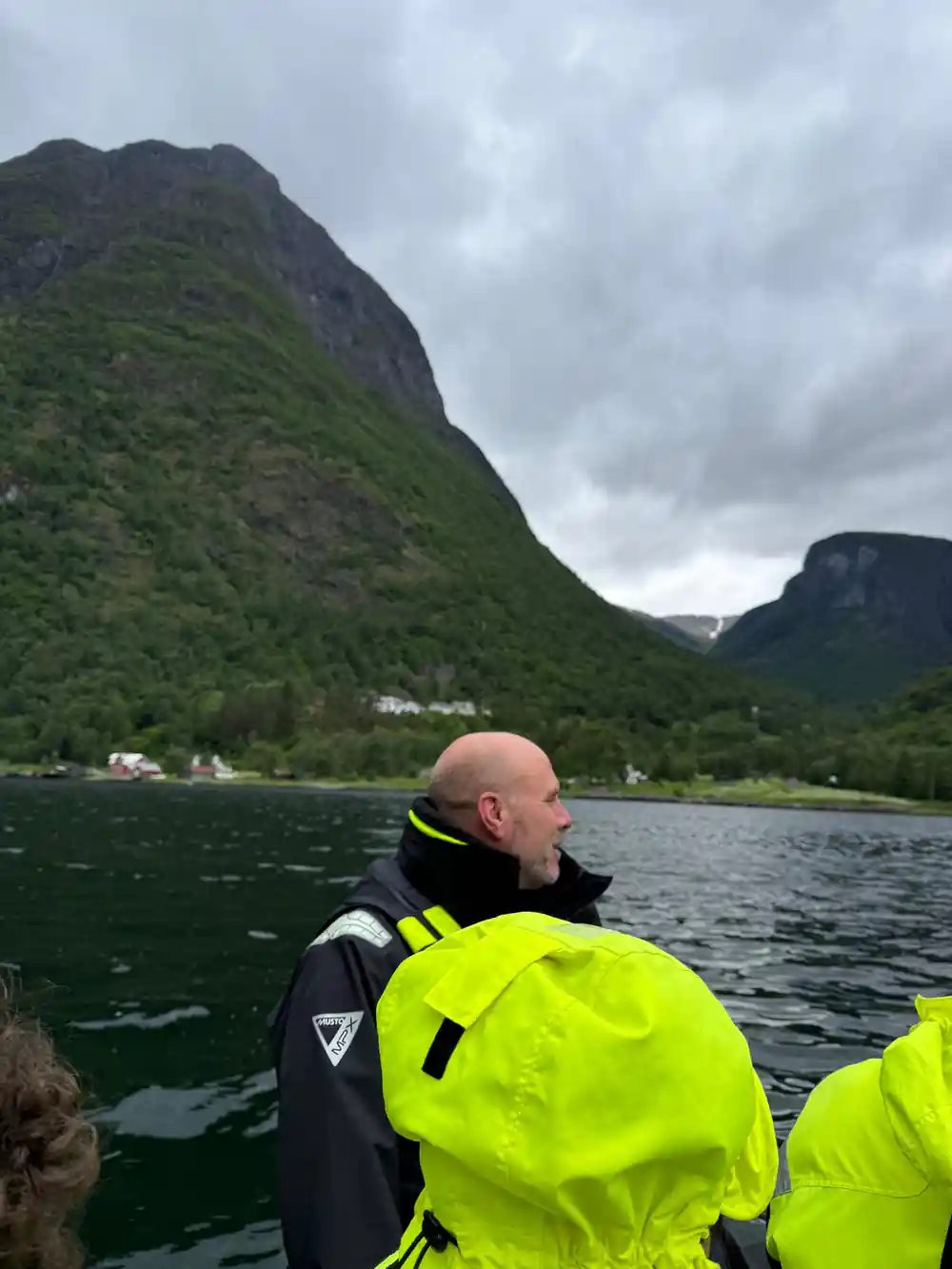
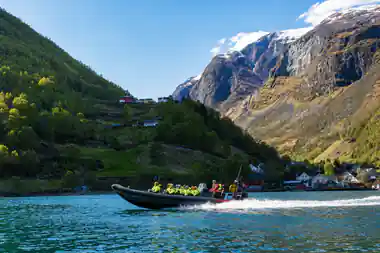
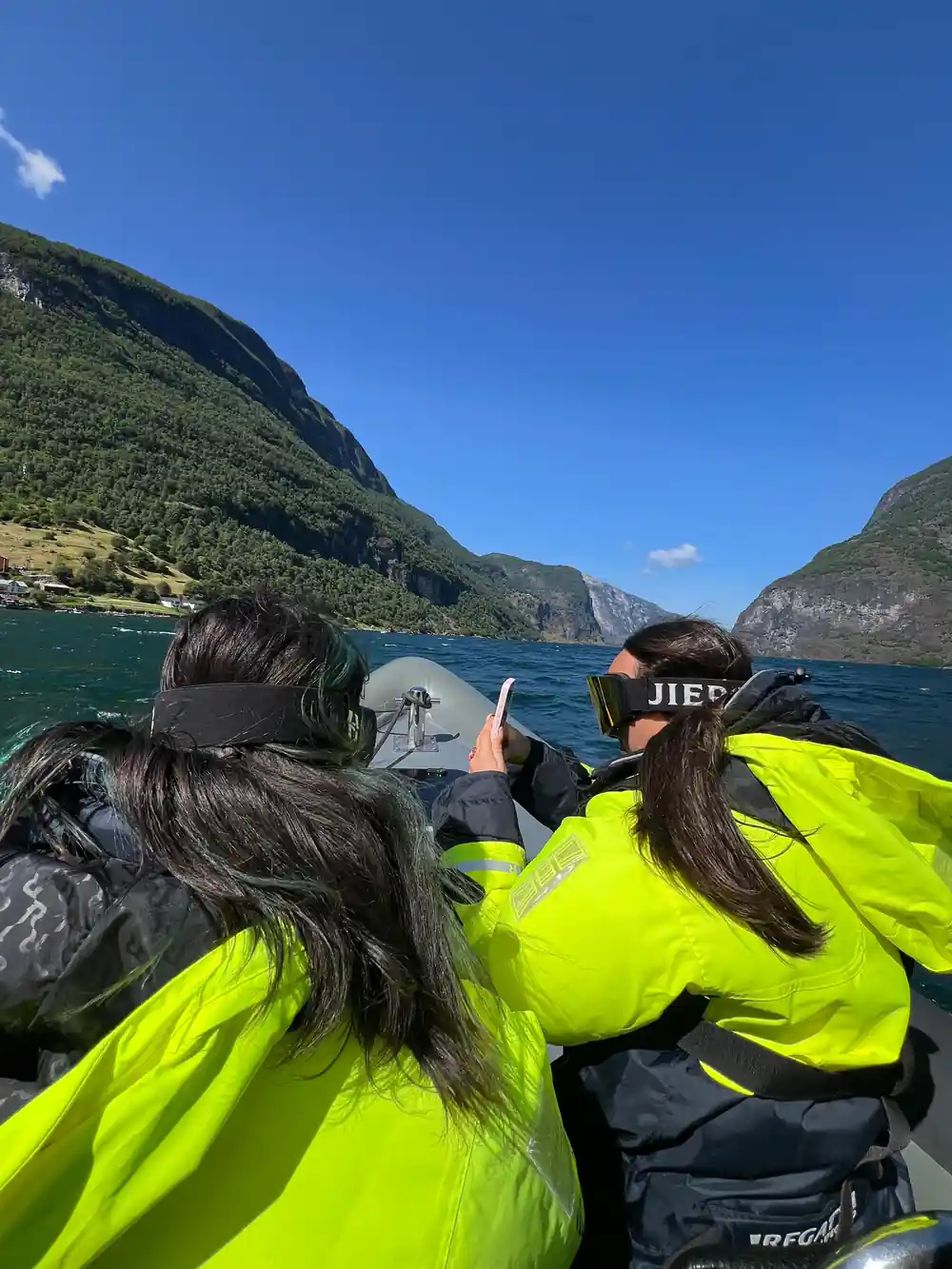
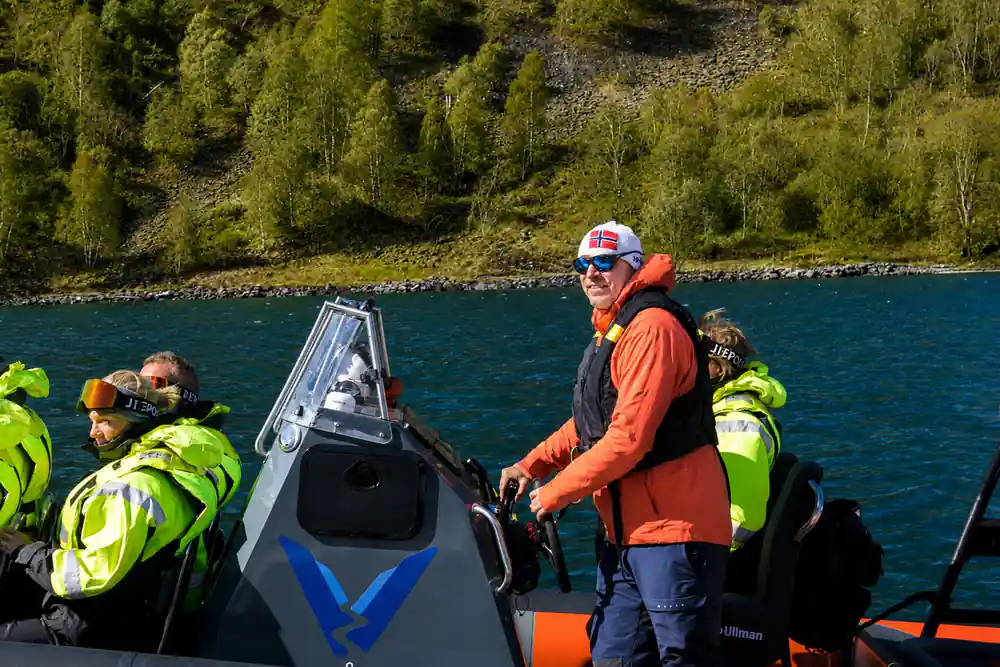
The skipper at the wheel of the RIB with passengers behind him
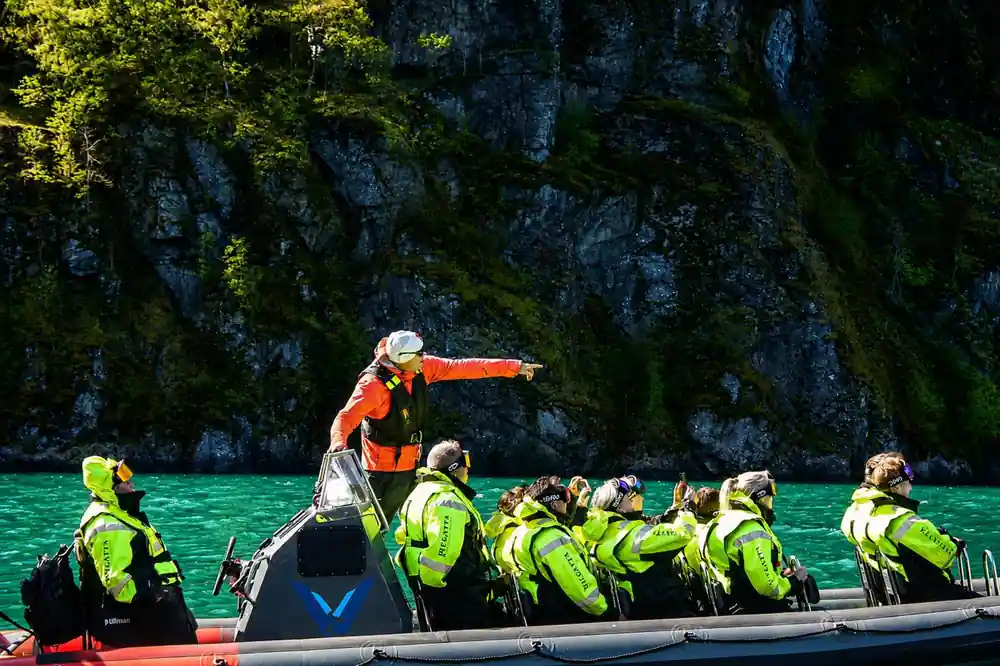
A guide standing and pointing out across the fjord to seated passengers
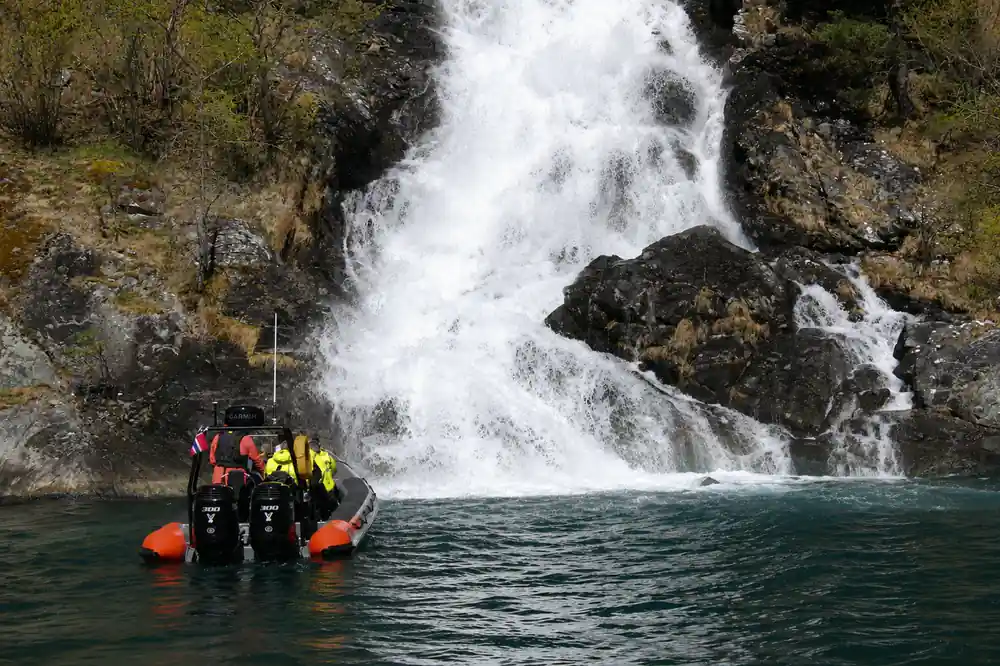
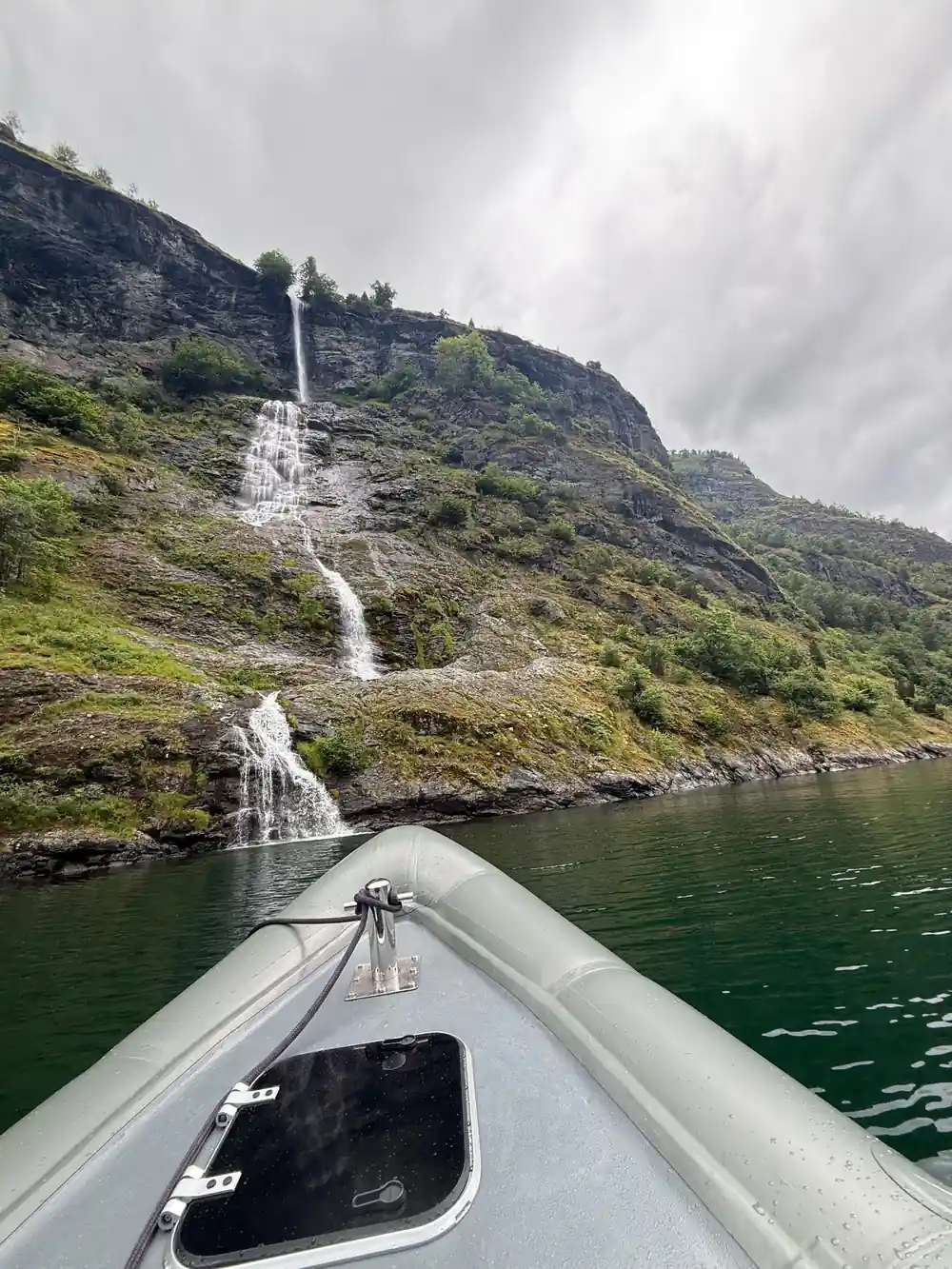
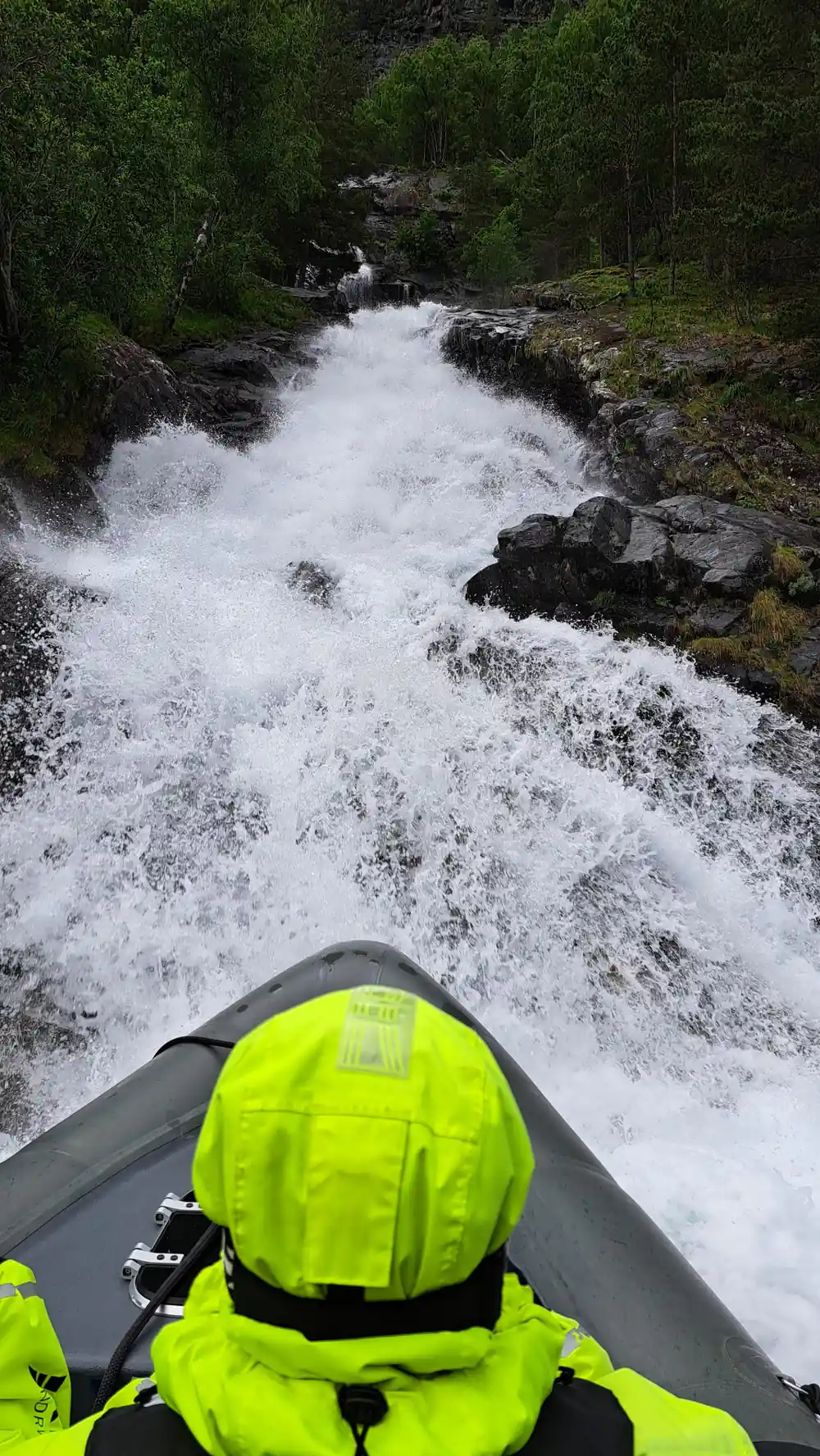
The RIB nosed in close to a waterfall crashing onto rock
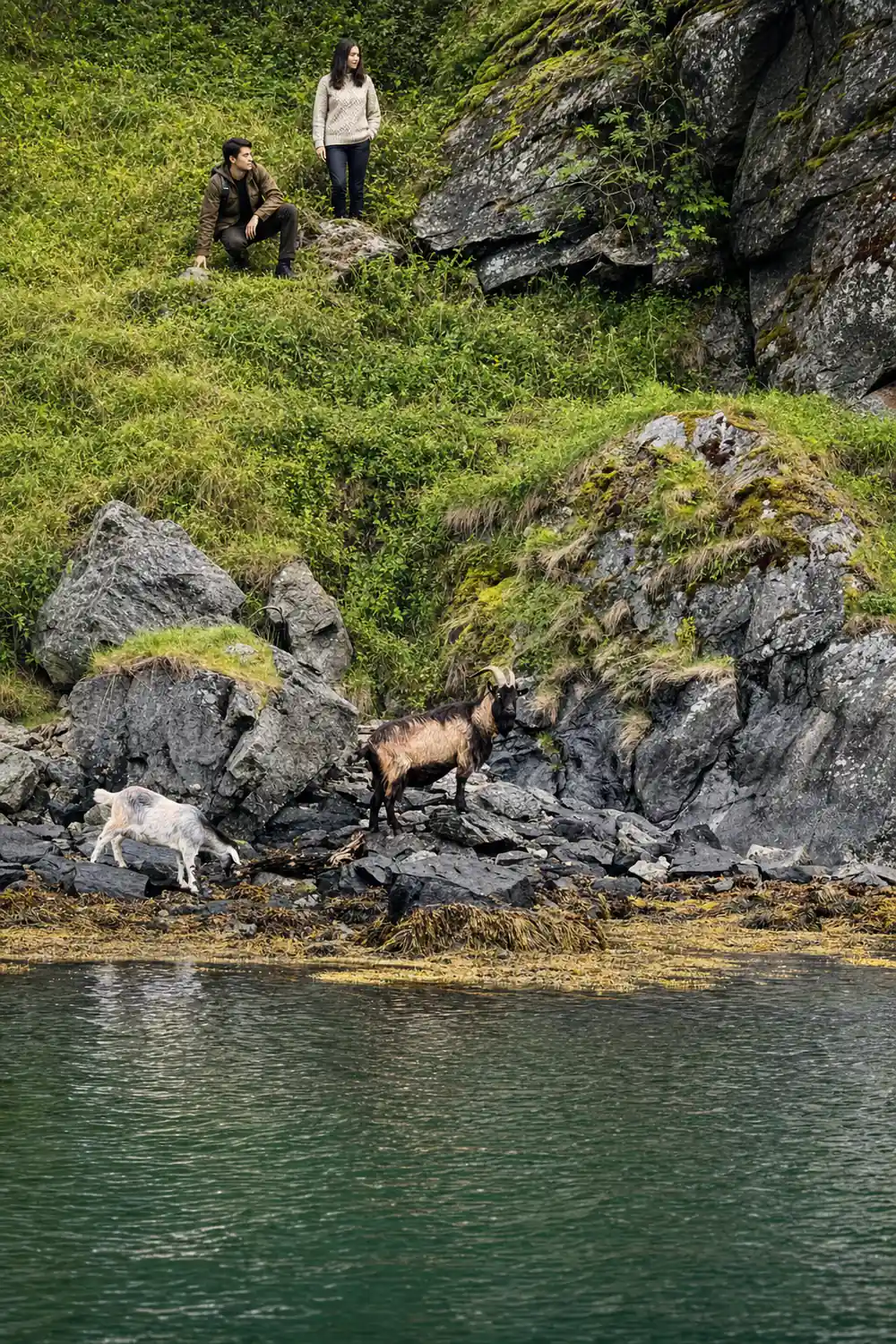
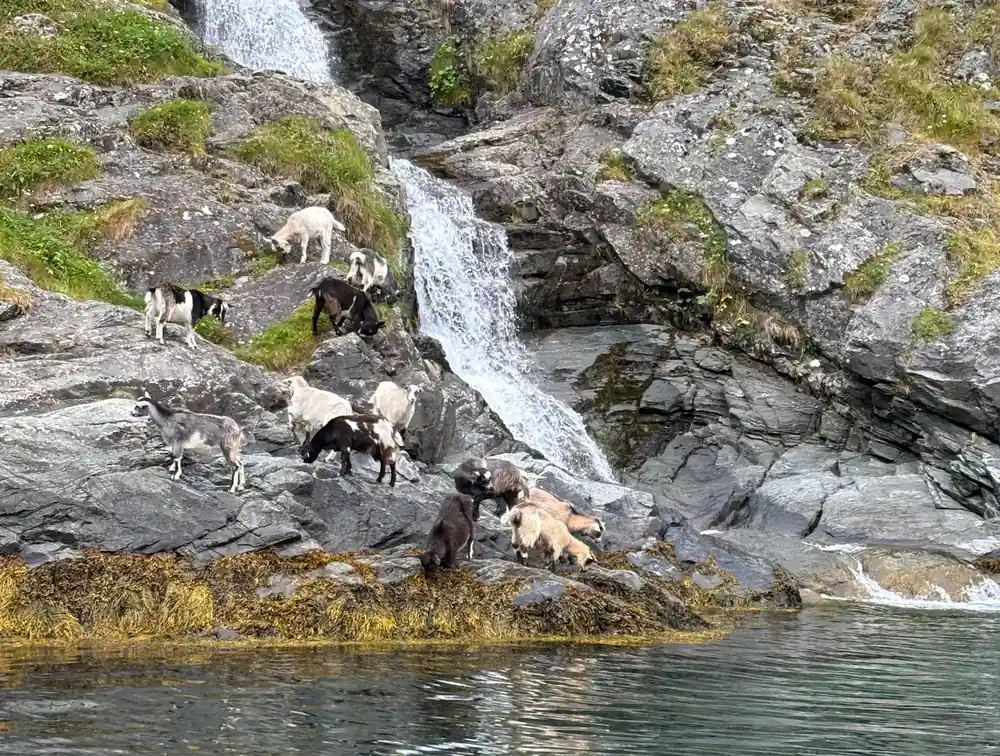
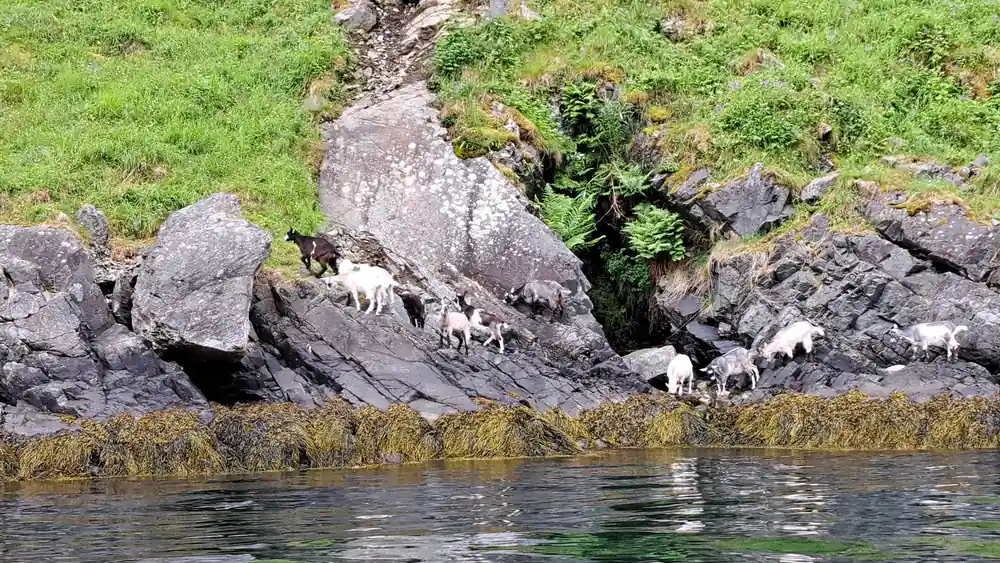
Goats picking their way over rock beside a small waterfall
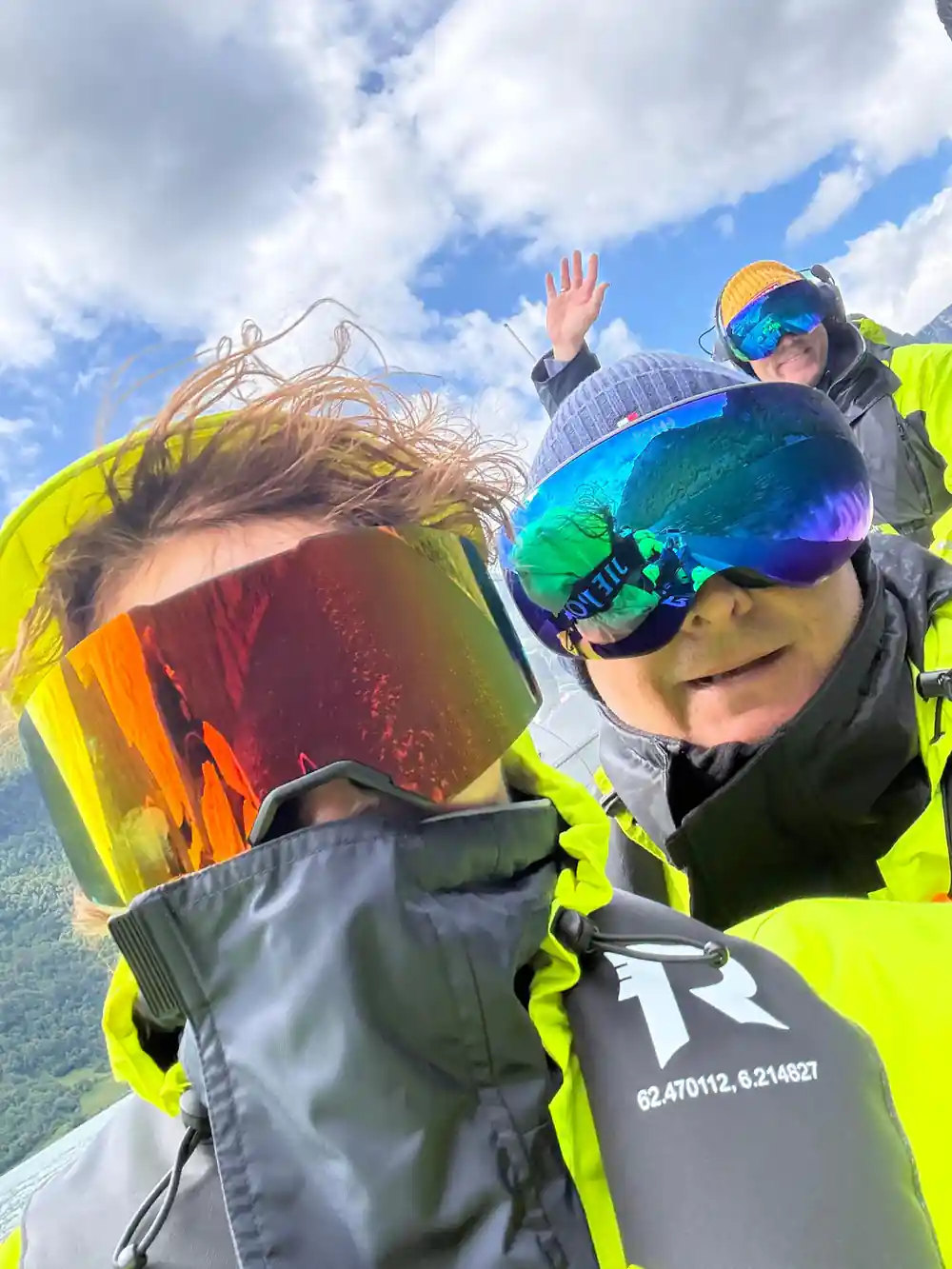
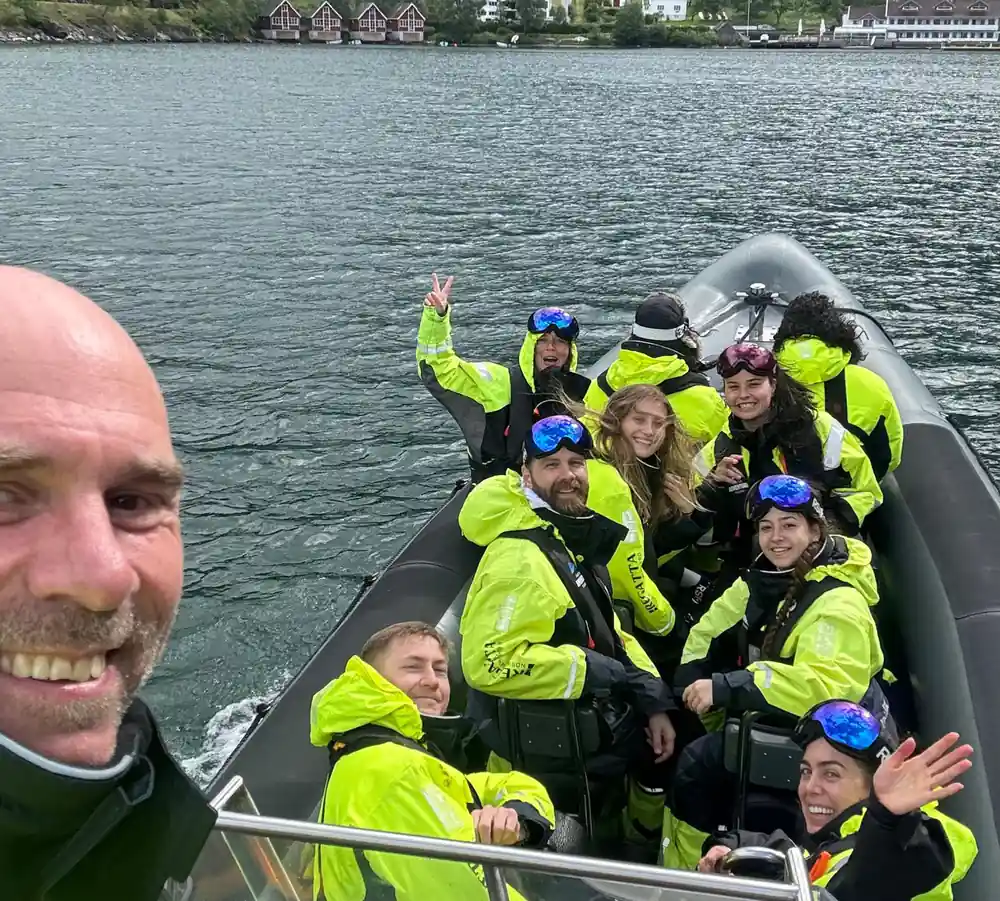
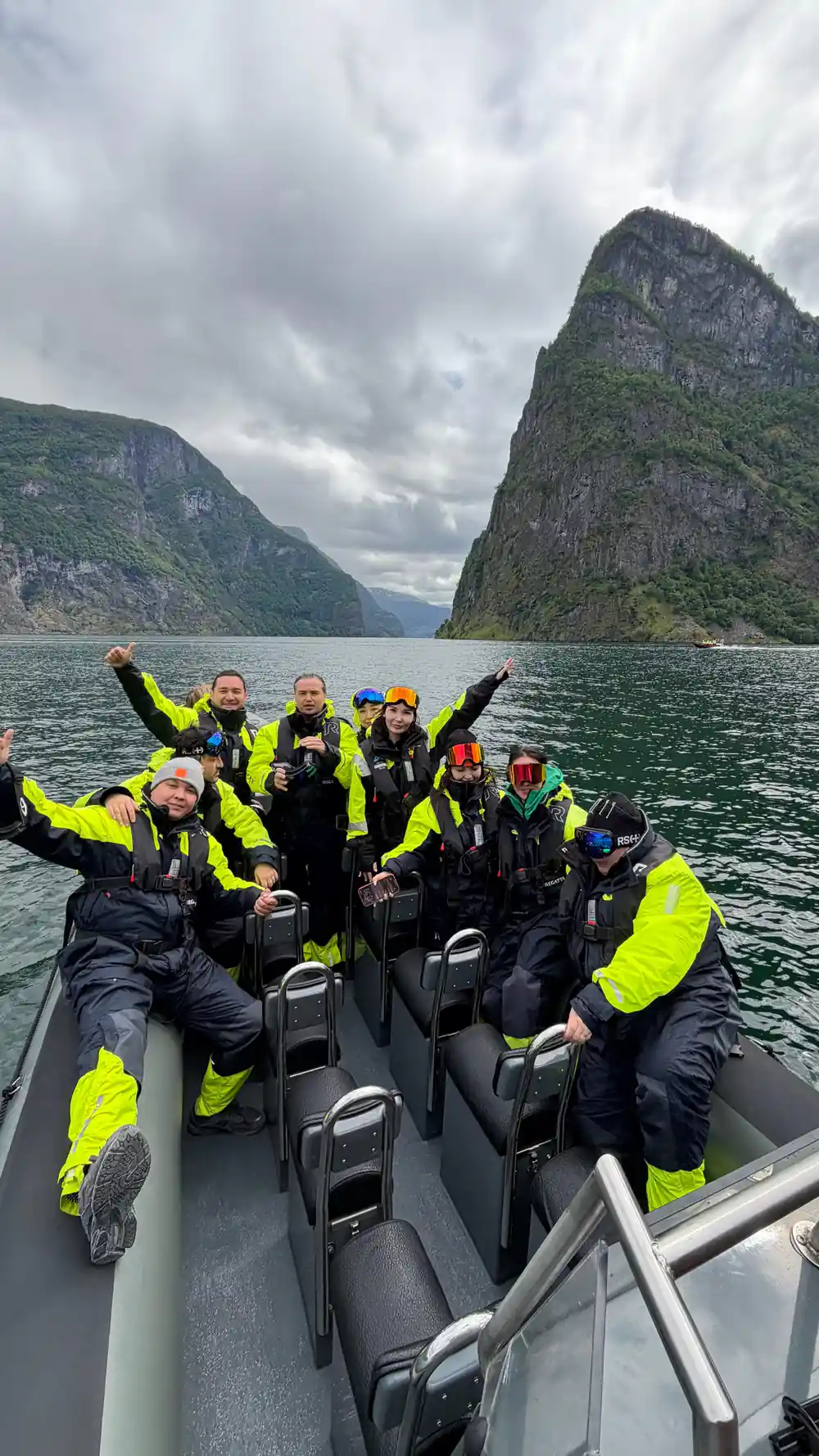
Passengers in survival suits and goggles waving from the boat
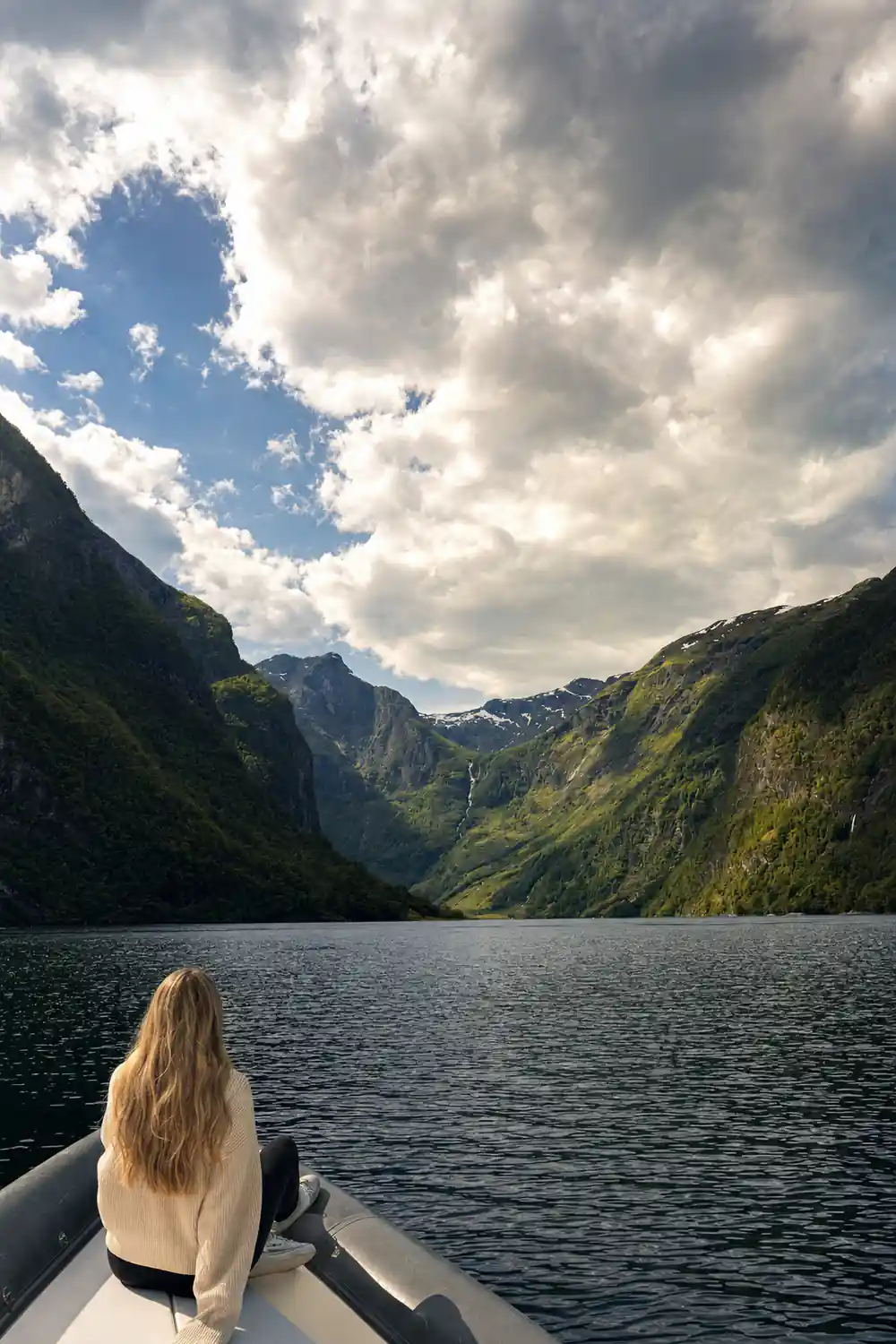
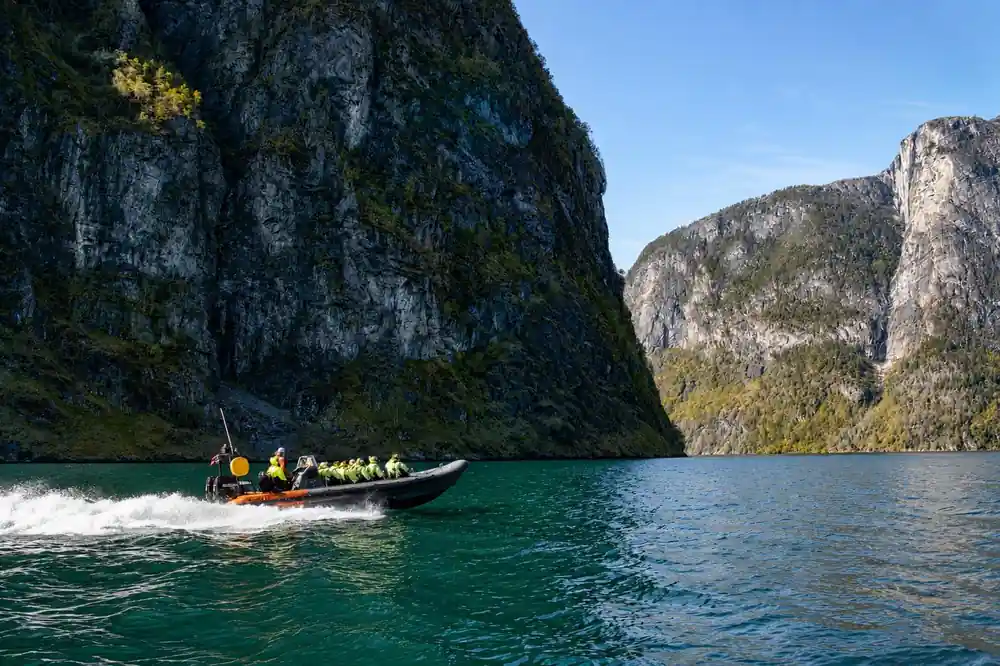
A small RIB dwarfed by the green walls of the fjord
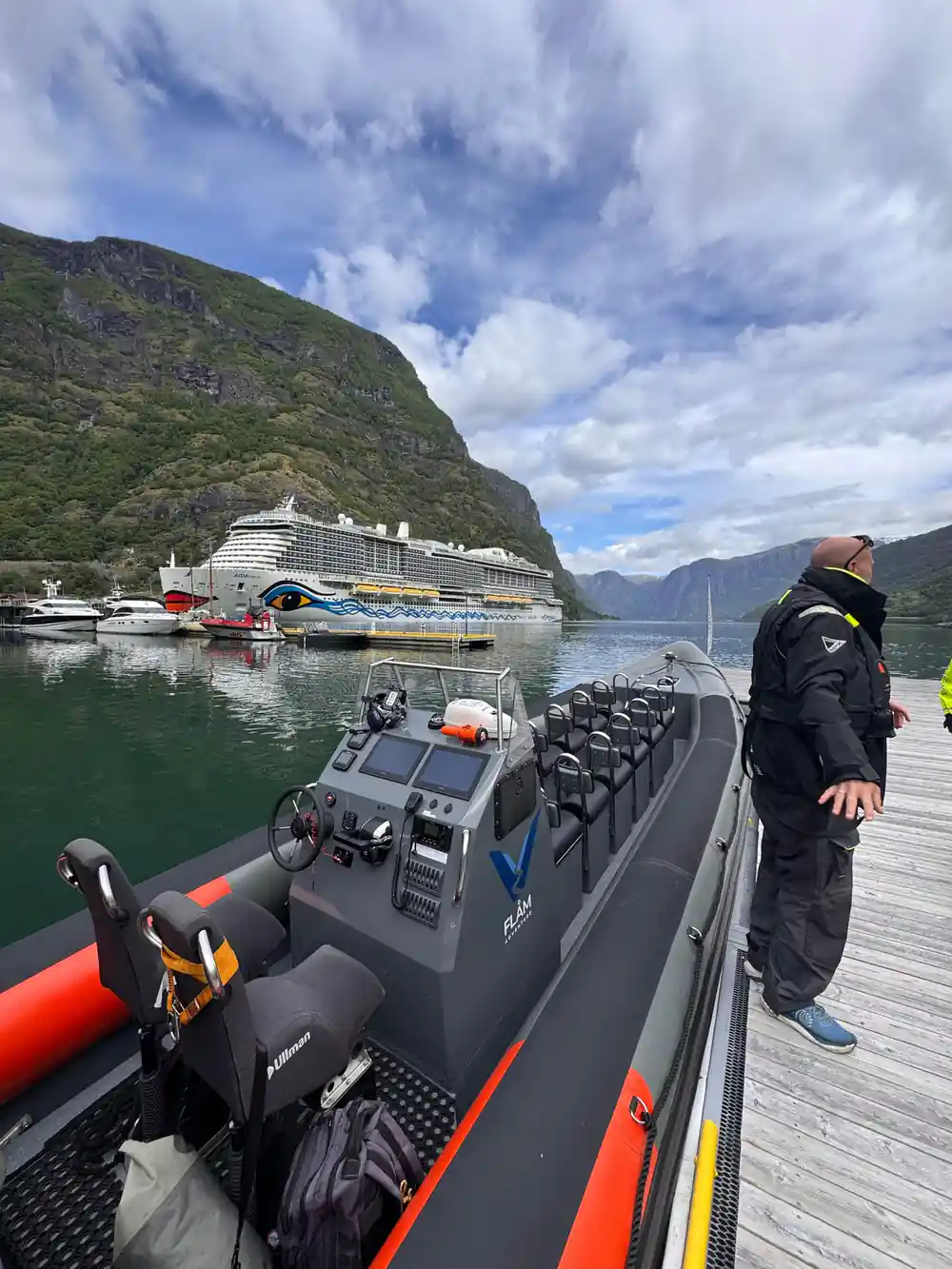
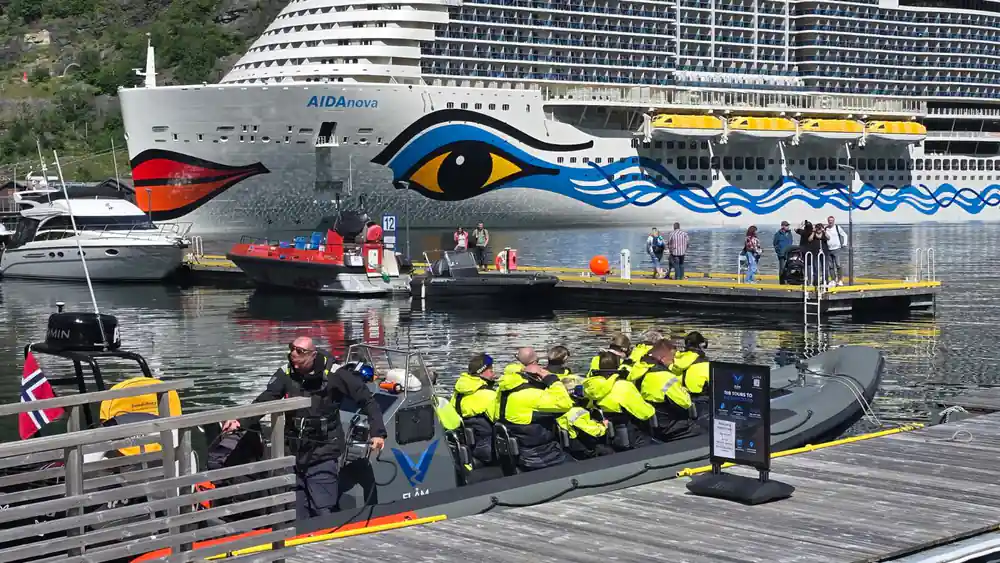
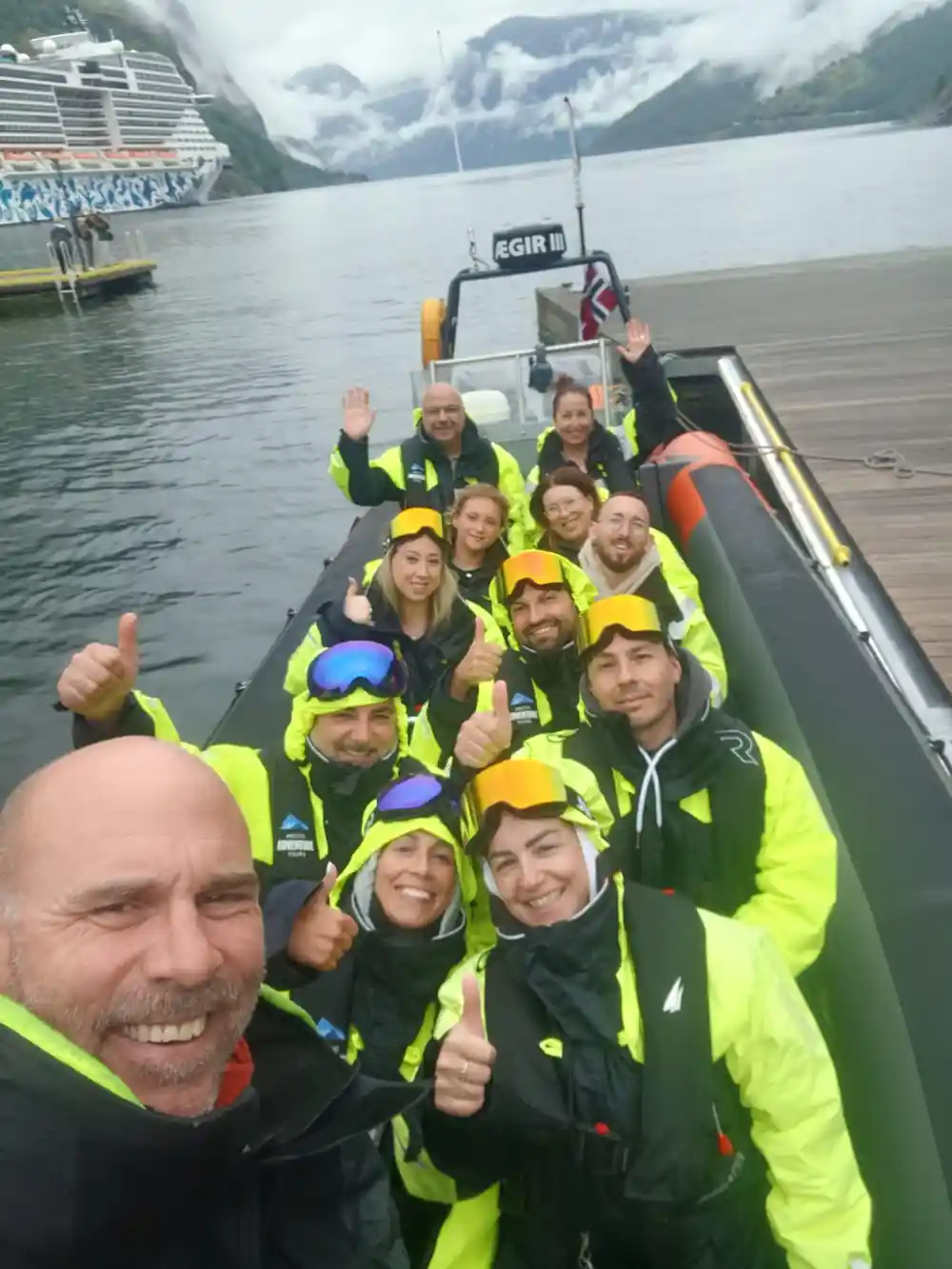
The RIB at the pontoon with a large cruise ship behind it
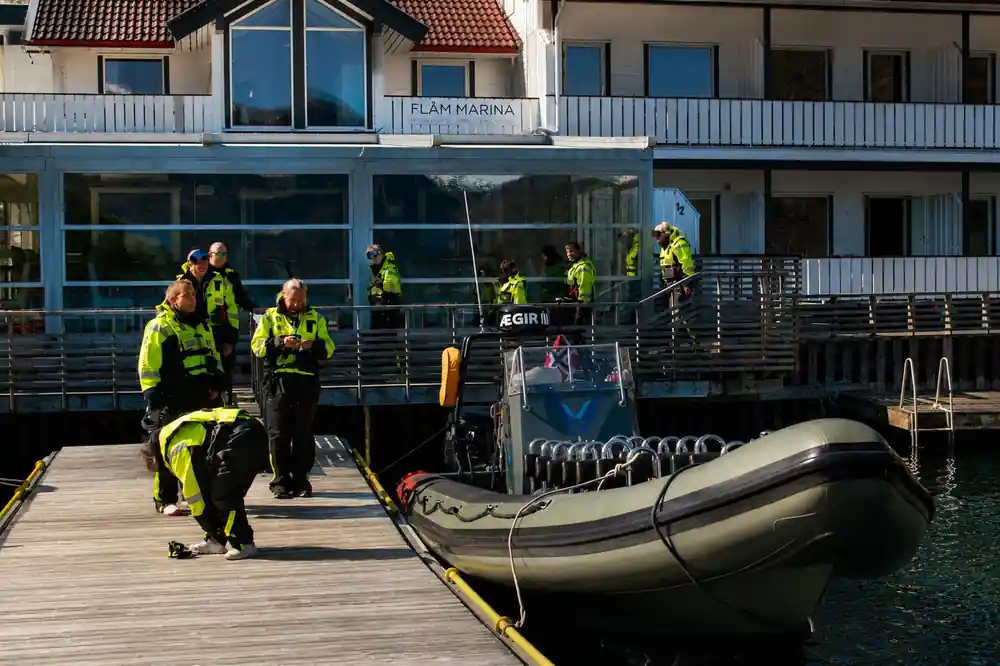
Passengers in suits gathered on the deck outside the marina building
A thin waterfall on a green wall seen over the inflatable collar
Passengers cheering with arms raised in the boat
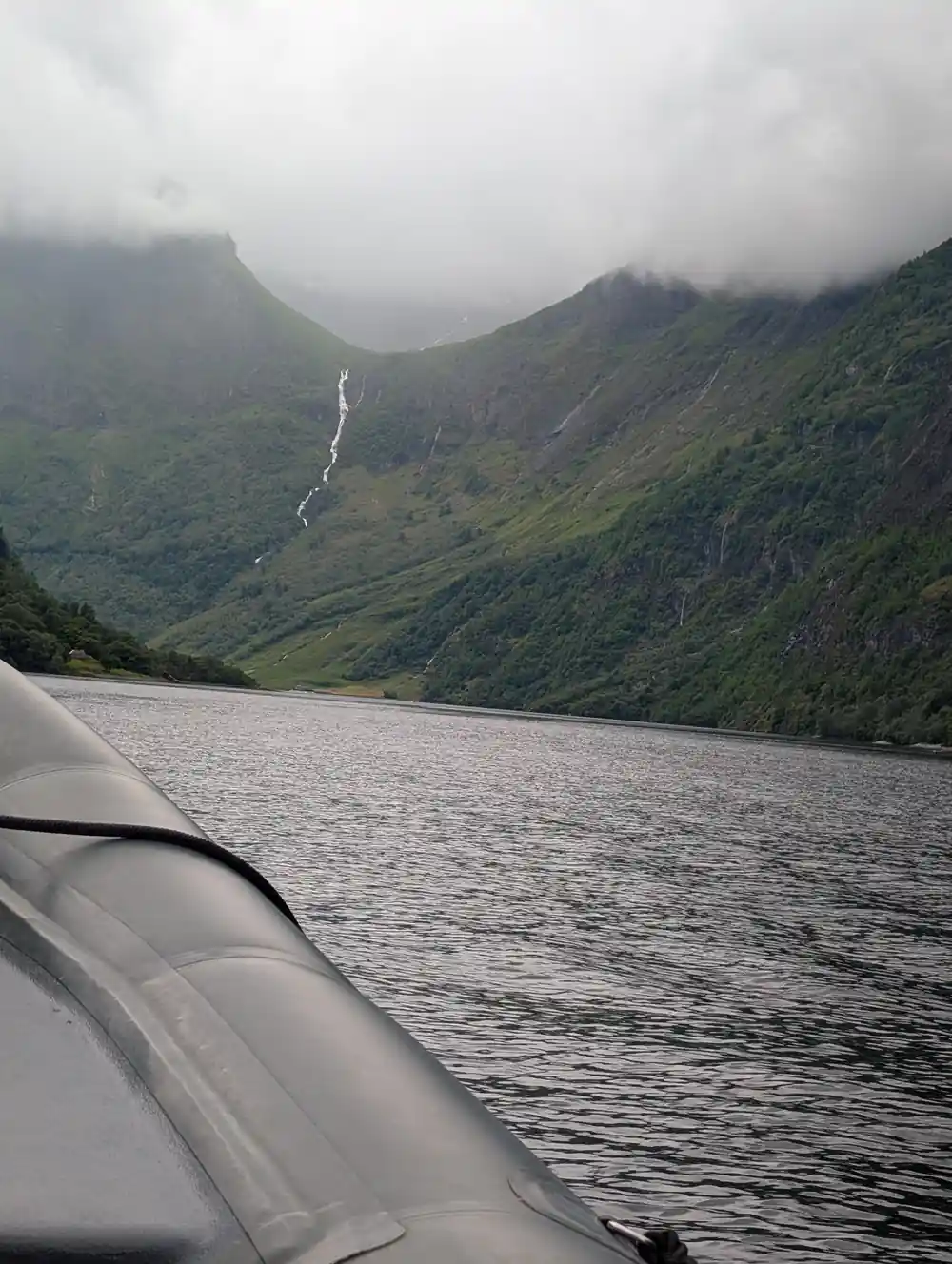
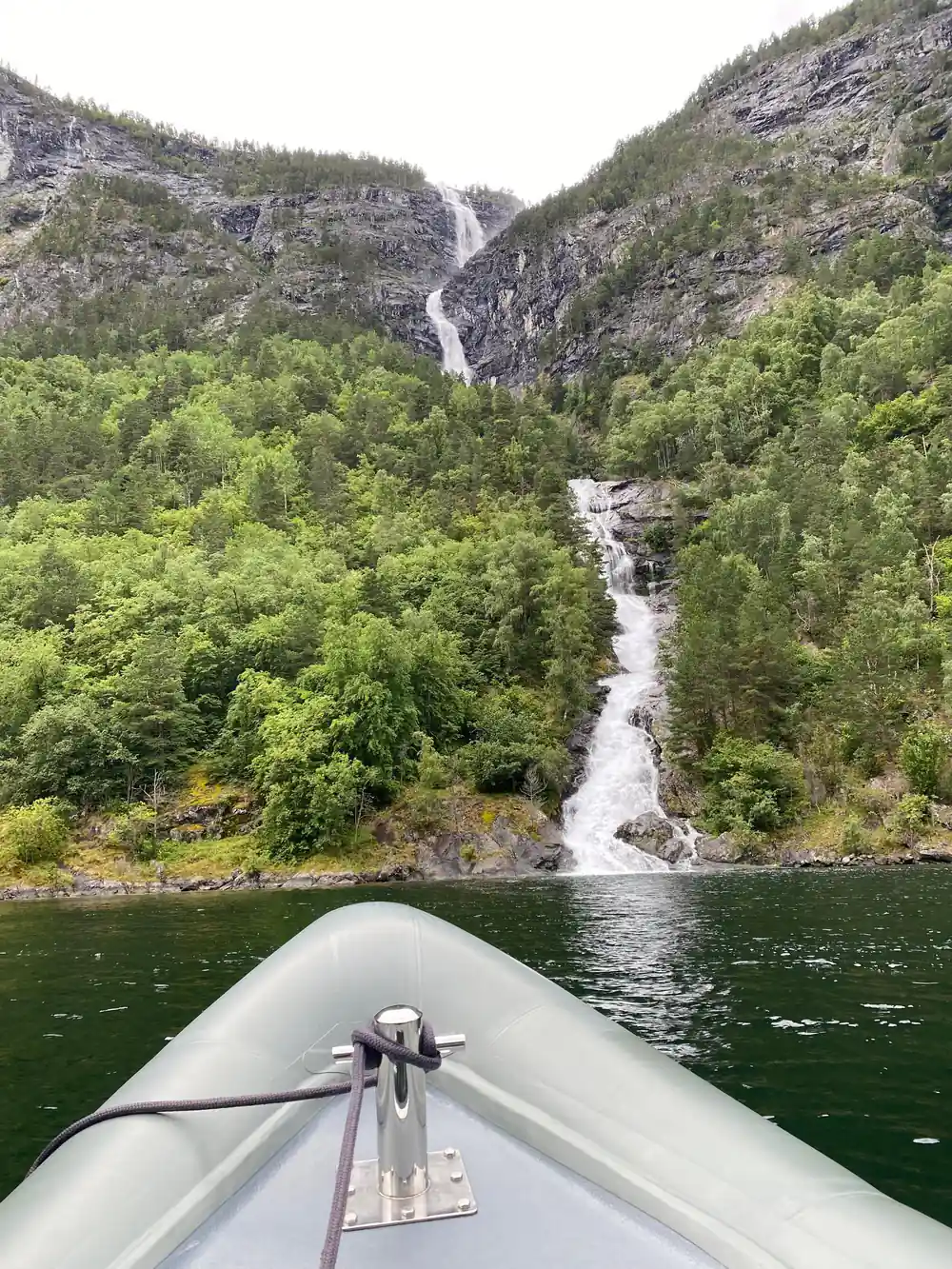
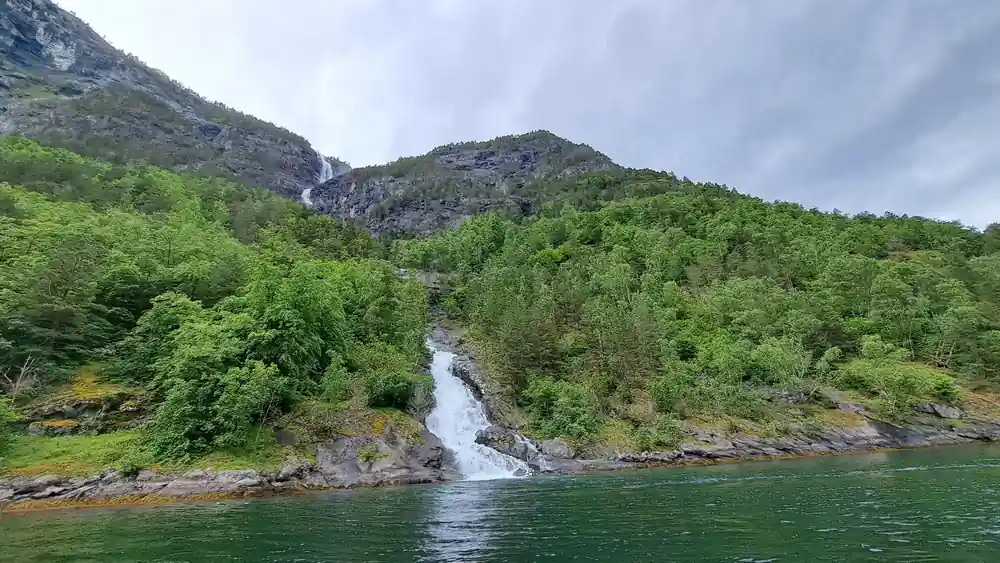
A long waterfall dropping through trees to the water
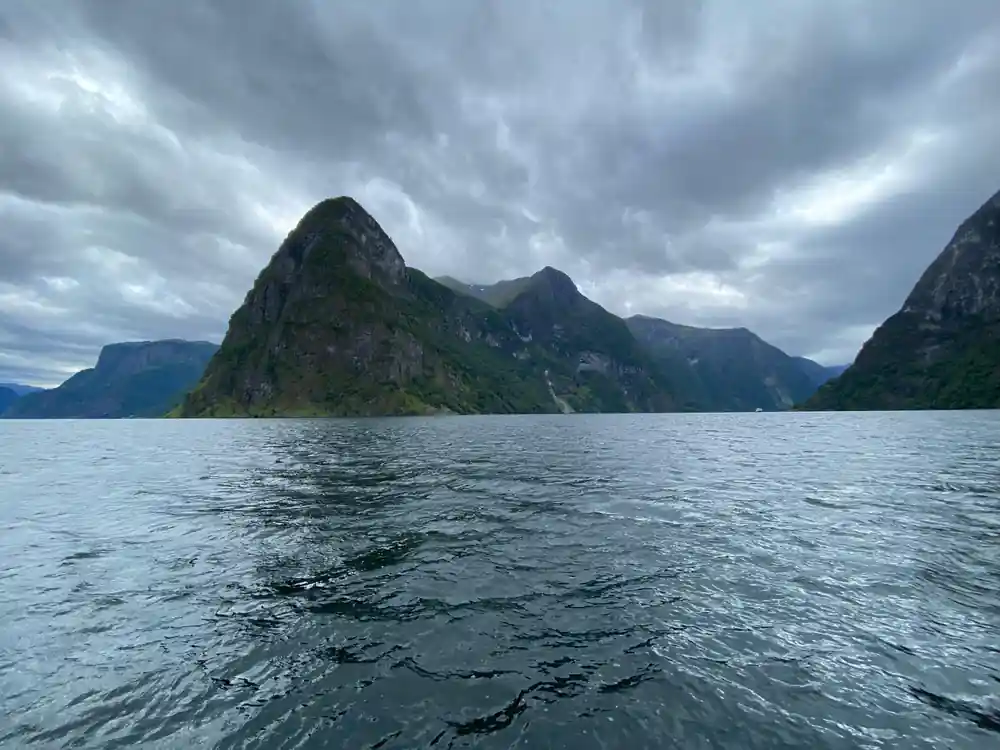
A pointed green summit under heavy cloud above flat water
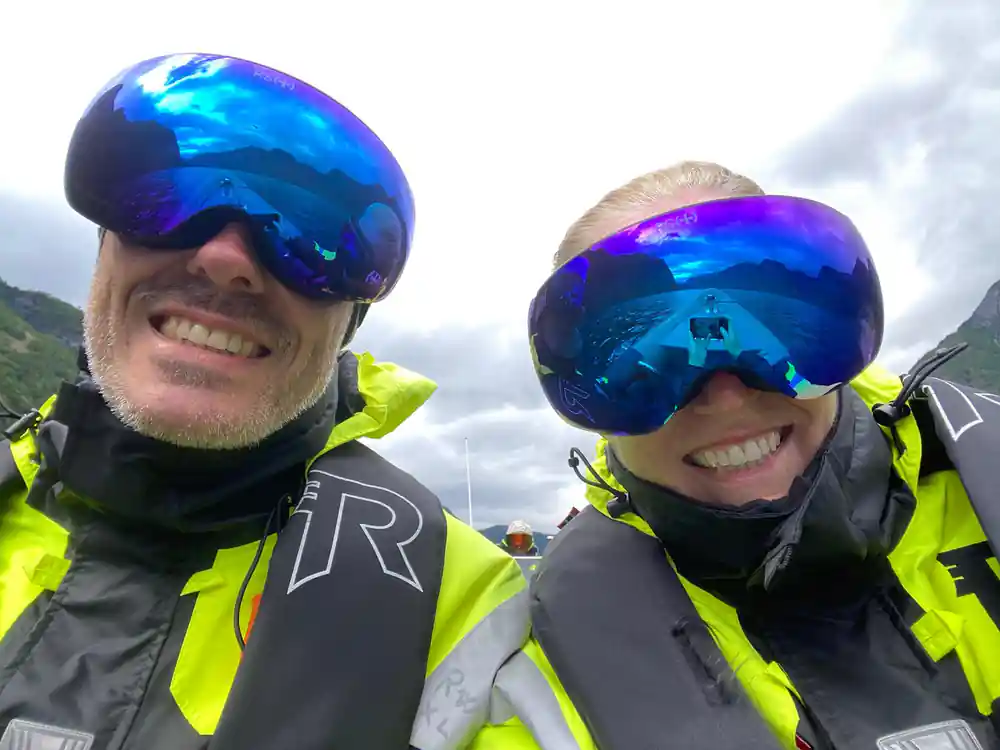
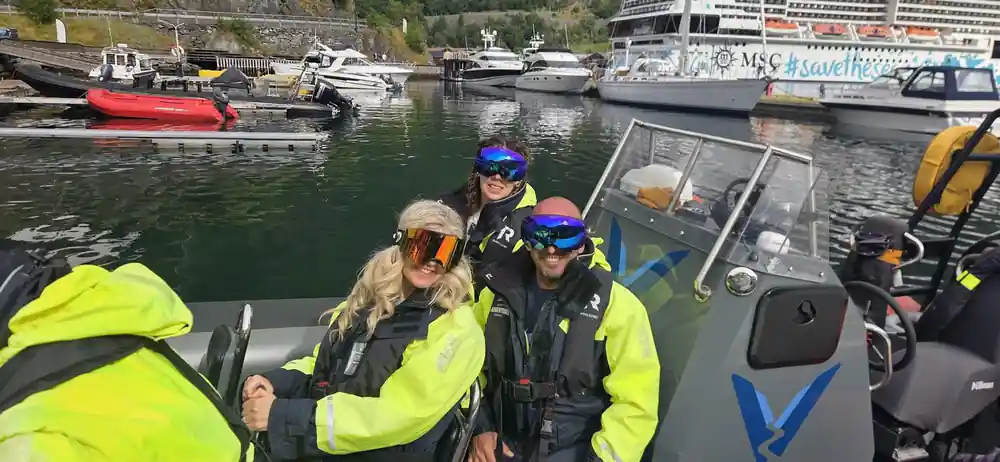
Two passengers in goggles and survival suits close to the camera
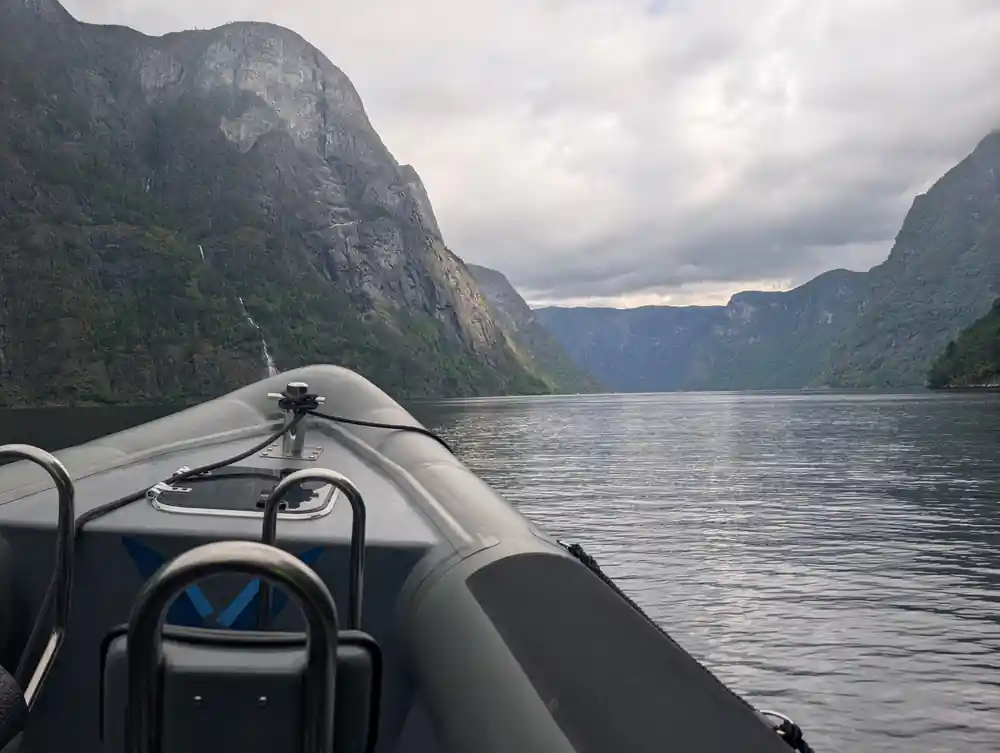
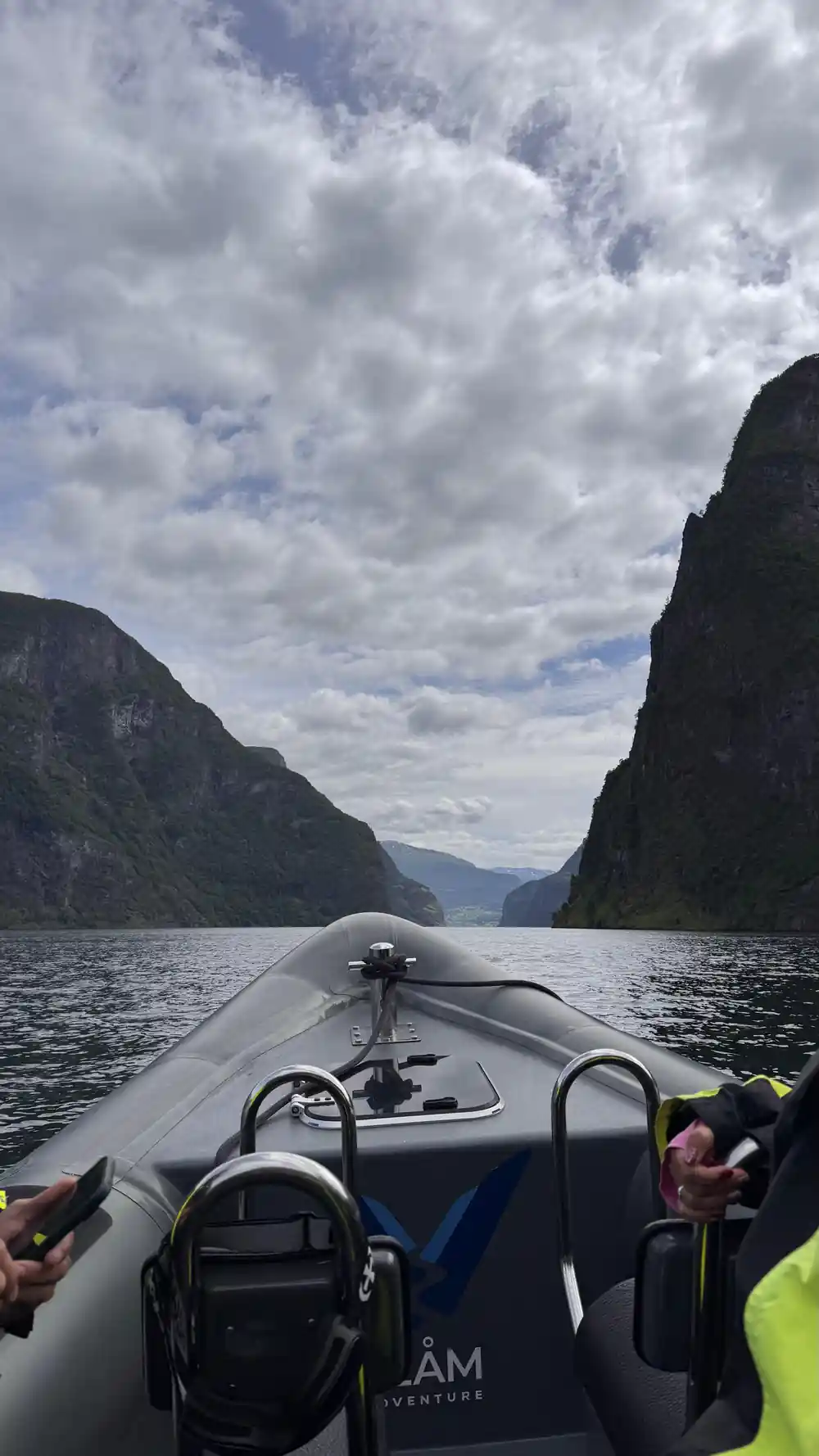
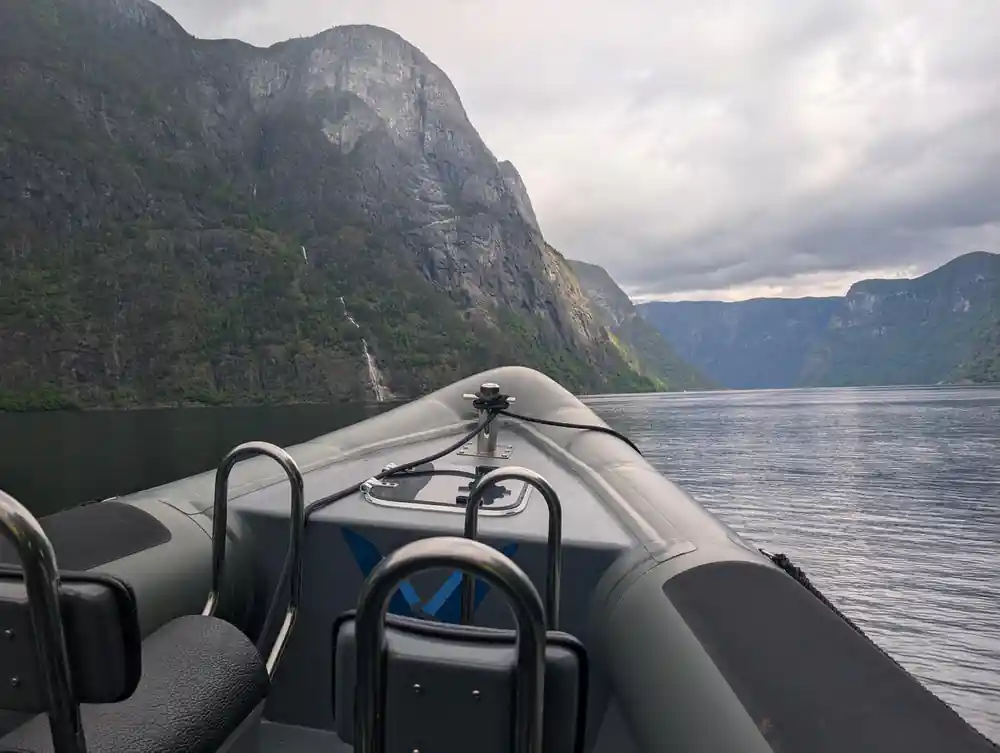
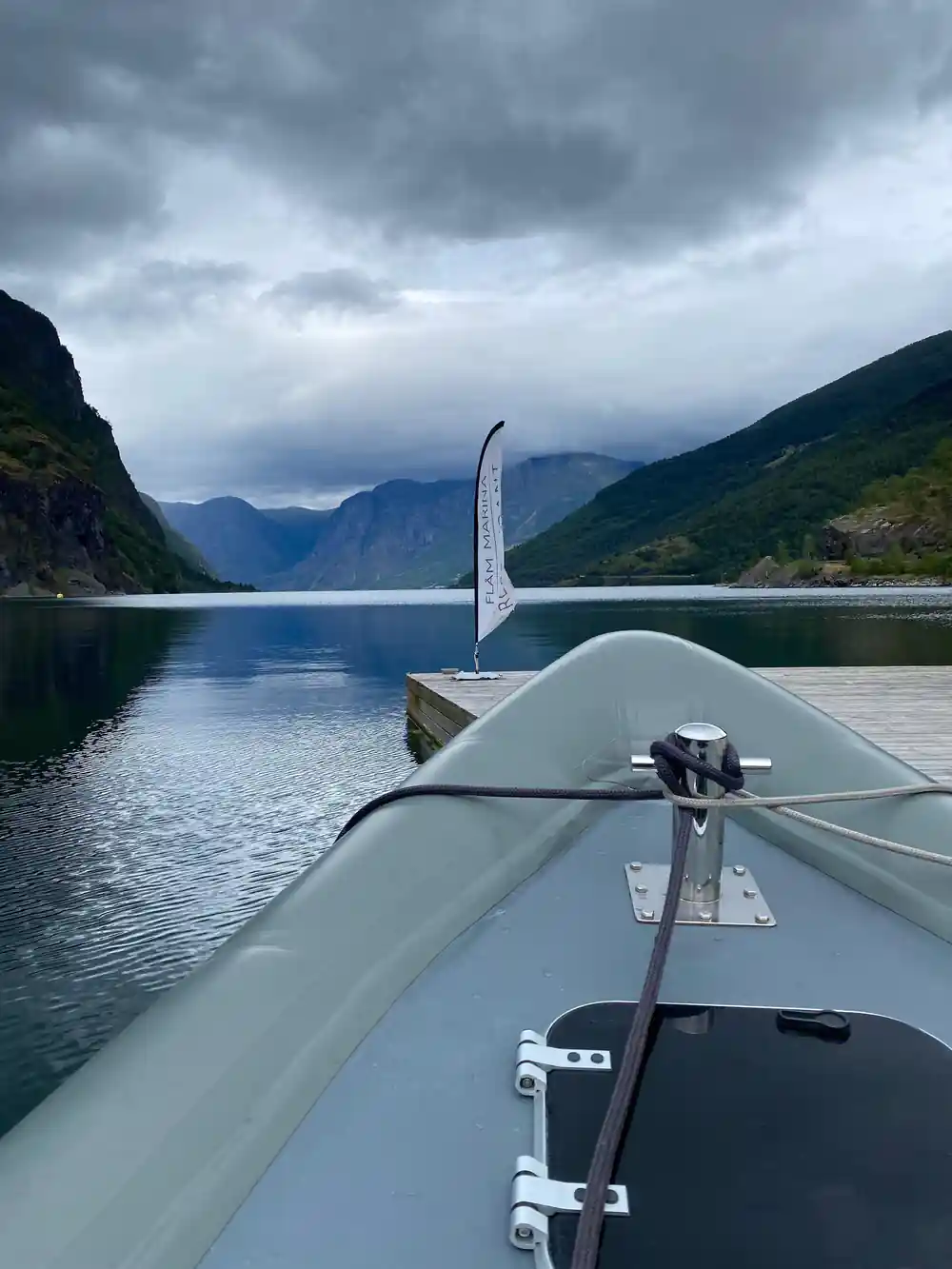
The bow of the boat and a flag on still water between the walls
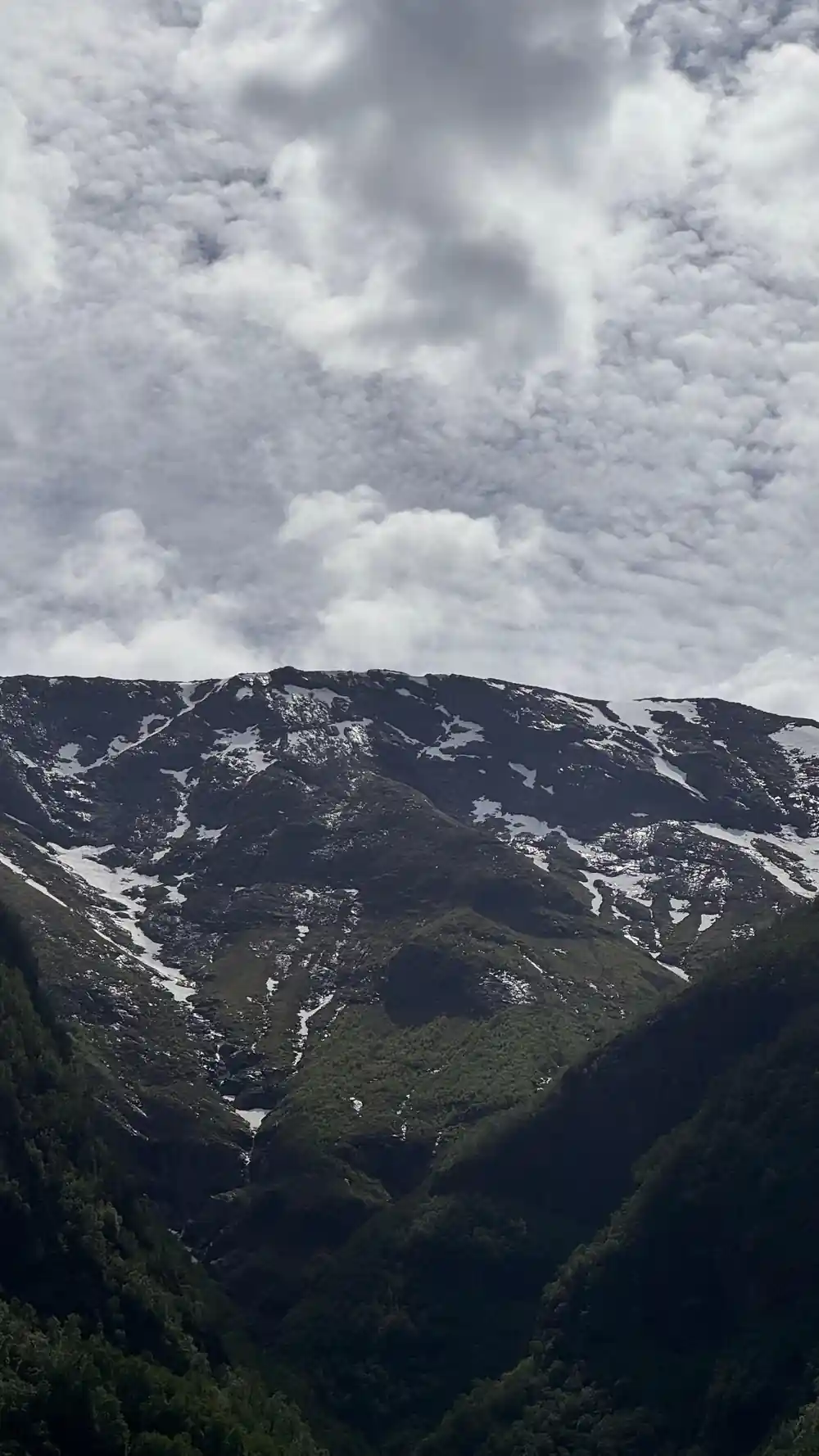
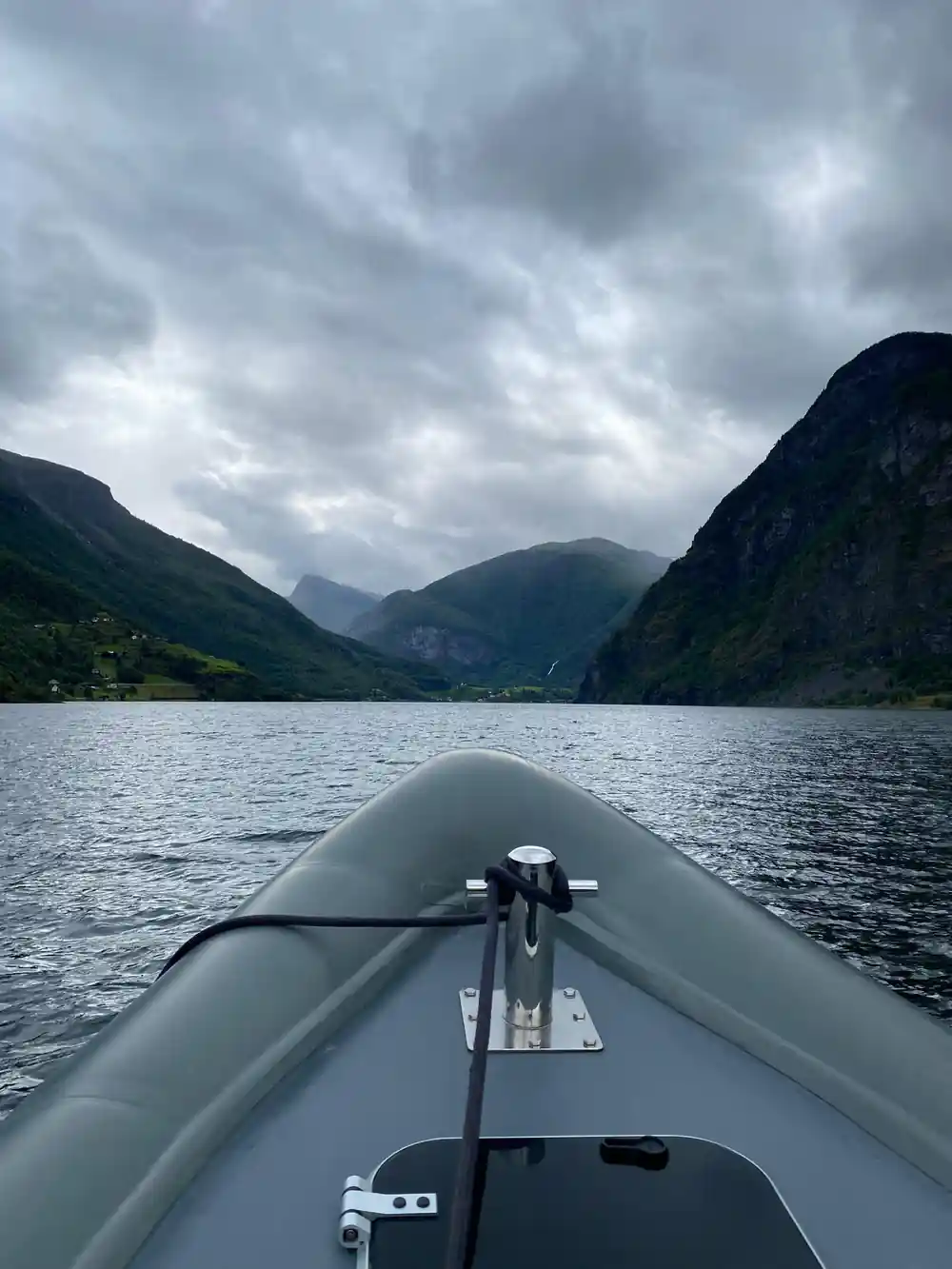
A dark headland ahead of the boat under cloud
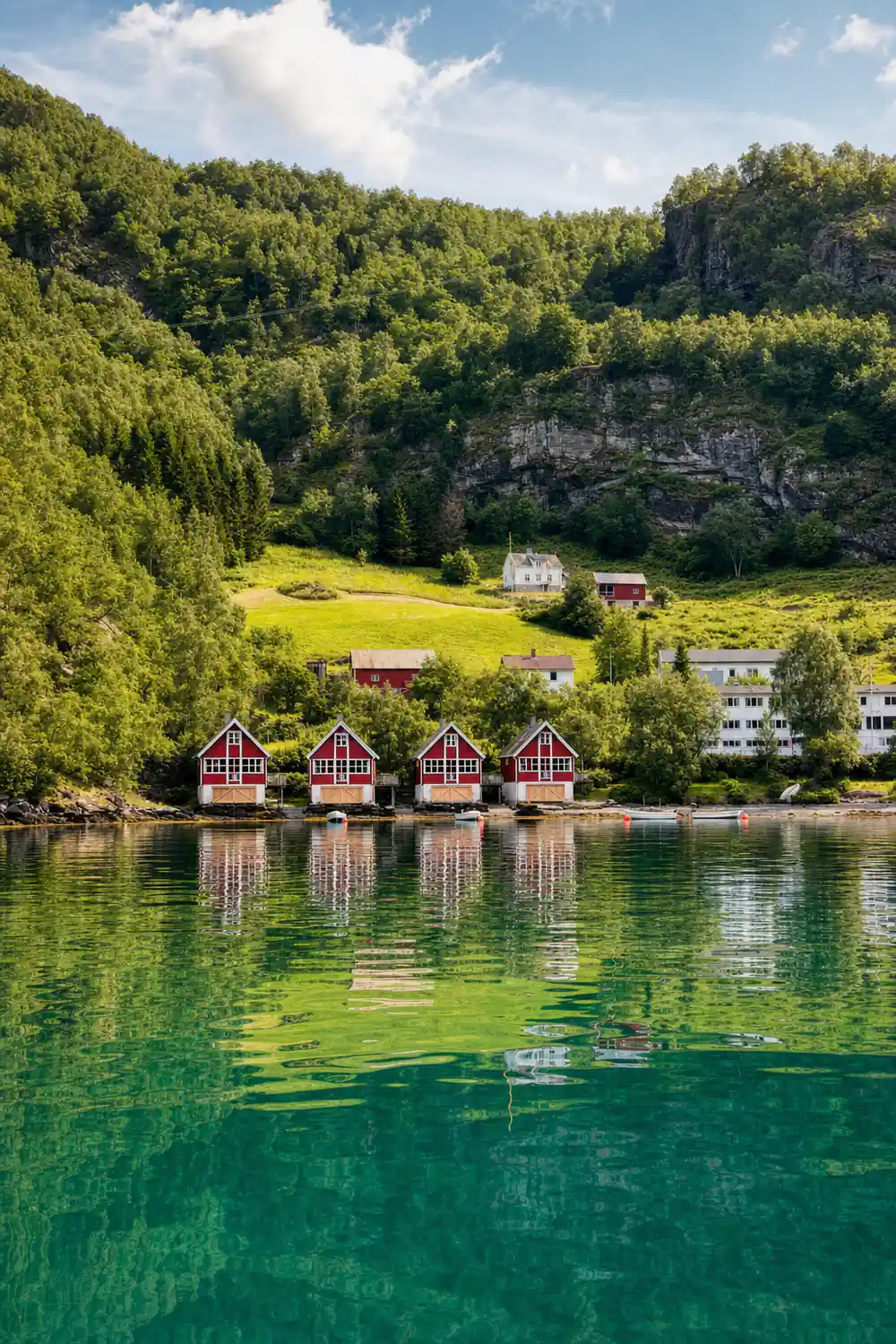
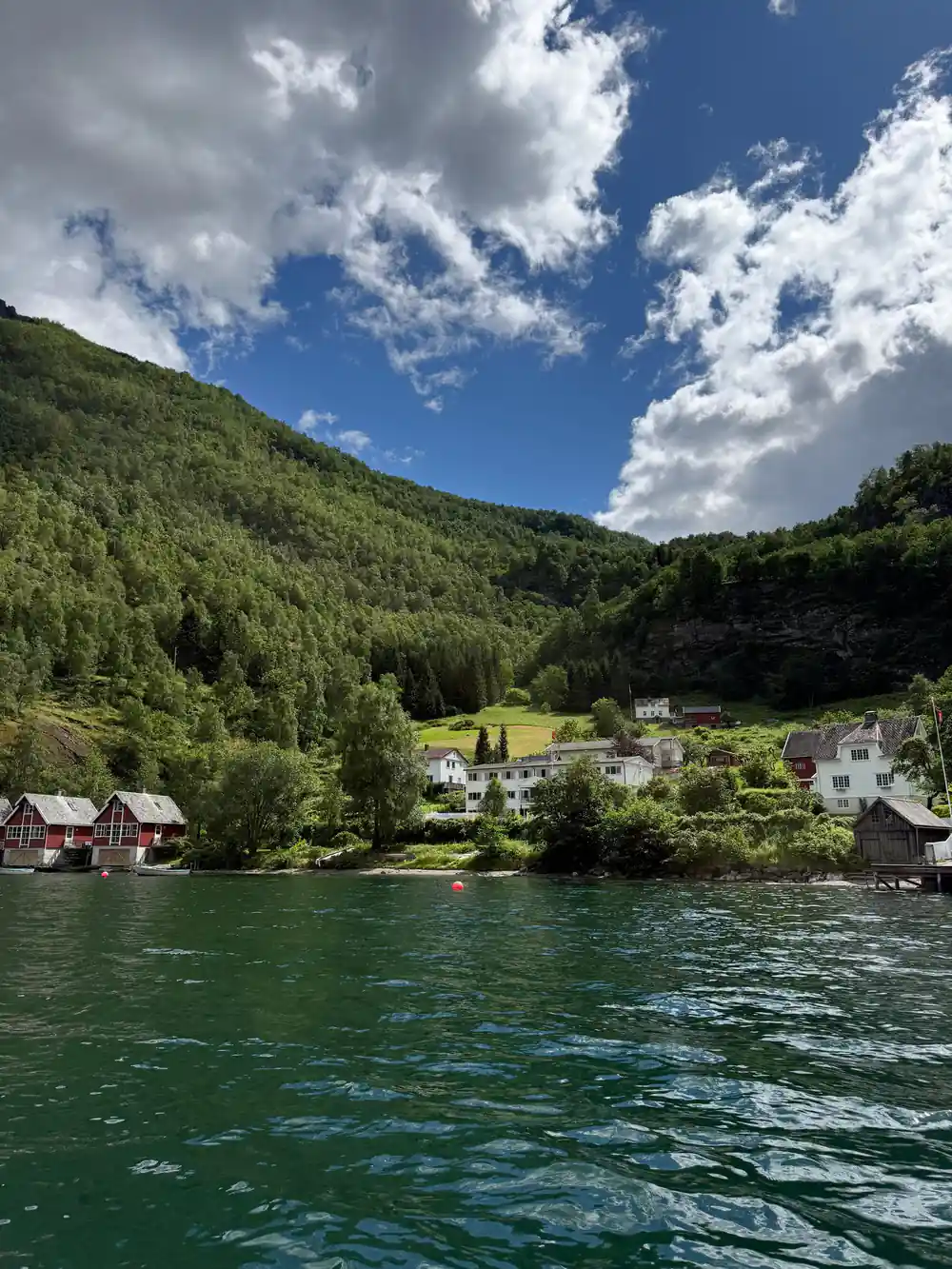
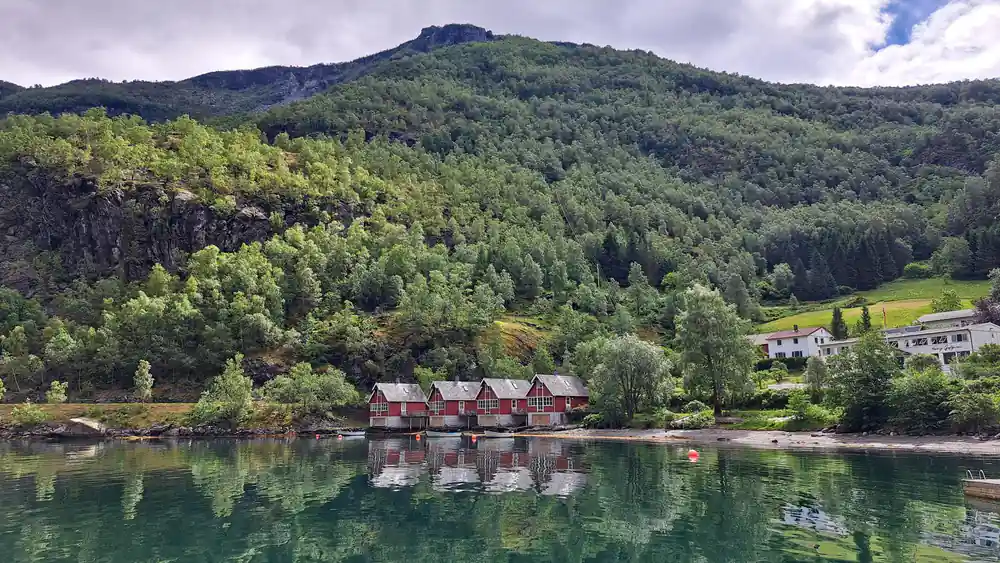
Red boathouses reflected in still green water below a wooded slope
Goats on a mossy rock face above the waterline
A waterfall running down a wooded slope into the fjord
Whitewater breaking over rock right beside the inflatable collar
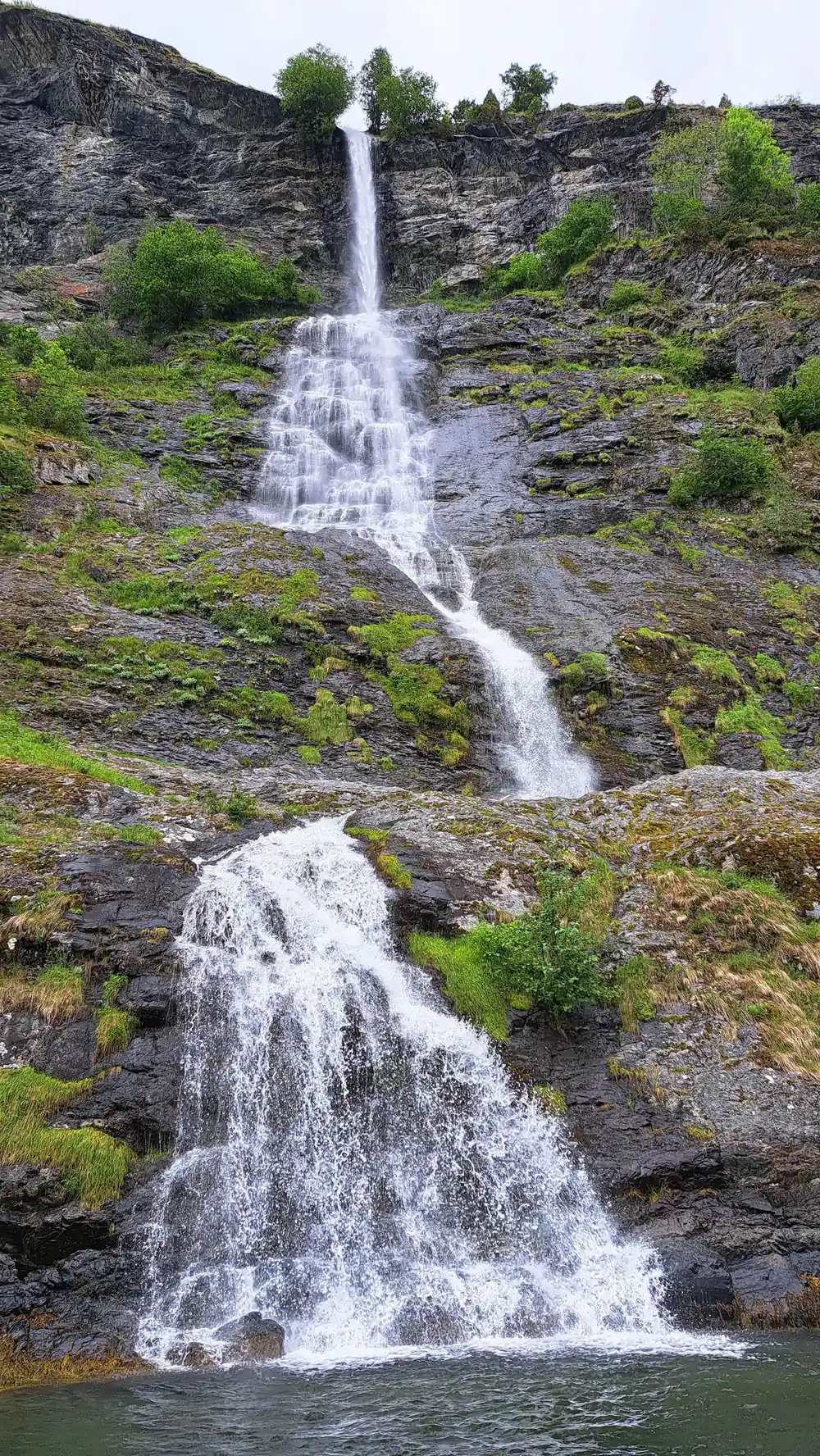
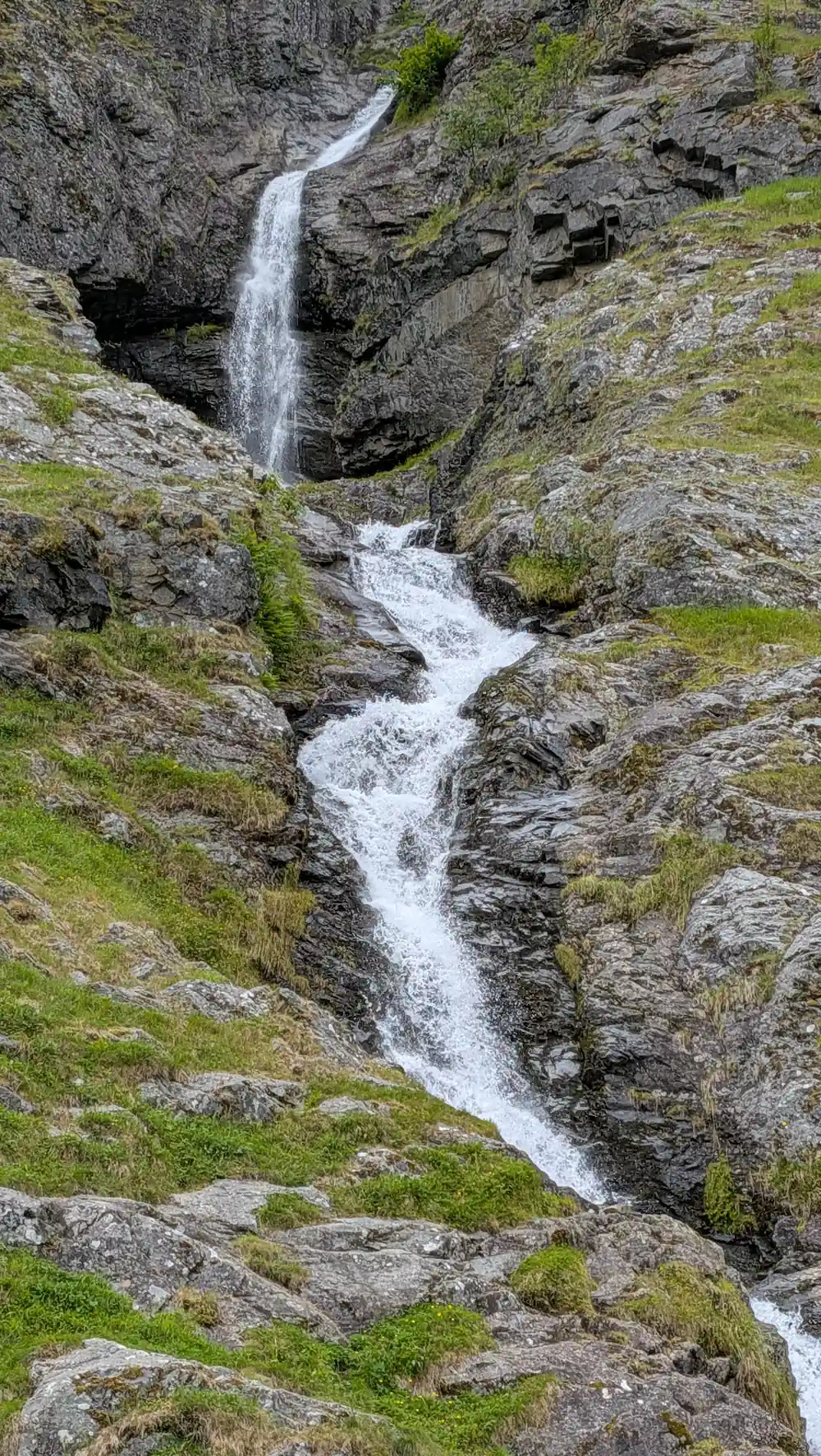
A waterfall dropping in two stages over mossy rock
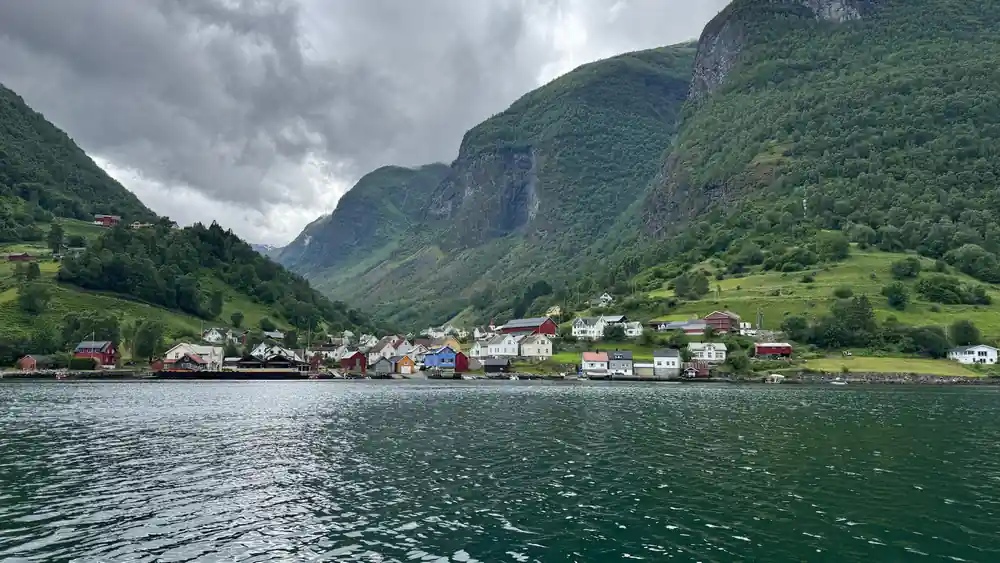
A village of white and red houses along the shore under a green mountain
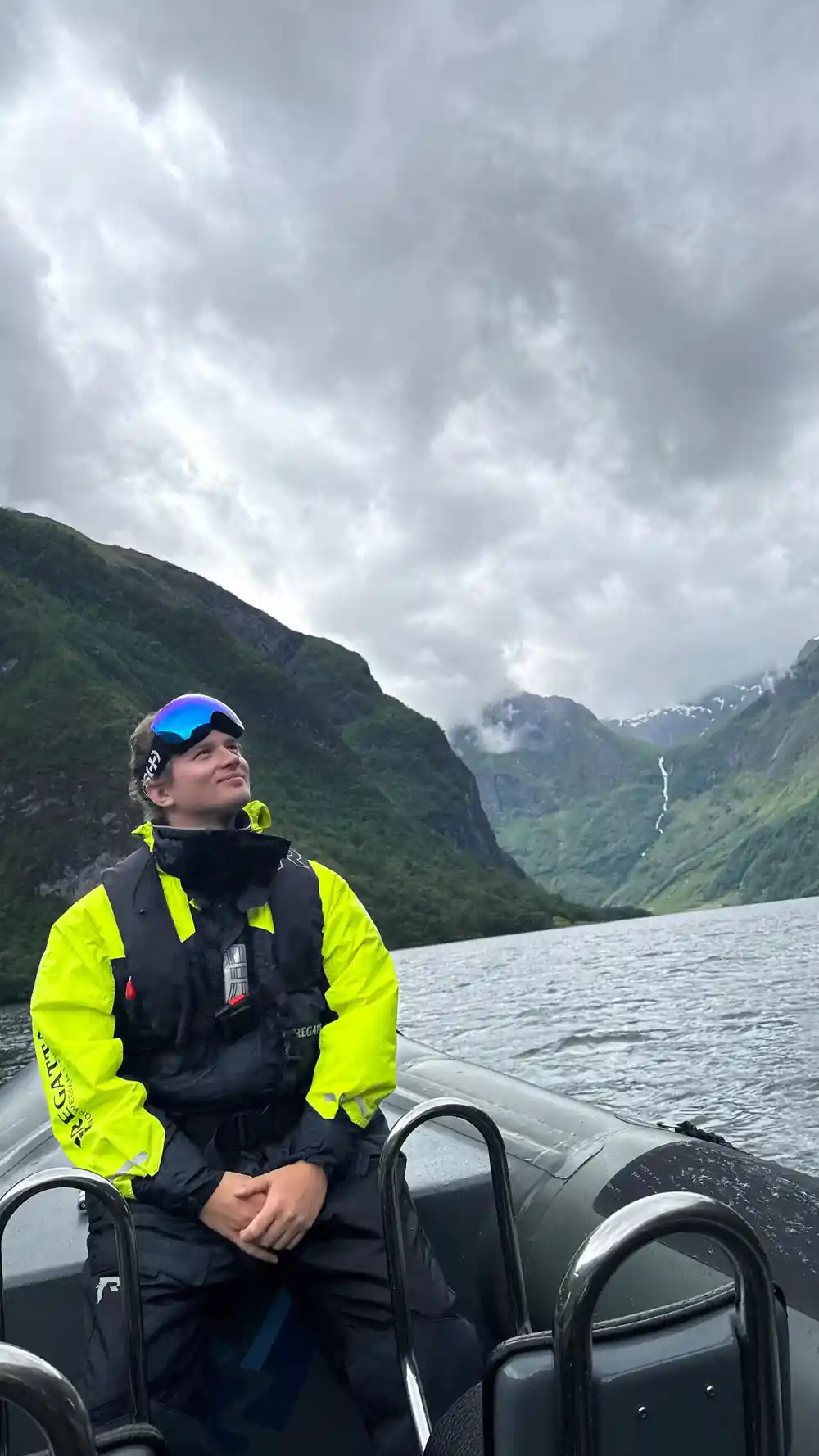
A passenger in a survival suit looking up at the fjord walls
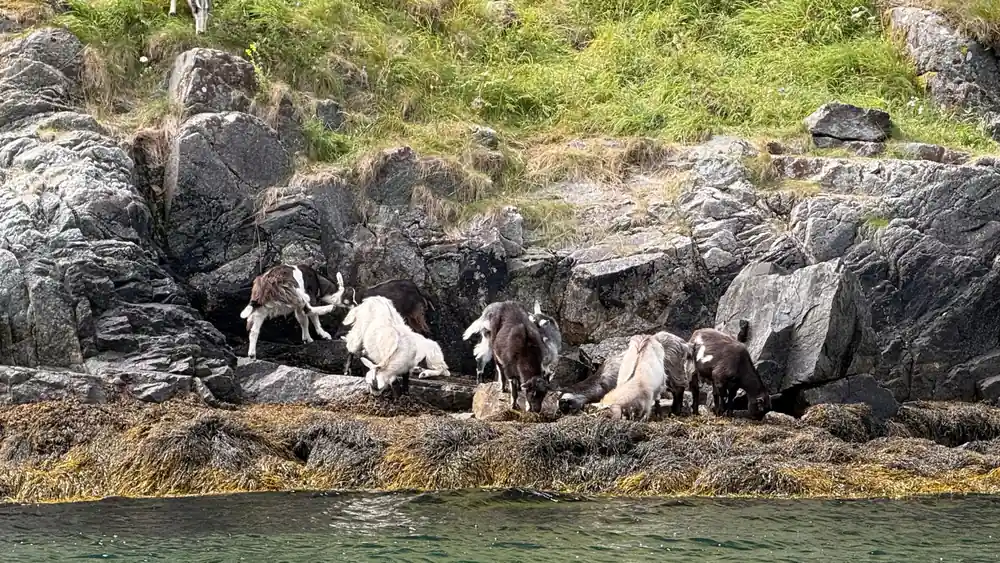
A herd of goats resting on the rocks at the waterline
Passengers in the boat with a dark headland ahead in blue light
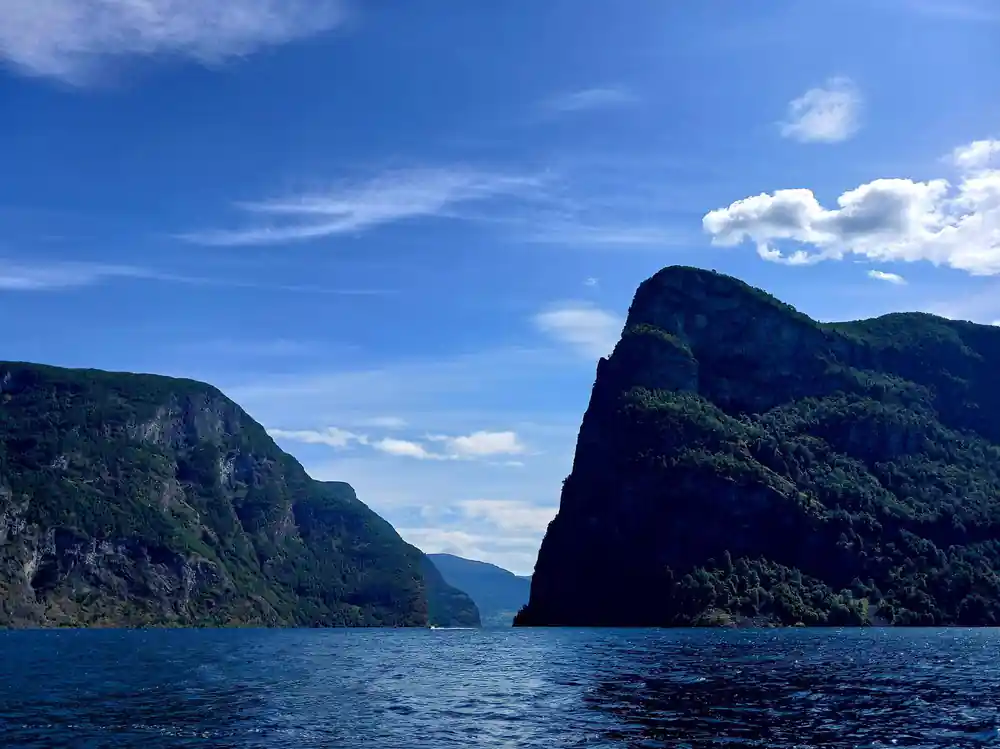
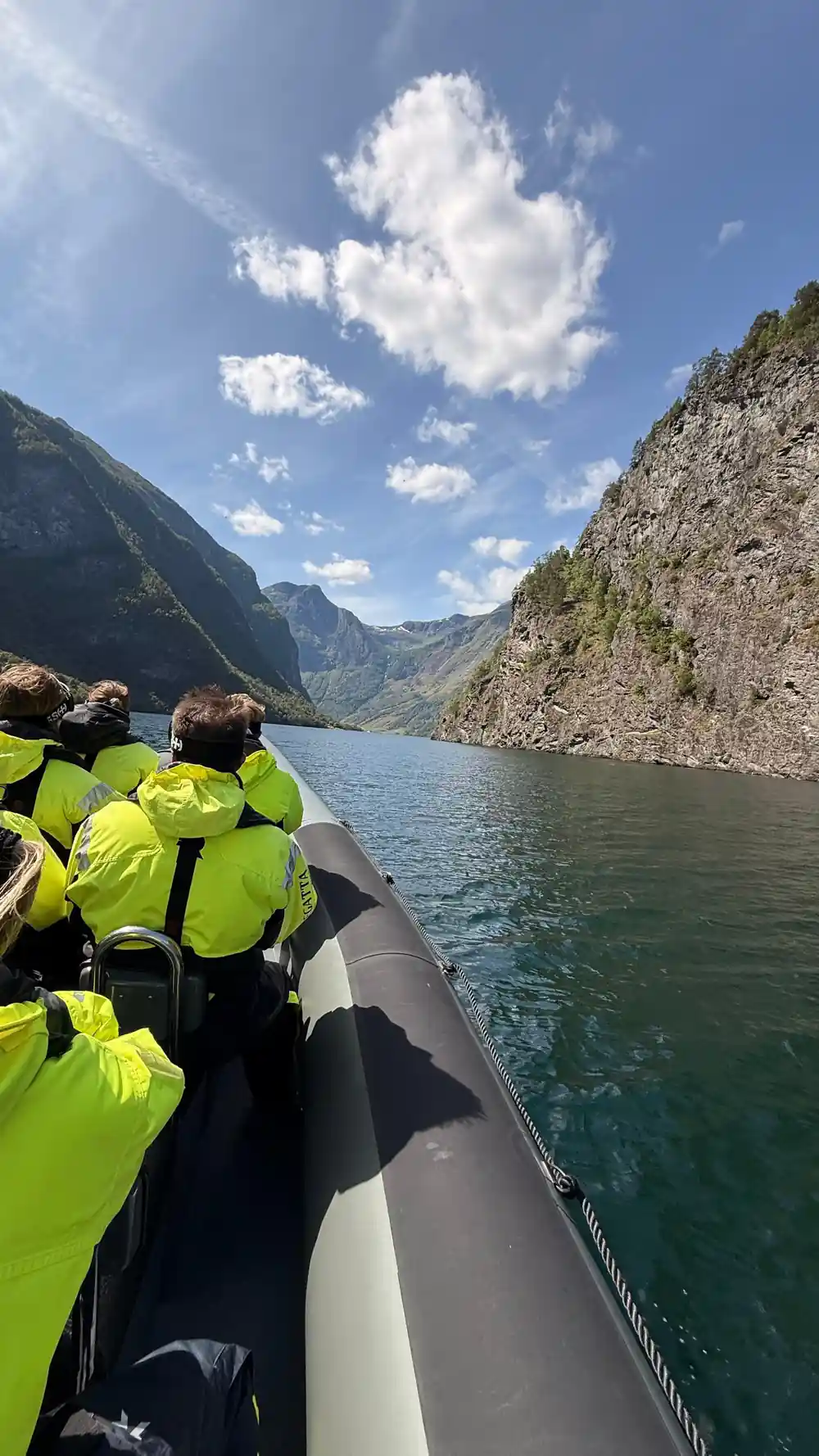
Mirror-flat water between two walls under a blue sky
A boatload of passengers in suits and goggles giving a thumbs up
Passengers in goggles at the marina with boats moored behind
A narrow waterfall threading down a mossy rock face
Goats standing on a steep rock slope above the water

Two hours, one thermal suit, and the narrowest fjord in Norway

Check availability

Weather

When to go

Low to high Days with rain Daylight
Source: NOAA GHCN

Flam month by month. This is an open boat and the season is felt rather than observed.

UNESCO

The Naeroyfjord was inscribed on the World Heritage list in 2005, together with the Geirangerfjord, as the West Norwegian Fjords.

Practical

What you get

Included

  • Thermal suit, life jacket, goggles and hat
  • Two hours of boat time
  • Local guide throughout

Tour details

  • Duration2 hours on the water
  • Allow2 hours 30 from check-in to return
  • Meeting pointFlam Marina, on the east side of Flam
  • Check-in30 minutes before departure
  • Minimum age14 years, and 140 cm tall
  • Not includedFood and drink
  • BringWarm layers and a camera

Book

Check dates and availability

Powered by GetYourGuide

Reviews

What people say

4.9

129 reviews

5 ★100%
4 ★0%
3 ★0%
2 ★0%
1 ★0%

How the 37 most recent reviews scored it

What the Naeroyfjord is

It is a side arm of the Sognefjord, which is the longest and deepest fjord in Norway, and it is the narrowest and steepest arm of the lot.

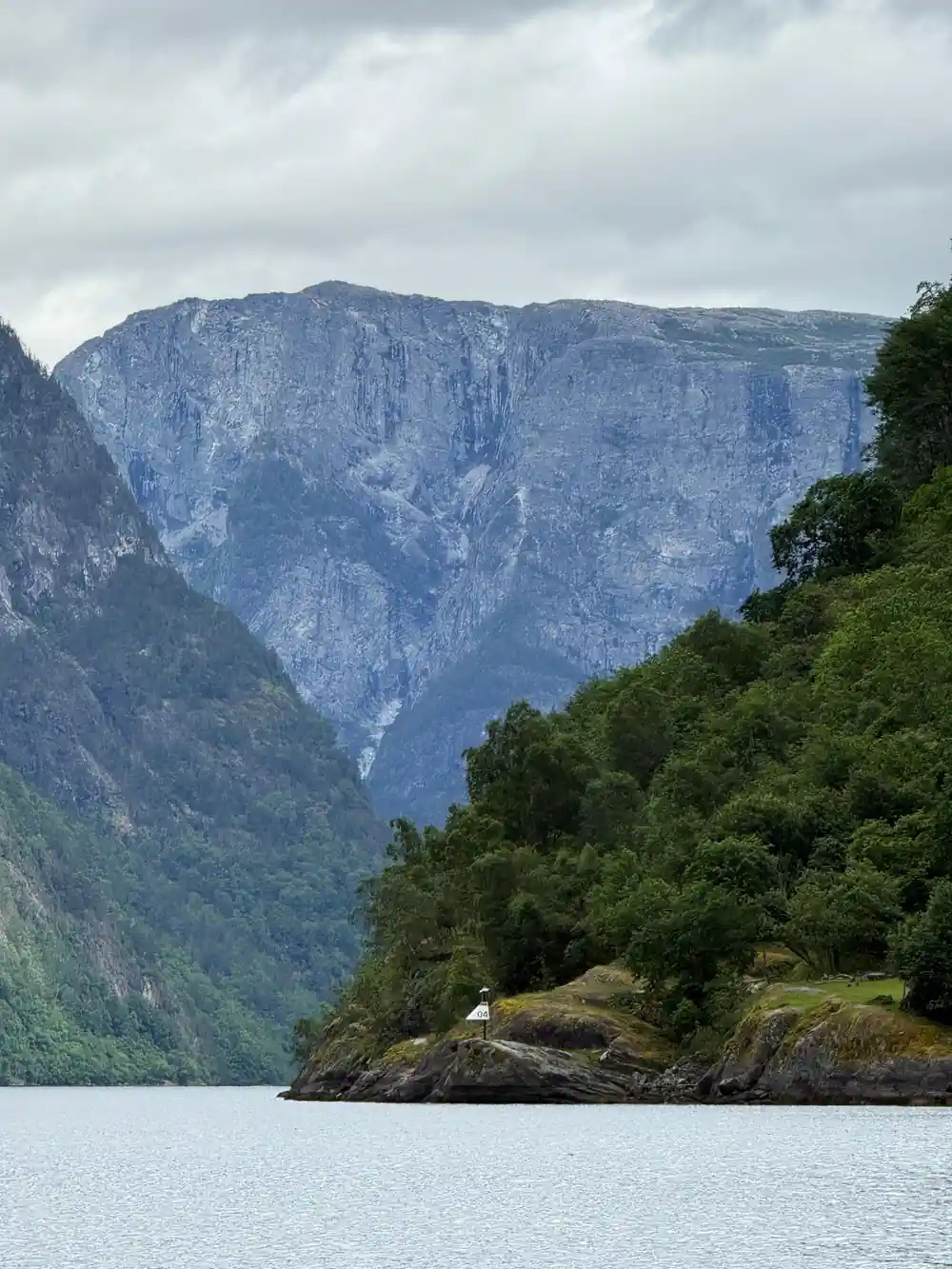
At its tightest the water between the walls is a few hundred metres across, with rock going up well over a kilometre on both sides. That ratio is the whole thing: a channel narrow enough that the sky is a strip and the light changes with every bend.

It was inscribed on the UNESCO World Heritage list in 2005 along with the Geirangerfjord, and the citation is about exactly this. Not the prettiness, but the scale and clarity of the landform: a textbook example of what ice does to rock, preserved without a road, a dam or a town in the middle of it.

It is also short, which surprises people. Seventeen kilometres is nothing next to the two hundred of the Sognefjord it branches from. The whole of the protected stretch fits comfortably inside a two-hour round trip, which is why this tour exists in the shape it does.

Why a small boat is a different trip

A large vessel is comfortable, sheltered and slow, and it stays in open water because it has to. It draws several metres, it takes time to turn, and it cannot approach a rock wall.

A rigid inflatable draws almost nothing, turns on the spot and is small enough to be nosed in close to the shore. That means the guide can take you under a waterfall, along a rock face and into corners a scheduled boat has no business entering.

It also means you are outside for two hours with nothing between you and the fjord, which is why there is a thermal suit rather than a lounge. Speed on cold water in an open boat is cold, and being dressed for it is the difference between an experience and an endurance test.

The waterfalls

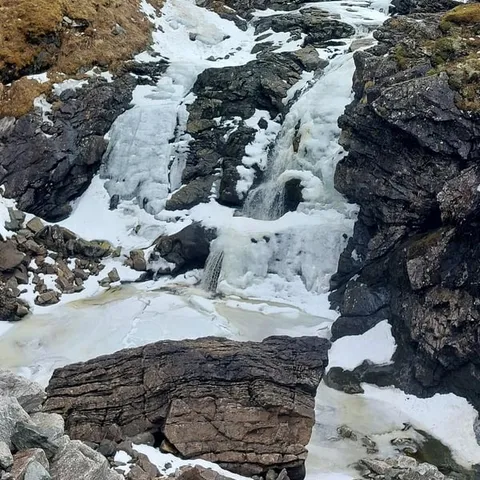
Glaciers cut the main valley far deeper than the side valleys feeding into it, so the tributaries were left hanging high up the walls. Their water has nowhere to go but over the edge.

The result is a fjord with waterfalls down both sides, dozens of them, most unnamed. After heavy rain or during the spring melt they multiply into something closer to a curtain than a set of falls.

This is where the boat earns its keep. The guide can take the RIB right up to the base of one, close enough that the noise takes over and the spray reaches you, and that is not an experience available from any other vessel on this water.

How many there are depends entirely on the week. A dry spell in late summer leaves the permanent ones; two days of rain puts three or four times as many down the same walls, most of them gone again within days.

The farms nobody can explain from a distance

Look up as you go and you will see green shelves partway up the walls, and on some of them buildings.

People farmed those ledges for centuries. There was no road to any of them; everything and everybody arrived by boat and then went up. Children were rowed to school. Hay was carried down. Livestock were moved on paths that a modern visitor would not attempt.

Almost all of them are empty now, abandoned across the twentieth century as the arithmetic stopped working. From a large vessel they are a detail on the hillside. From a small boat close in, with somebody explaining them, they are the most memorable thing in the fjord.

What else is out there

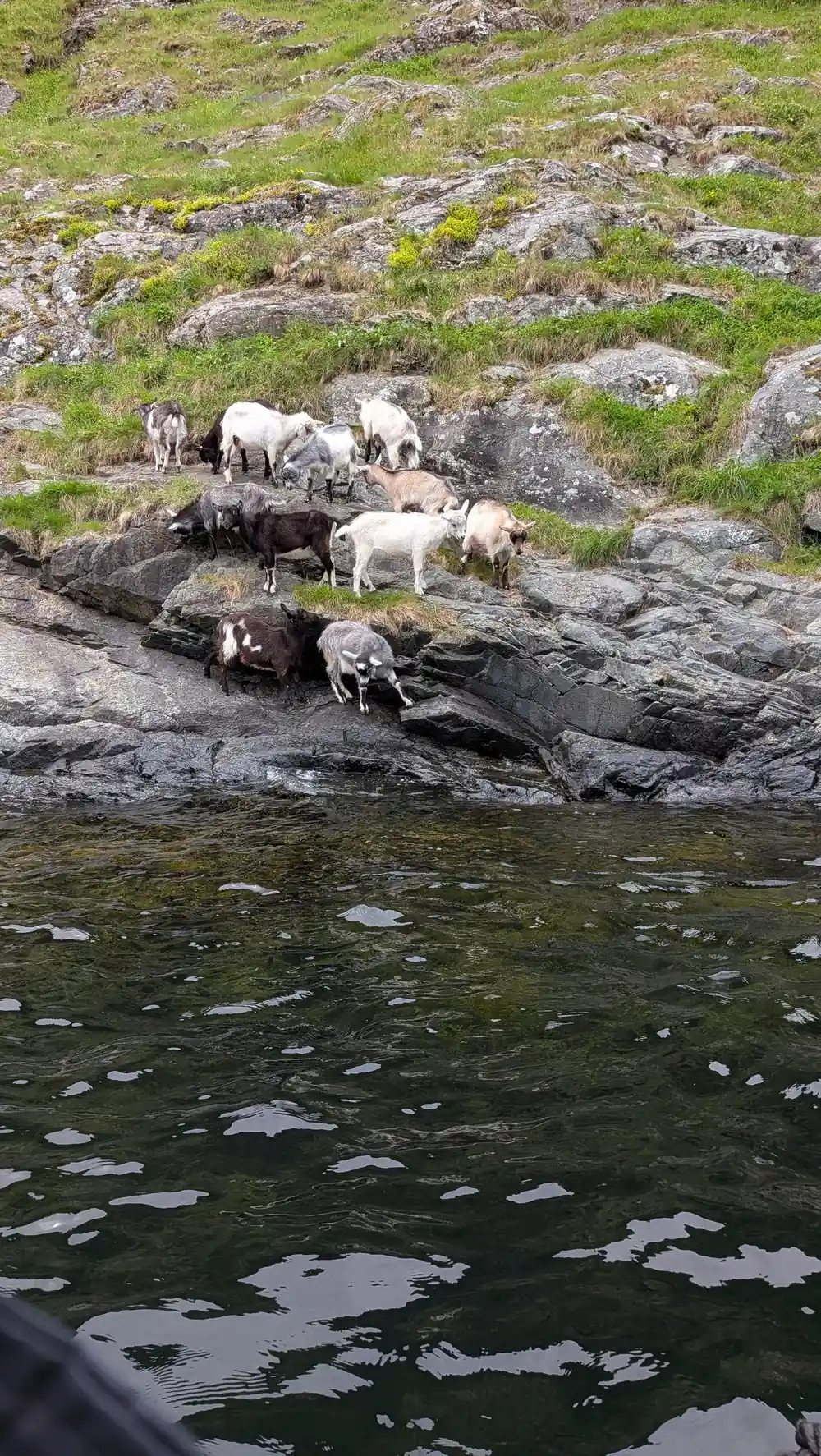
Goats, first, because they surprise everyone. There are goats on the rock faces above the waterline, standing on ledges that look like they should not hold anything, and they are entirely unbothered.

Harbour porpoises come into the fjord, and seals use it. White-tailed eagles nest on these walls, and a bird with a two-metre wingspan crossing above an open boat is a different proposition from the same bird seen through a window.

None of it is promised. It is a wild fjord rather than a wildlife tour, and the honest position is that most trips see something and no trip is guaranteed anything.

Who this is not for

The operator is direct and so should we be. Nobody under fourteen and nobody under a hundred and forty centimetres can go, and that is a fixed rule rather than a guideline.

It is also unsuitable for pregnant passengers and for anyone with mobility impairments. A RIB involves stepping down into a boat that is moving, sitting astride a padded bench and absorbing impacts through your back for two hours.

If any of that sounds wrong, the scheduled cruise on the same fjord is a genuinely good alternative rather than a consolation prize, and there is a page here comparing them honestly.

None of that is the operator being cautious for the sake of it. A rigid inflatable takes impacts through the hull and passes them to whoever is sitting on it, and two hours of that is a genuine physical experience rather than a boat ride.
Questions

Before you book

What is the Naeroyfjord?
The narrowest arm of the Sognefjord, UNESCO listed in 2005, with walls rising more than a kilometre above water a few hundred metres wide.
How long is the trip?
Two hours on the water. Allow two and a half in total, because check-in is thirty minutes before departure.
What is a RIB?
A rigid inflatable boat: a hard hull with an inflatable collar. Small, fast, shallow and able to get close to rock.
What is provided?
A thermal suit, a life jacket, goggles and a hat. You bring warm layers to go underneath and a camera.
Who can go?
Anyone fourteen or over and at least 140 cm. It is not suitable for pregnant passengers or people with mobility impairments.
Where does it leave from?
Flam Marina, on the east side of Flam, about ten minutes on foot along the waterfront from the port.
Is it cold?
Yes, and that is what the suit is for. An open boat at speed on cold water is colder than the air temperature suggests.
Will I get wet?
Some spray, depending on conditions and where you sit. The suit handles it; your camera needs its own plan.
Is it rough?
The fjord is sheltered, so it is rarely rough in the open-sea sense, but a fast small boat moves and you feel it through the seat.
Can I take photographs?
Yes, and people do constantly. Ask about a dry bag before boarding rather than after the first waterfall.

Check availability