If you read nothing else
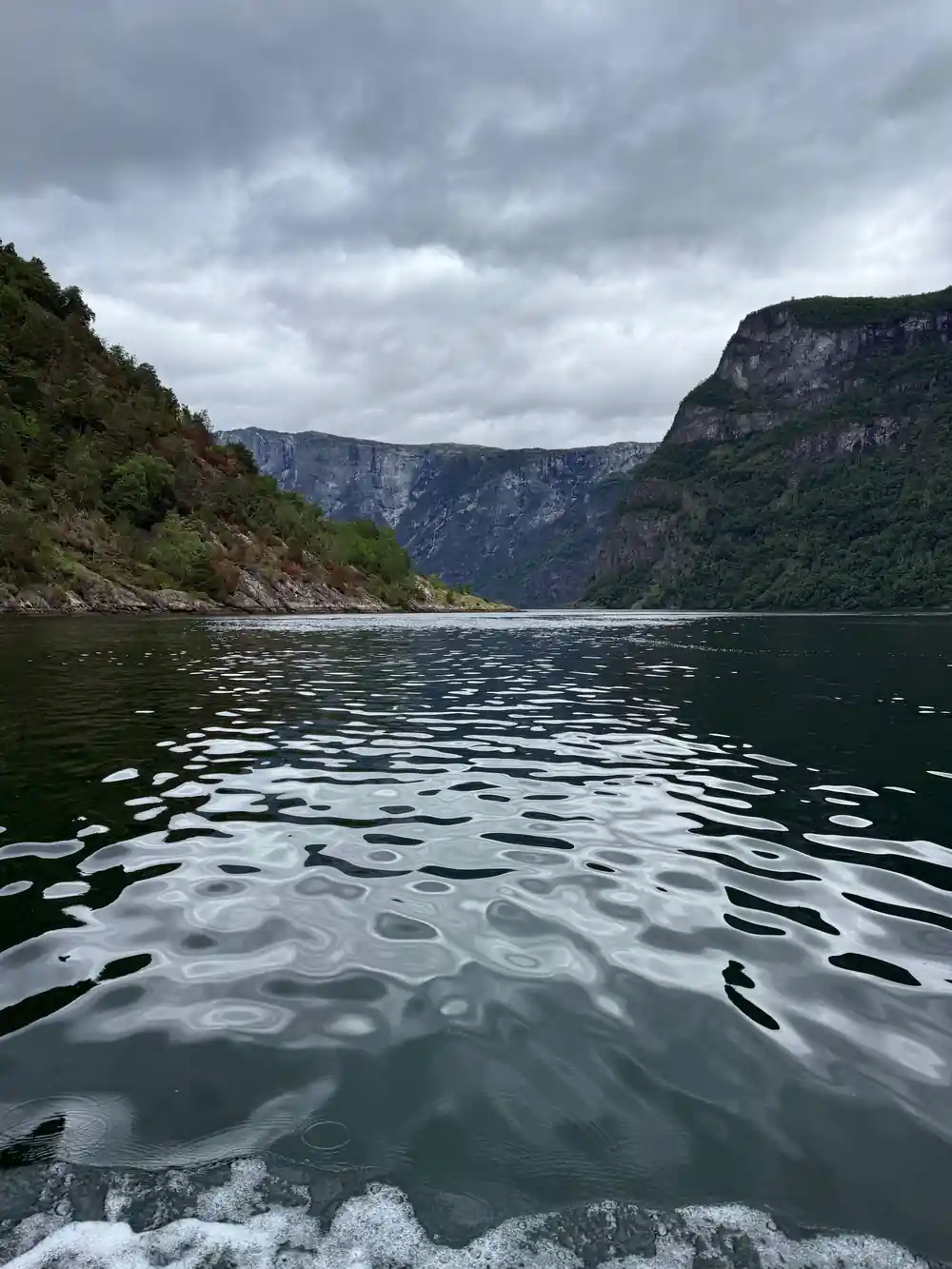
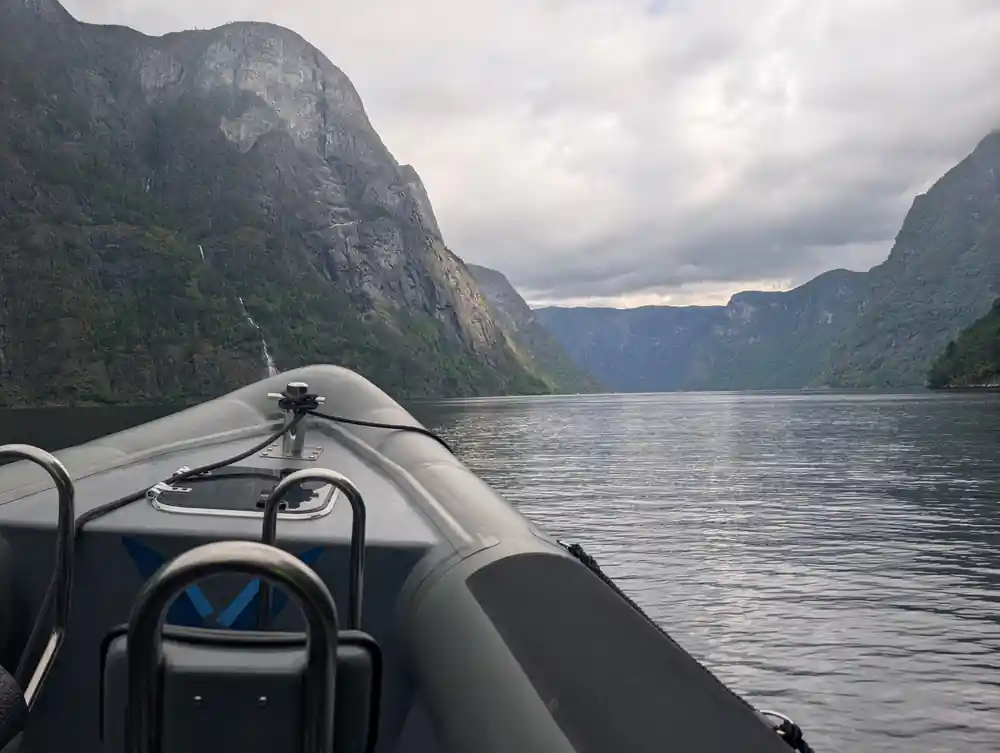
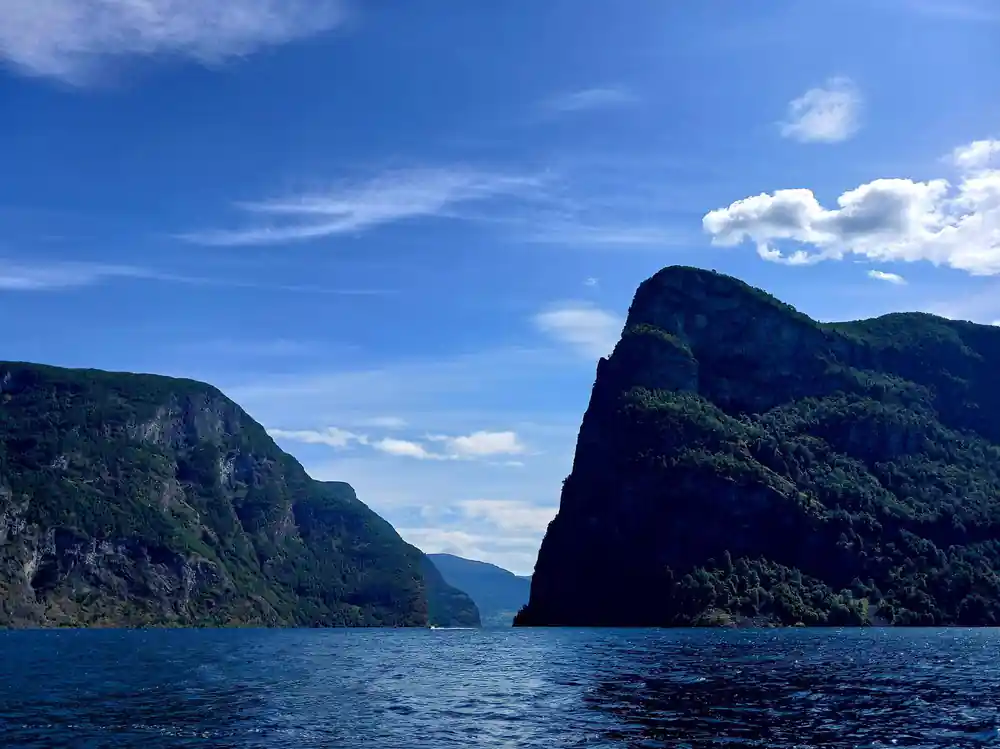
- The Nærøyfjord is 20 km long and just 250 meters across at its narrowest, with cliffs rising 1800 metres overhead.[1][2]
- Farms cling to the steep green walls above the water, part of a West Norwegian Fjord landscape that UNESCO first recognised in 2005.[3]
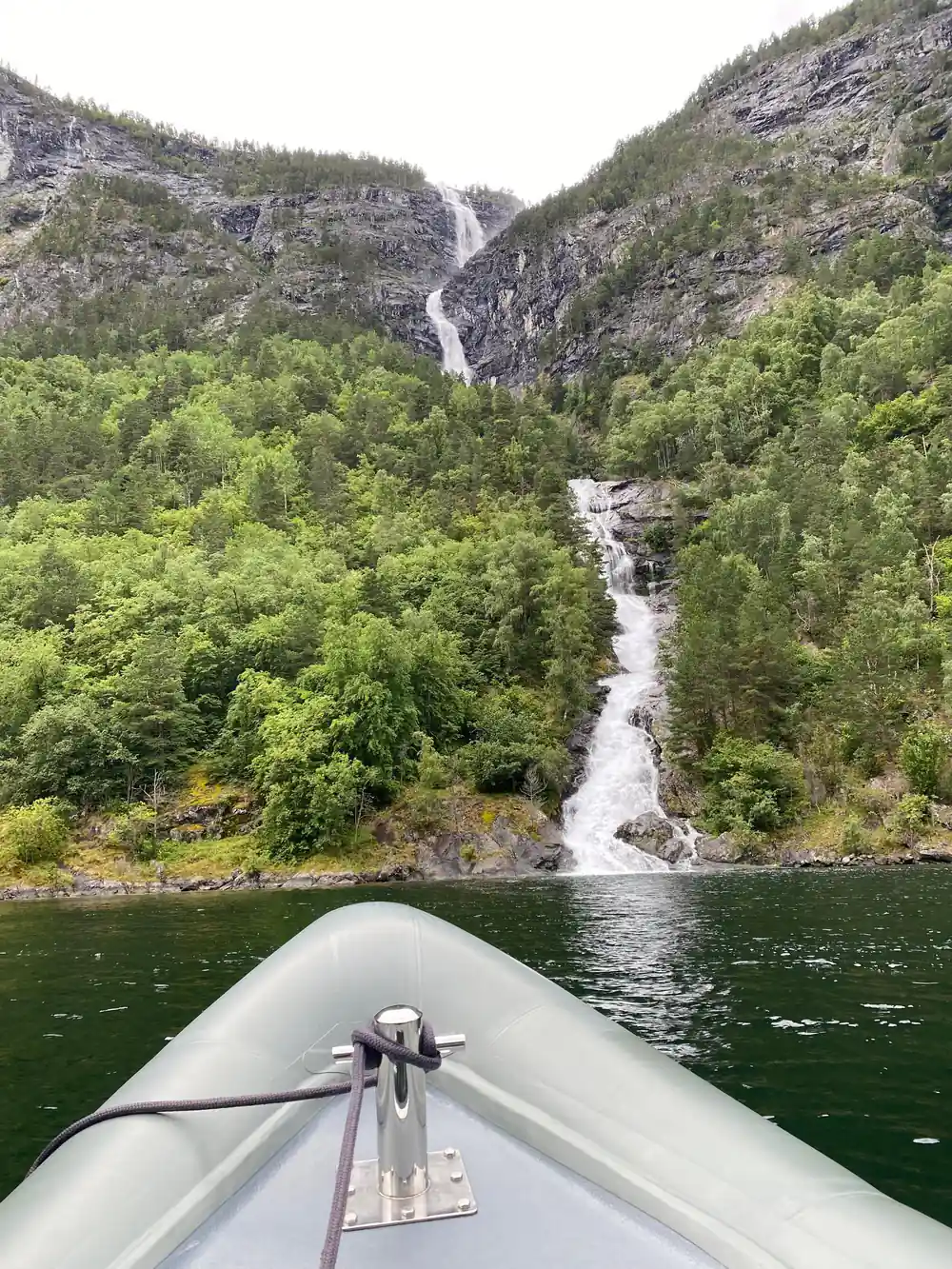
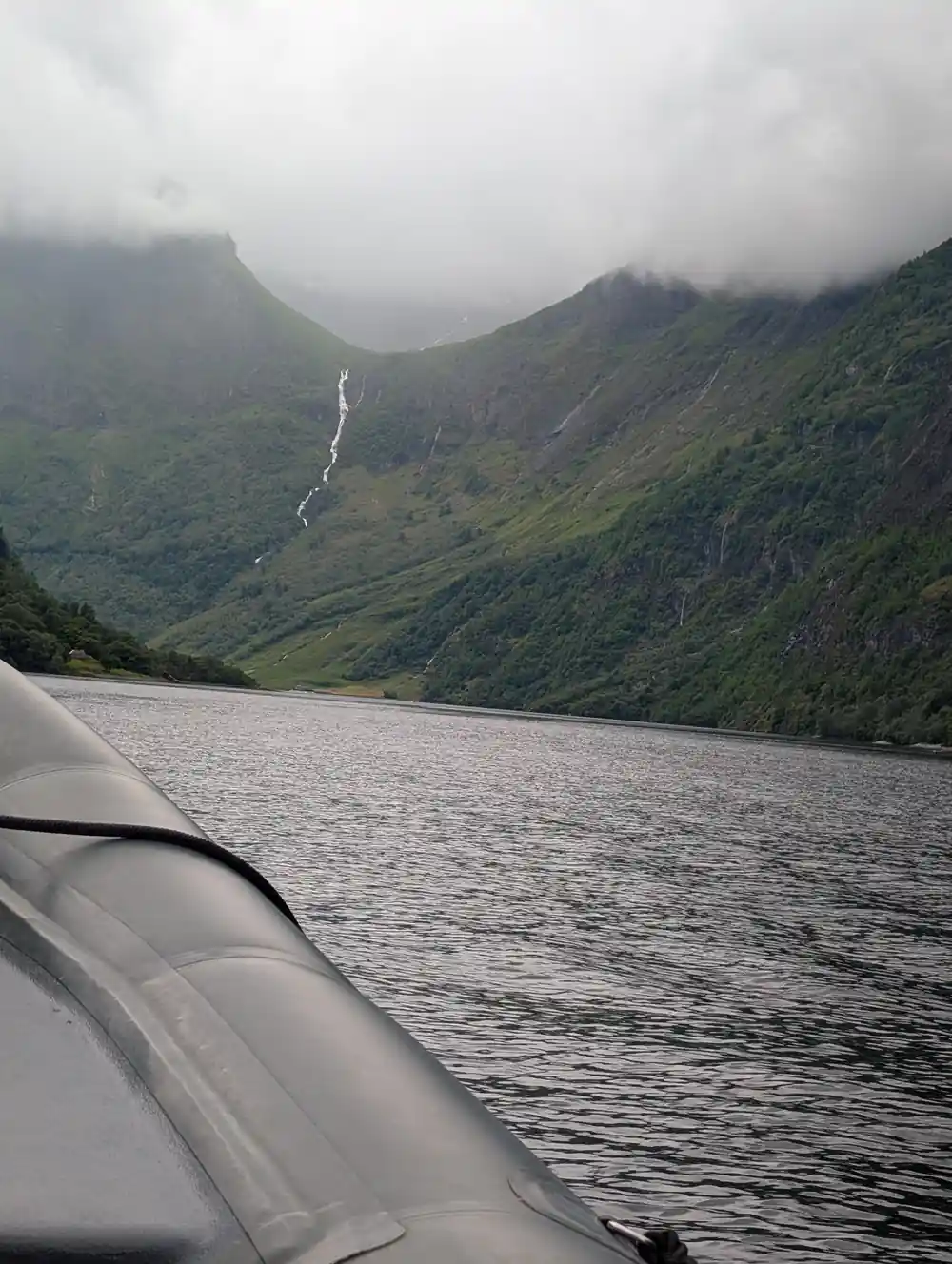
- Kjelfossen drops 150 metres in free fall at the head of the Nærøyfjord; its total drop is 840 metres.[4]
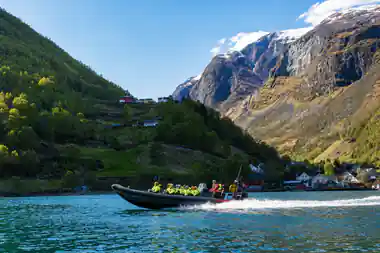
- A two-hour RIB-boat tour from Flåm runs under the cliffs with an English-speaking guide, from US$146.[5]
- Harbor seals live in both Aurlandsfjorden and Nærøyfjorden; look for them basking on rocks.[6]
| RIB safari | Classic cruise | Railway and cruise | |
|---|---|---|---|
| From | from US$146[5] | from US$62[7] | from US$396[8] |
| Duration | 2 hours[5] | 2 hours[7] | 11 hours[8] |
| Guide | Live English guide[5] | No guide listed[7] | Live English guide[8] |
| Great for | Close-up views of cliff farms | A quiet, steady cruise | A full rail and fjord day |
The Nærøyfjord is unique with steep mountain inclines, ascending 1800 metres high, wild waterfalls, and a living cultural landscape.
The walls are the real attraction
Good to know
What you are looking at
Look up from the deck and the first thing you notice is the squeeze. The Nærøyfjord is 20 km long and only 250 meters across at its narrowest point, and the mountain sides do not politely step back. They rise in green-black walls, with steep inclines ascending to 1800 metres above the water.[1][2] On the lower slopes, scattered like dropped coins, are the farms that give this page its name.
The farms are not ruins in the usual sense. Many are still neat, with mown strips, stone fences and boathouses at the water line. This is a living cultural landscape. The West Norwegian Fjords, including the Nærøyfjord, were first recognised as a UNESCO World Heritage Site in 2005.[3] A fjord is formed when a glacier retreats after carving its typical U-shaped valley and the sea fills the resulting valley floor.[12] What you see from the boat is that carved shape, with a human story added on top.
The houses are painted in the soft Norwegian palette of red, white and ochre. Some stand alone; others are grouped around a small field. From a RIB, the details are close enough to register clearly: a porch, a woodpile, a tiny window watching the water. This is not a museum facade. It is a way of life still carried on, in a landscape that does not make it easy.
How a family lived up there
Imagine the work before the road arrived. A family lived on a shelf of land far above the water, reached by a path that still makes your knees ache. They kept a cow or two, grew potatoes and hay, and relied on the farm's own spring. Every load of supplies came up the same path. Every animal and every bale came down in the autumn. The flat patches you see from the fjord were not natural terraces; they were made by hand, stone by stone.
Water made the ledges usable. The great waterfall at the head of the fjord, Kjelfossen, runs down east of Gudvangen with a free fall of 150 metres and a total drop of 840 metres.[4] Smaller falls and streams watered each farm. The noise must have been constant after rain. In summer, when the grass is deep green, you can almost see why people stayed. In winter, with the fjord dark and the cliffs overhead, the hard parts of that life are easier to imagine.
Look at the farm buildings from the fjord and you notice how few are on the steepest land. The farms were placed where the grade eased just enough for a field. The houses themselves may be small, but the work around them was huge. A farm was not a single building; it was a system of paths, fences, barns, haylofts and landing places, all arranged on a few vertical hectares.
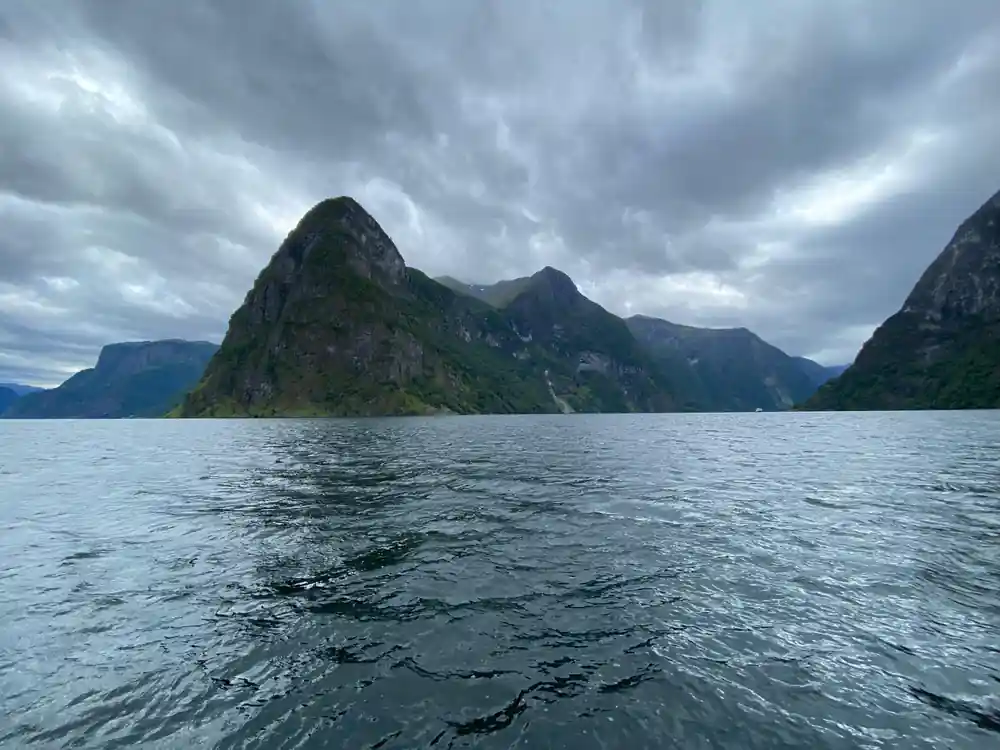
The old farm terraces seem to hang on the walls above the narrow Nærøyfjord.
The old road along the shore
At the foot of the cliffs, an old road once linked the shore farms. It runs below the ledges, now partly overgrown but still traceable in places. You can pick out stone walls, gateposts and a few worn steps. If you walk it, allow plenty of time and wear boots; the point is not to hurry but to stand underneath the farms and look at the paths climbing away from you.
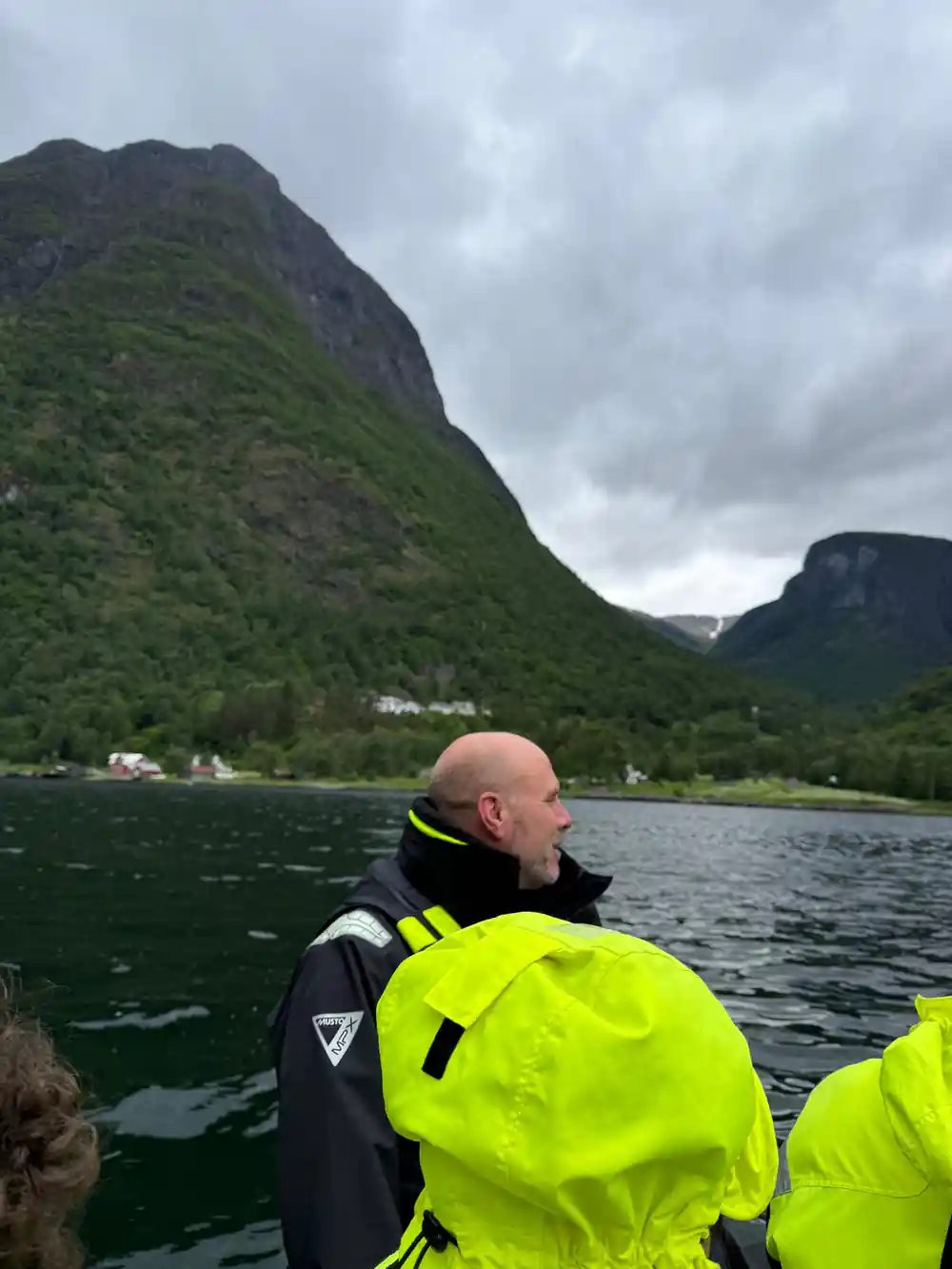
The route is bookended by two villages. Gudvangen sits at the head of the fjord and is today a thriving village with about 90 inhabitants.[13] Bakka is the smaller settlement opposite, its houses gathered around a white church. The old road and the modern services do not really compete. The farms above are what people stop and stare at.
The farms were strung along the shore, with neighbours close even when houses were far apart. A walk along the old route gives you a sense of that community, from one inlet to the next, always with the water on one side and the walls on the other.
Bakka, and the ones still occupied
Bakka is the place to slow down. The hamlet has the feel of a fjord farm community that has not been turned into a souvenir. From Bakka you look straight across to the steepest walls and the farms that remain lived-in. The signs are subtle: a hayfield recently cut, a stack of firewood, light in a window on a winter evening.
Some farmhouses are clearly still occupied; others have become summer homes for families who moved down the fjord. You do not need to know their names to read the landscape. A RIB trip from Flåm approaches the same walls from the water, giving you time to ask the guide which farms are working farms. The tour lasts 2 hours and is led live in English.[5]
After the boat, take a proper look at the small things. The old boathouses are often in better shape than the farmhouses. The fjord was the road, and the cliffs were the address.
from US$146
The two-hour RIB-boat experience runs under the farm cliffs with an English-speaking guide. Pay later; cancel free up to 24 hours in advance.[5]
Why they left
The empty farms are the ones that ask the most questions. Some roofs have fallen in; birch woods are reclaiming the pastures. The pattern appears across the fjord regions; small holdings on impossible slopes were given up over the generations. The walls remain, built too carefully to disappear quickly.
The RIB is the quickest way to feel the scale of that leaving. It runs under the cliffs for 2 hours and costs from US$146, with free cancellation up to 24 hours in advance.[5] If you prefer a slower pace, the ordinary cruise from Flåm to Gudvangen also takes approximately two hours.[9] Either way, you pass the same farm walls and the same silence.
Do not feel shy about asking guides about the overgrown paths, the empty barns, and the houses with new roofs. The answers will be different for each farm, which is the point. The landscape looks timeless, but it is full of individual decisions and small dramas.
Reading the farms from the water
From the water, each farm tells its own small story. A farm had to be near fresh water. At the head of the fjord, Kjelfossen provides the most dramatic example: a free fall of 150 metres and a total drop of 840 metres.[4] On the RIB you can feel the spray on your face; from the cruise boat you get the wider view. Both work.
Keep an eye on the water as well as the walls. Both Aurlandsfjorden and Nærøyfjorden are important habitats for harbor seals, and you may see them basking on rocks or popping their heads above the surface.[6] The seals have been here far longer than the farms, but they share the same instinct: find a ledge, hold on, and watch the boat go past.
If you bring binoculars, the farms become even more legible. You can see the windows, the outbuildings and the stone walls that stop the sheep from wandering. On a clear day the colours are extraordinary: grey rock, green pasture, white waterfall streaks and red painted timber. The farms were never hidden. They were simply waiting for you to look up.
When to visit and what to wear
Flåm's weather changes quickly, so the practical answer is layers rather than one heavy coat. Monthly average maximum temperatures in Flåm reach 30°C, while the monthly minimum drops to 6°C, and monthly rainfall runs from 22 mm to 84 mm.[11] Mornings are often calmer on the fjord, which suits photographers and anyone prone to seasickness.
If you are coming from Bergen, you can turn the trip into a longer loop. The classic day includes the Flåm Railway, one of the steepest railroads in the world, climbing from 2 meters to 867 meters above sea level at a 5% gradient.[14] Then the boat takes you back through the narrow fjord. Give yourself a few hours at Flåm between train and boat, and keep looking up.
Whenever you go, leave time to sit by the water. The farms on the walls do not need to be climbed to be understood. They simply need to be noticed, and the Nærøyfjord rewards those who look. From a slow boat or a fast RIB, the old holdings above the water are the part of the journey you will remember.
Average monthly rainfall in Flåm (mm)
Values from Weathermondo's climate table for Flåm.[11]
See the farm walls: three ways to book
Prices are from GetYourGuide listings.[5][7][8]
When to plan your farm-wall trip
Plan your fjord trip
Pick your base
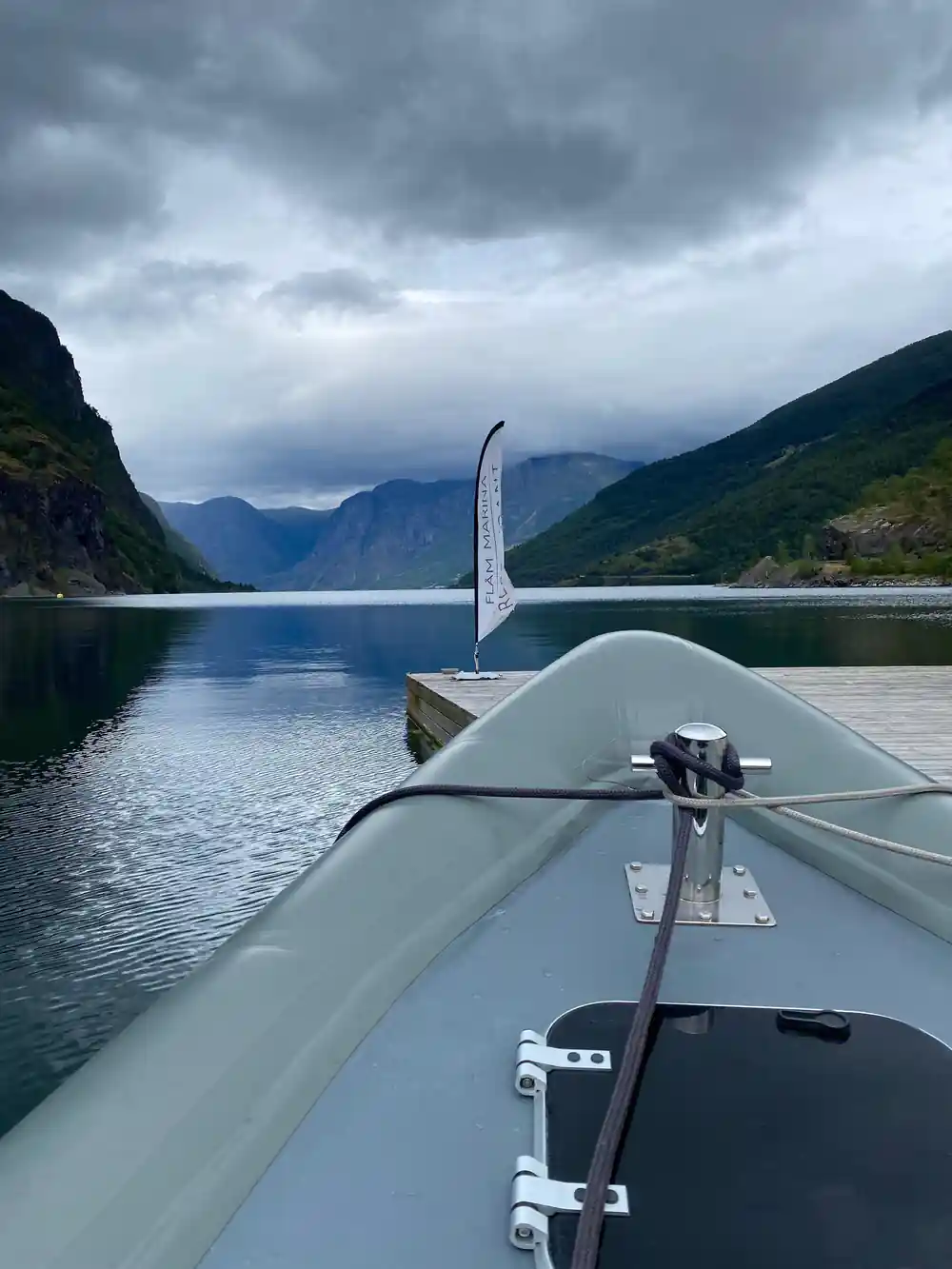
Flåm is the practical starting point. The 2-hour RIB-boat tour runs from here in the Nærøyfjord.[5]
Dress for the deck
Bring layers and a waterproof shell. The boat moves quickly, so even a warm day feels cooler once you are under the cliffs.
Look up early
Scan the slopes just after leaving the harbour. You will see the first farms tucked into the green while the fjord is still broad.
Watch the water
Keep an eye on rocks and shorelines for harbor seals; both Aurlandsfjorden and Nærøyfjorden are important habitats for them.[6]
Stop at the falls
Kjelfossen plunges 150 metres in free fall at the head of the fjord. Ask the guide for the best view.[4]
Continue by rail
If you have a longer day, the Flåm Railway climbs from 2 meters to 867 meters at a 5% gradient after your boat trip.[14]
See the farm walls from the water with a RIB trip out of Flåm
from US$422Reserve now & pay later